AED Versus CPR: What Responders Need to Know
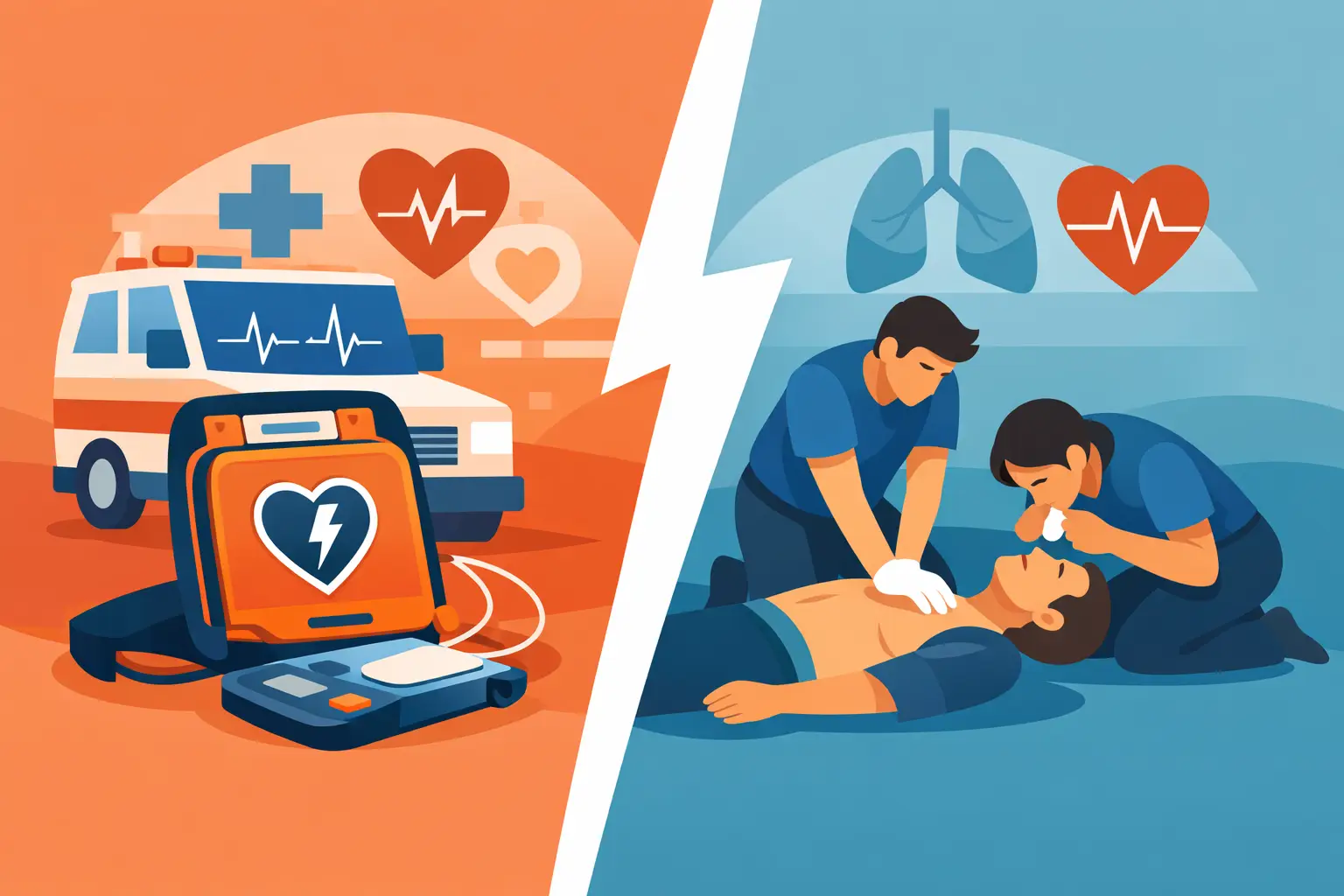
A coworker collapses, does not respond, and is not breathing normally. In that moment, AED versus CPR is not a choice between two competing actions. CPR keeps blood moving while an automated external defibrillator, or AED, checks the heart rhythm and may deliver a shock. The right response is to start both as quickly as possible, using the AED as soon as it arrives.
For employees, supervisors, security personnel, and workplace first aid attendants, understanding the difference is practical. It affects how you act in the first minutes of a cardiac emergency, how you assign tasks, and why hands-on certification training matters.
AED Versus CPR: The Core Difference
CPR, or cardiopulmonary resuscitation, is a physical intervention. The responder gives chest compressions to manually circulate a limited amount of oxygenated blood to the brain and other vital organs. If trained and willing to do so, the responder may also provide rescue breaths according to current first aid protocols.
An AED is a device. After adhesive pads are placed on the person’s bare chest, the AED analyzes the heart’s electrical rhythm. If it identifies a shockable rhythm, it instructs rescuers to stand clear and delivers, or directs delivery of, an electric shock. The shock may allow the heart to resume an effective rhythm.
CPR does not restart every stopped heart, and an AED does not replace CPR. A person in cardiac arrest needs continuous support while the device is being retrieved, attached, and used. That is why trained responders alternate these tasks rather than treating them as alternatives.
Why Both Actions Matter in Cardiac Arrest
Sudden cardiac arrest is an electrical problem that prevents the heart from pumping blood effectively. It can happen without warning at work, in a recreation center, on public transit, or at home. A person may collapse, become unresponsive, and show no normal breathing. Occasional gasping is not normal breathing and should not delay action.
Chest compressions provide a bridge. They are not a cure, but high-quality compressions can help preserve circulation until emergency medical services arrive or an AED can address a shockable rhythm. Every unnecessary pause reduces the value of those compressions.
The AED provides rhythm-specific treatment. Some cardiac arrest rhythms respond to defibrillation, while others do not. The device determines this. Responders should never guess whether a shock is needed. They should turn on the AED, follow its voice or visual prompts, and ensure nobody touches the patient while the device analyzes the rhythm or delivers a shock.
This is also why an AED can be used by a trained lay responder. Modern public-access AEDs are designed to guide the user step by step. Training improves speed, confidence, pad placement, and team coordination, but the device itself gives the instructions during the emergency.
What to Do When Someone Collapses
The exact sequence may vary slightly by current certification standard and workplace procedure, but the operational priorities are consistent. First, make sure the scene is safe. Check whether the person responds. If they are unresponsive and not breathing normally, activate emergency response immediately.
In a workplace, this means calling 911 or directing a specific person to call. Ask another specific person to retrieve the AED. Clear instructions work better than calling generally for help. For example: “You in the blue shirt, call 911. You, bring the AED.”
Begin chest compressions without waiting for the AED. Place the heel of one hand in the center of the chest, place the other hand on top, and press hard and fast with full chest recoil between compressions. Minimize interruptions.
When the AED arrives, turn it on immediately. Expose and dry the chest if necessary, apply the pads exactly as shown on the diagrams, and connect them if the model requires it. Continue CPR while pads are being placed when possible. Stop only when the AED directs you to stand clear for analysis.
If the AED advises a shock, make sure no one is touching the person, deliver the shock as directed, and restart CPR immediately. If no shock is advised, restart CPR immediately. Continue until the person shows clear signs of recovery, emergency medical services take over, or you are unable to continue.
CPR Quality Determines the Value of the Response
An AED is highly effective only when it is accessed and used quickly. In many workplaces or public settings, it may take several minutes to bring the device to the scene. CPR fills that critical gap.
Good CPR is physically demanding. Compressing too slowly, too shallowly, or with long pauses reduces circulation. Rescuers should switch compressors about every two minutes when another trained person is available, ideally during a rhythm analysis or another necessary pause. This helps prevent fatigue from reducing compression quality.
Rescue breaths can be part of adult CPR for trained responders, especially when a barrier device is available and the cause may involve breathing failure, drowning, overdose, or a child emergency. However, a bystander who cannot or will not give breaths should still provide hands-only chest compressions and use an AED. Doing something promptly is better than standing by while waiting for a more experienced responder.
AED Use Has Practical Considerations
AEDs are designed for urgent use, but responders must handle a few common conditions correctly. The chest must be dry enough for pads to adhere. If the person is on a wet surface, move them only if it can be done quickly and safely, then dry the chest. Do not delay defibrillation over minor concerns.
Medication patches should be removed before placing a pad over that area, using gloves or a barrier if available. Thick chest hair may prevent pad contact, so use the razor included in some AED kits if it is clearly needed. Implanted devices, such as a pacemaker, may create a visible bump under the skin. Place the AED pad at least an inch away from it rather than directly over it.
For infants and children, use pediatric pads or the AED’s pediatric setting when available and appropriate. If those are not available, follow the AED instructions and the guidance taught in your current course. The priority remains rapid recognition, CPR, and early defibrillation when indicated.
Workplace Readiness Is More Than Owning an AED
A wall-mounted AED does little good if employees do not know where it is, who retrieves it, or how to respond while waiting for emergency services. Employers should make AED access part of their emergency response plan, not an item checked off after purchase.
A practical readiness program includes clearly marked devices, routine inspection of pads and batteries, incident roles, and staff training that includes realistic CPR and AED practice. Shift changes, large facilities, remote work areas, and public-facing operations may require more than one device or a more detailed response plan. The appropriate setup depends on the site layout, occupancy, and how quickly a responder can reach a person in distress.
Formal training also gives workers a chance to use an AED trainer before a real emergency. That practice reduces hesitation around turning on the device, placing pads, delivering a shock safely, and returning to compressions without delay.
For Ontario workers who need recognized credentials, Canada First Aid offers blended Intermediate First Aid Level C with AED certification. The format combines online coursework with in-person skills instruction, which is particularly useful for learners who must demonstrate practical competency as part of workplace certification requirements.
Certification Builds More Than Compliance
A certificate can satisfy an employer or job requirement, but its real value is operational. A trained responder is more likely to recognize abnormal breathing, call 911 promptly, start effective compressions, and use the AED without wasting time deciding whether they are allowed to touch it.
Skills do fade between courses. Review your workplace emergency procedures, locate the nearest AED when you enter a new site, and renew training on schedule. If an emergency occurs, you will not have time to read a policy manual or search for instructions.
When someone collapses, act on the basics: call for emergency help, start CPR, send someone for the AED, and follow the device prompts. Those first coordinated actions give the person the best available chance while professional care is on the way.