How a First Aid Class for New Hires Supports Safety
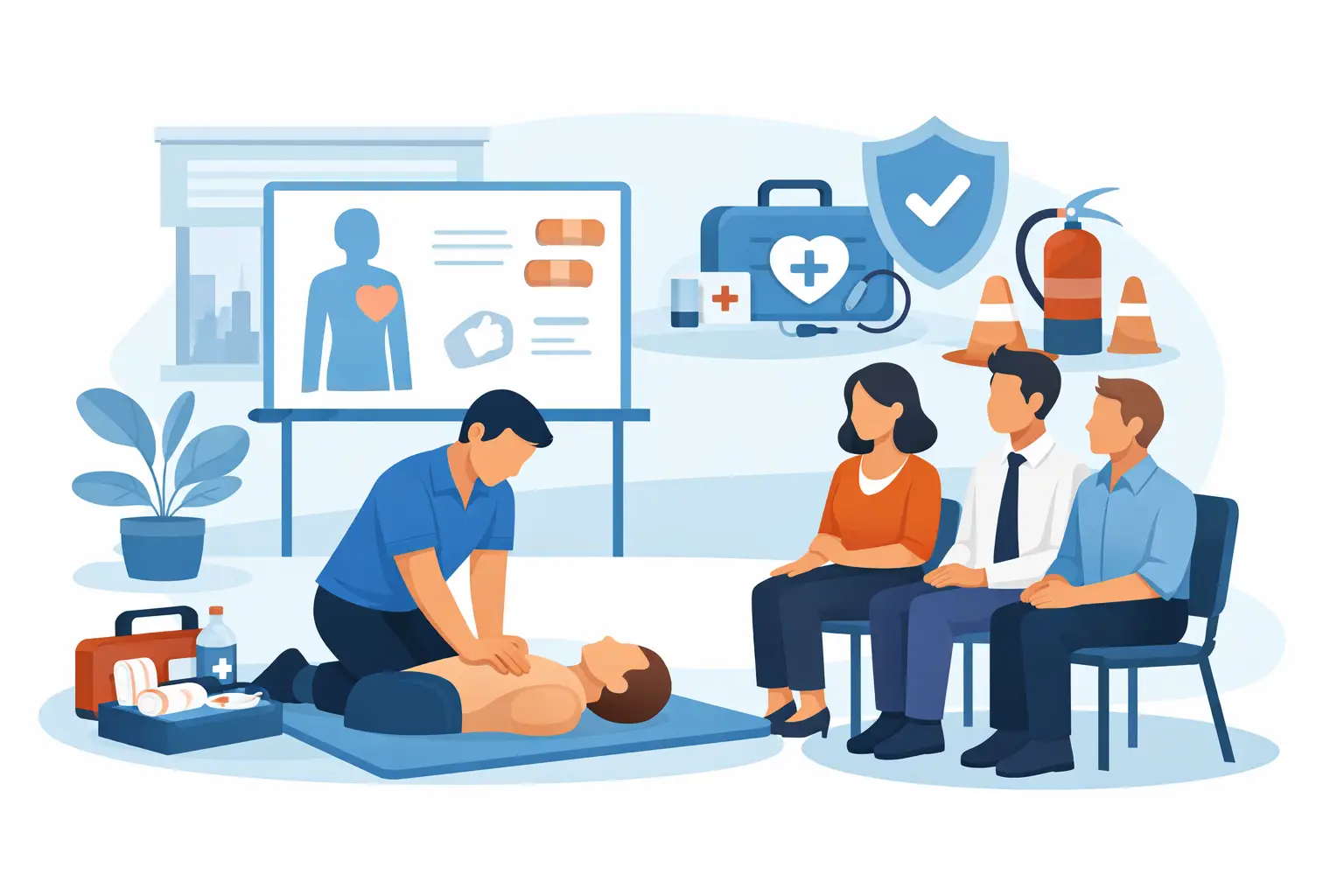
A new employee can understand their job duties and still be unprepared for the moment a coworker collapses, suffers a severe cut, or shows signs of an allergic reaction. A first aid class for new hires gives employees a defined response process before an emergency creates confusion. For employers, it also helps establish a more organized approach to workplace safety, coverage, and certification records.
First aid training should not be treated as a generic onboarding checkbox. The right course depends on the workplace, the employee's role, the number of trained responders available per shift, and the level of recognition an employer or contract requires. A course that meets a hiring requirement but does not prepare employees for likely workplace risks leaves a gap when it matters most.
When New Hires Need First Aid Training
Some new hires need certification before they begin working independently. This is common for security personnel, supervisors, staff assigned to safety duties, and employees working in environments where immediate response coverage is required. Other employees may complete training as part of their early onboarding period, especially when an employer is building sufficient first aid coverage across locations and shifts.
The timing should be practical. Waiting several months after hire can leave a new employee without the skills their role requires, while booking a course before the employee understands the worksite may reduce the relevance of the training. For many workplaces, scheduling training during the first few weeks provides the right balance: the employee is established in the role but is not yet expected to manage an emergency without support.
In Ontario, employers should review their workplace obligations, internal safety program, and client or contract requirements before assigning a course. WSIB-recognized certification is often a key consideration for workplaces that need formal, accepted training. Requirements can vary by workplace size, risk level, and operational setup, so employers should avoid assuming that one certificate automatically fits every position.
What a First Aid Class for New Hires Should Cover
New-hire training must give employees practical skills they can use under pressure, not just terminology. A suitable course should cover scene safety, emergency assessment, activating emergency services, and the limits of a first aider's role. Employees need to know what to do first, how to protect themselves and others, and when professional medical help is necessary.
For many employment settings, Intermediate First Aid Level C with AED certification is an appropriate standard because it combines broader first aid skills with adult, child, and infant CPR training. It is particularly relevant when employees may be required to respond to a range of incidents rather than a narrow set of office-based risks.
Practical instruction should include hands-on skills such as CPR, automated external defibrillator use, choking response, bleeding control, shock management, and care for common medical emergencies. The goal is not to turn employees into medical professionals. It is to help them provide safe, immediate assistance until emergency responders take over.
Course selection also needs to account for the work environment. A security guard working alone or moving between properties may need a different level of readiness than an employee in a staffed administrative office. Workers in public-facing roles may be more likely to encounter medical emergencies involving visitors. Employees in physical, industrial, or maintenance settings may face greater exposure to falls, burns, cuts, and injuries involving equipment. The certificate should match the actual duties and foreseeable risks.
Why Blended Learning Works for Employee Onboarding
Training format affects whether employees complete the course on time and retain the material. A blended format divides learning between online coursework and in-person instruction. This allows new hires to complete foundational material independently while reserving classroom time for demonstration, practice, and instructor feedback.
For example, an 8-hour online component can cover first aid principles, legal considerations, emergency recognition, and response steps. The 8-hour in-person portion then gives learners time to perform CPR, use an AED trainer, practice assessments, and work through realistic response scenarios. Skills such as chest compressions and bleeding control cannot be properly evaluated through online learning alone.
This structure can make onboarding easier to manage. Employers can schedule the online work around orientation, shift assignments, or other required training, then book employees into an in-person session when they are ready. It reduces the amount of time a new hire must spend away from the workplace in one block, without removing the hands-on evaluation needed for credible certification.
There is a trade-off. Blended learning requires employees to complete the online portion responsibly and before their practical session. Employers should set a completion deadline, confirm attendance, and give employees clear instructions about what happens if online work is incomplete. A flexible format still needs firm administration.
Build Certification Into the Hiring Process
The most efficient approach is to decide who requires training before the employee's first day. Hiring managers, supervisors, and safety coordinators should use the job description and workplace coverage plan to identify roles that require first aid certification. This avoids last-minute course bookings after an employee has already begun work.
A clear process should identify the required certification level, the date training must be completed, and the person responsible for tracking it. It should also confirm whether the employee is joining a location or shift that already has enough qualified responders. Certification is individual, but emergency readiness is a team responsibility. A workplace with several certified staff members on day shifts may still have inadequate coverage overnight, on weekends, or at remote locations.
Keep a central record of course completion and certificate expiration dates. The record should include the employee's name, certification type, issue date, expiration date, and work location or department. This makes it easier to verify compliance during an audit, assign trained responders during scheduling, and arrange recertification before credentials lapse.
Do not rely only on an employee's statement that they are certified. Request documentation and verify whether the certificate meets the employer's required standard. A certificate from a previous workplace may still be valid, but it may not provide the level of training or recognition needed for the new role.
Help New Hires Apply Training at the Worksite
Formal certification is only one part of preparedness. After training, employees should know how first aid procedures work at their specific location. A brief workplace orientation can show them where first aid kits, AEDs, emergency exits, incident forms, and emergency contact information are located.
They should also understand the internal reporting process. After providing first aid, who must be notified? Where is the incident documented? When should a supervisor call emergency services or arrange transportation for further care? These questions are operational, but they affect how well first aid training works in practice.
Supervisors should avoid assigning every emergency responsibility to the newest certificate holder. Trained employees need support from management, access to stocked equipment, and authority to act when urgent care is required. A certificate supports competence, but a prepared workplace supports action.
Choosing a Provider With Clear Recognition and Delivery
When selecting a provider, focus on the certification required, the practical course structure, and the ability to schedule employees without unnecessary delays. Ask whether the program is recognized for the purpose it is being taken, whether CPR and AED instruction are included, and how learners receive proof of completion.
For employers in Toronto and Peel, Canada First Aid provides WSIB-recognized Intermediate First Aid Level C with AED certification through an 8-hour online and 8-hour in-person blended format. This can be a practical fit for organizations that need recognized credentials while managing new-hire schedules.
Price matters, but it should not be the only decision factor. A lower-cost course is not a good value if it does not meet employer requirements, lacks practical instruction, or creates administrative delays. The right program gives the employee usable skills and gives the employer documentation they can rely on.
A well-planned first aid requirement sends a direct message to new employees: safety is part of the job from the start. Set the certification standard early, schedule the training promptly, and make sure each trained worker knows where their skills fit within the workplace response plan.