How to Renew First Aid and CPR Certification
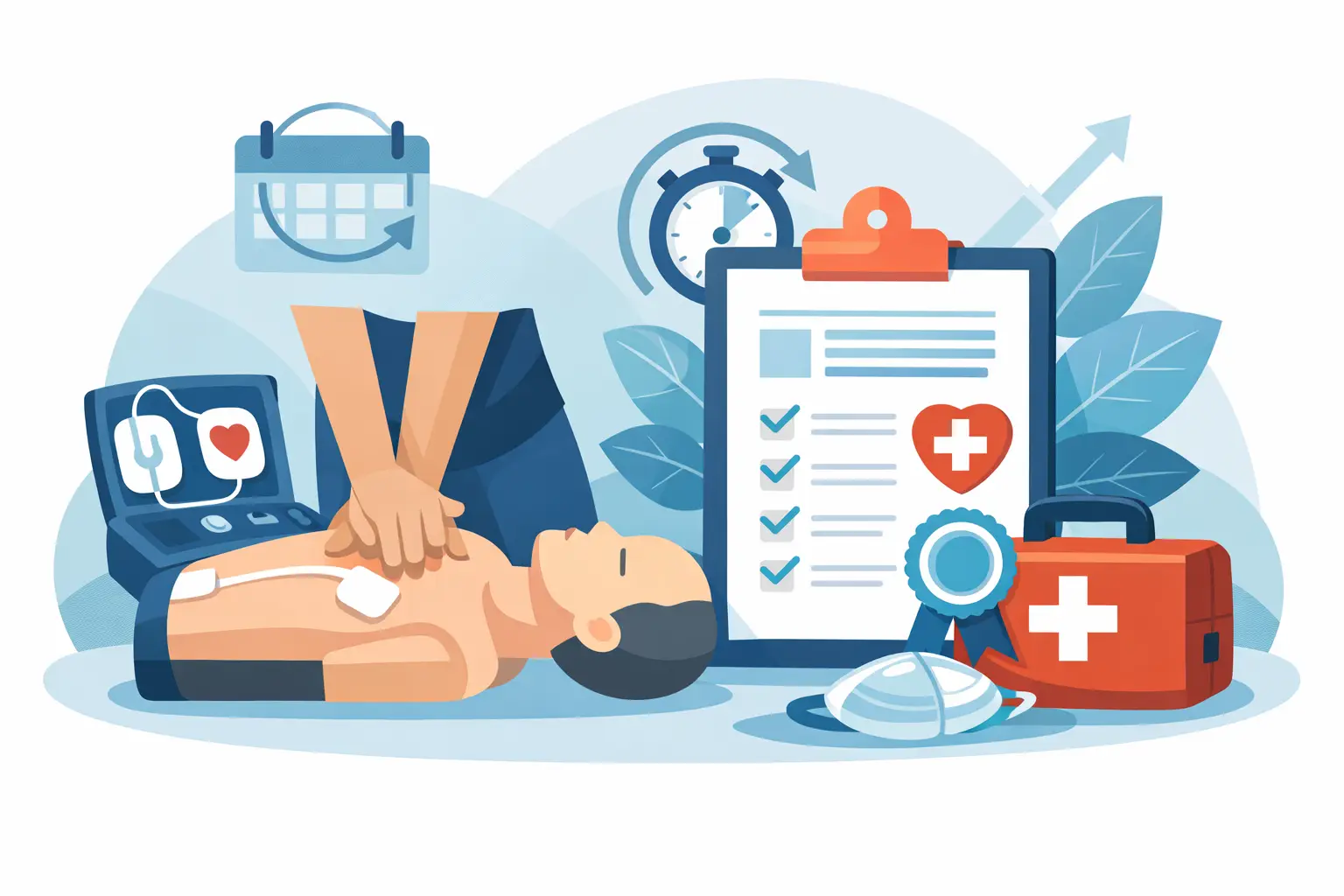
If your certificate is close to expiring, waiting too long can create a real problem. Employers, job sites, and regulated workplaces often require current proof of training, which means knowing how to renew first aid and CPR certification is not just a paperwork issue - it affects whether you can stay compliant and continue working.
For most people, renewal is straightforward, but the right path depends on the type of certification you already hold, when it expires, and whether your employer requires a specific standard. The mistake many learners make is assuming all renewals work the same way. They do not. Some credentials can be renewed through a shorter recertification course, while others require you to retake the full program.
How to renew first aid and CPR certification without delays
Start by checking the exact name of your current certificate. You need to confirm whether you hold Emergency First Aid, Standard First Aid, Intermediate First Aid, CPR A, CPR C, CPR HCP, or a workplace-specific equivalent. You should also verify whether AED was included and whether your certificate came from a recognized training provider.
Next, check the expiration date. Many first aid and CPR certifications are valid for three years, but that is not universal. Some CPR-level renewals are required more often depending on the workplace, the regulator, or the employer's policy. If you work in security, childcare, healthcare support, construction, or a supervised workplace environment, do not rely on assumptions. Read the certificate and confirm the renewal window before booking anything.
Once you know what you have and when it expires, review whether you are eligible for a renewal course. Some providers allow renewal only if your certificate is still current or has expired within a limited grace period. If it has been expired too long, you may need to take the full course again. That matters because the time commitment and price are usually different.
This is also where provider recognition matters. A cheap course that does not meet employer or workplace requirements can cost you more in the long run if you have to repeat the training with an approved provider. If the certification is for work, confirm that the course is accepted by your employer, insurer, site supervisor, or health and safety requirement before registering.
What to check before you book a renewal course
The first question is whether you need first aid, CPR, or both. Many people search for renewal when they actually need a combined course. If your job posting, workplace file, or compliance checklist says Standard or Intermediate First Aid with CPR Level C and AED, a basic CPR recertification on its own will not be enough.
The second question is whether a blended format is allowed. In many cases, it is. A blended course combines online theory with in-person practical training, which can save time and make scheduling easier. That format works well for adults who need recognized credentials without spending multiple full days in a classroom. It also keeps the hands-on skills component in place, which is essential for proper assessment.
The third issue is timing. If your certificate expires next month, register now. Popular training dates fill quickly, especially for weekend classes and employer-driven enrollment periods. Leaving renewal until the last week adds unnecessary risk. If there is no seat available before your expiration date, you may end up with a lapse in certification.
Price matters, but it should not be the only factor. A low-cost course is not useful if it is the wrong level, not recognized, or scheduled too late. Focus on fit first - certification standard, renewal eligibility, delivery format, and proof of recognition - then compare convenience and cost.
When renewal is allowed and when you need the full course
This is where many people get caught off guard. Renewal is not automatic just because you took first aid before. Training providers usually apply specific rules based on the level of course and the status of your existing certificate.
If your certificate is still valid, you are often in the best position to take a renewal course. If it expired recently, you may still qualify, but that depends on provider policy and certification standards. If it expired a long time ago, expect to retake the full program.
There is also a practical reason for this. Skills such as CPR compressions, AED use, airway management, and scene assessment need refreshers. A renewal course assumes you already know the basics and need structured review and reassessment. A full course is designed for learners who need the entire framework again.
For workplace compliance, the safest approach is simple: do not wait until after expiration unless you have confirmed in advance that renewal is still permitted. If your job depends on active certification, the full course may still be worth booking sooner rather than risking a gap.
How to choose the right renewal provider
A renewal course should do more than issue a certificate. It should meet the standard your workplace expects and provide a clear, legitimate training record. That means looking at recognition, course format, and how the provider handles registration and completion.
A professional training provider should clearly state the course name, level, duration, delivery method, and who the certification is recognized by. If those details are vague, that is a warning sign. You should know exactly what you are registering for before paying.
For many working adults, blended learning is the most efficient option. Completing theory online and practical skills in person reduces classroom time while still meeting skill evaluation requirements. Canada First Aid, for example, offers a blended model that combines 8 hours of online coursework with 8 hours of in-person instruction for learners who need recognized workplace credentials in the Toronto and Peel area.
Location also matters. If your in-person session is too far away or only offered at limited times, the course becomes harder to complete before your expiration date. Choose a provider with a schedule and training site that matches your work demands.
Common mistakes people make when renewing
One of the biggest mistakes is booking the wrong course level. Someone who needs first aid with CPR C and AED may register for CPR only, then find out it does not satisfy the employer requirement. Another common issue is assuming all certifications are interchangeable. They are not. Course names, levels, and recognition standards matter.
Another mistake is waiting for the employer to remind you. Some employers track certification dates closely, but others expect workers to manage renewals themselves. If you are responsible for staying current, put the expiration date in your calendar well in advance.
People also underestimate the value of hands-on retraining. Renewal is not just about keeping a card active. The practical portion helps correct bad habits, refresh current protocols, and rebuild response confidence. That has real value whether you use the training at work or in public.
Finally, do not ignore documentation. After completing the course, keep your certificate accessible. Employers may ask for it immediately, and some job applications require proof before onboarding is complete.
How to renew first aid and CPR certification for work
If you are renewing for employment, approach it as a compliance task. Start with your employer's stated requirement. Confirm the exact course level, whether blended learning is accepted, and whether the provider must be WSIB-recognized or meet another formal training standard.
Then book early enough to avoid a lapse. If your role includes site access, supervision, security work, or public-facing responsibilities, expired certification can delay shifts, assignments, or hiring. A current certificate is often treated as a condition of work, not a nice-to-have.
If you are an employer arranging staff renewals, consistency matters. Put everyone through the same recognized standard where possible. That reduces confusion, simplifies recordkeeping, and makes audits easier. It also helps avoid the problem of mixed credentials from different providers with unclear acceptance status.
Renewal should be treated as scheduled maintenance, not an emergency. When it is planned properly, the process is simple. You confirm the required level, choose a recognized course, complete the training, and keep your proof of certification ready for work.
A current first aid and CPR certificate does more than satisfy a rule. It keeps your training usable when someone actually needs help, and that is the part worth staying ready for.