Intermediate First Aid Level C Explained
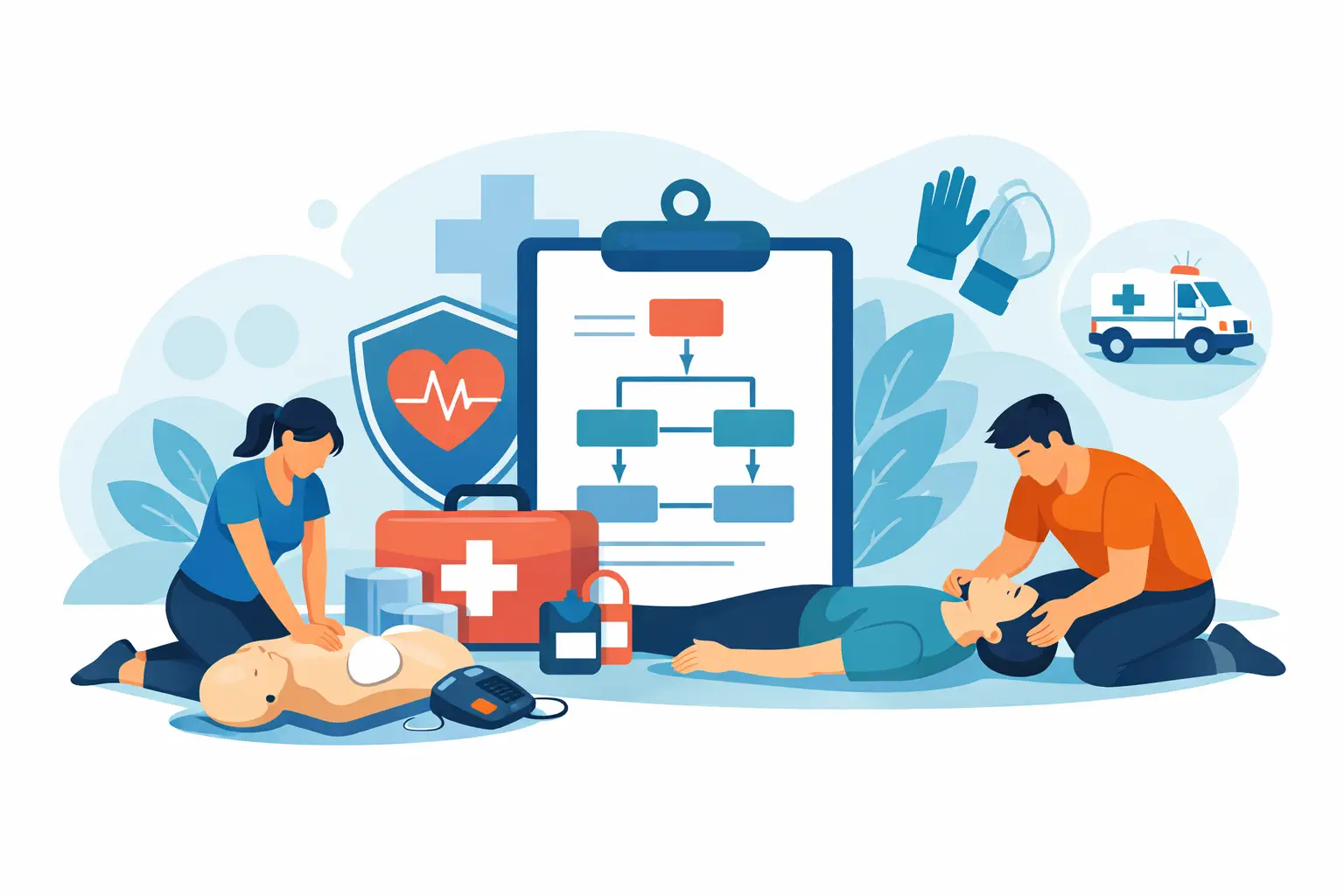
If an employer asks for Intermediate First Aid level c, they usually are not asking for a general awareness course. They want a recognized certification that meets workplace expectations, covers CPR Level C, and prepares you to respond to real emergencies with a clear standard of training.
For many workers in Ontario, that requirement comes up fast. A job offer is conditional on certification. A supervisor needs staff compliant by a deadline. A security professional needs valid credentials before starting a shift. In those situations, the practical question is simple: what does this course include, and is it the right one for your role?
What Intermediate First Aid Level C means
Intermediate First Aid Level C is a formal first aid certification that combines a broader emergency response scope with CPR training for adults, children, and infants. In a workplace context, it is commonly used to meet safety requirements where a higher level of preparedness is expected than basic one-day instruction.
The "Level C" portion refers to CPR content that includes adult, child, and infant resuscitation skills. It also typically includes AED training, which is now a standard expectation in many recognized programs. That matters because most employers are not looking for partial training. They want one course that covers first aid, CPR Level C, and AED in a single certification path.
The "intermediate" designation matters as well. It signals more than a short introductory class. Learners are expected to understand patient assessment, scene safety, urgent intervention, and a wider range of medical and injury-based emergencies. The exact naming can vary by provider or regulatory framework, but the core value is the same: recognized training with a practical skill standard.
Who usually needs Intermediate First Aid Level C
This course is commonly required by employees, job seekers, supervisors, and designated workplace first aid attendants. It is especially relevant where employers need staff trained to a recognized standard under workplace safety expectations.
Security personnel often need this level of certification because they are expected to respond quickly in public-facing environments. Construction, industrial, warehouse, education, child care, fitness, and service-sector roles may also require it, depending on site risk level and employer policy. In some cases, an individual takes the course for personal preparedness, but most enrollments are driven by work requirements.
That said, not every job needs intermediate training. Some employers only require Emergency First Aid with CPR. Others specifically ask for Standard or Intermediate First Aid with Level C. The right course depends on the wording in the job posting, internal safety policy, union agreement, or compliance requirement. If the employer uses the term "recognized" or asks for WSIB-recognized certification, that should guide your decision.
What is covered in Intermediate First Aid Level C
A proper Intermediate First Aid Level C course is built around response skills that are expected in real incidents, not just theory. You should expect instruction in scene assessment, emergency action steps, and patient care priorities before moving into specific injuries and illnesses.
Training usually includes CPR for adults, children, and infants, AED use, airway emergencies, and how to manage an unconscious casualty. It also covers bleeding control, shock, burns, fractures, sprains, strains, head and spinal concerns, seizures, stroke, heart attack, diabetic emergencies, poisoning, and environmental emergencies such as heat or cold exposure.
The difference between reading this material and practicing it is significant. A recognized course should include hands-on assessment and skill performance, because first aid is not just about recalling information. It is about acting correctly under pressure, using a repeatable process, and meeting the standard used by the certifying body.
Why blended learning works for this course
For many adult learners, the biggest barrier is not the course content. It is scheduling. Taking a full block of classroom time can be difficult if you are working, job hunting, or managing rotating shifts. That is why blended delivery makes practical sense for Intermediate First Aid Level C.
In a blended format, part of the course is completed online and the rest is done in person. A common structure is 8 hours of online coursework followed by 8 hours of classroom instruction. The online component handles the knowledge portion in a flexible way. The in-person session focuses on skills, scenarios, and instructor evaluation.
This format has a clear advantage for employers and individual learners. It reduces time away from work while preserving the hands-on standard required for recognized certification. It also gives learners a chance to review concepts at their own pace before attending the practical session.
There is a trade-off. Blended learning is efficient, but only if the learner completes the online portion seriously. If someone rushes through the material and arrives unprepared, the in-person session becomes harder. The best results come when the online section is treated as real coursework, not a box to check.
WSIB recognition and why it matters
If certification is being used for employment or workplace compliance, recognition status is not a minor detail. It is one of the first things to verify.
WSIB-recognized training matters because it helps confirm that the course aligns with workplace expectations in Ontario. For an employer, this reduces uncertainty. For a worker, it lowers the risk of completing a course that is later rejected by hiring staff, site management, or a health and safety department.
This is where people sometimes make avoidable mistakes. They register for the cheapest course they find, assume all certificates are equal, and only later discover the credential does not meet the requirement attached to the job. That can delay hiring, force re-training, and add unnecessary cost.
If your role depends on valid workplace certification, the provider should be clear about what standard the course meets, whether CPR Level C and AED are included, and whether the credential is appropriate for employer submission. A legitimate training provider should present that information directly, without vague language.
What to expect on the in-person training day
The classroom portion should be structured, practical, and assessment-based. This is where online learning turns into performance. You will practice CPR, use training AED units, work through casualty assessments, and respond to emergency scenarios under instructor guidance.
A professional course should not feel disorganized. Learners need clear instruction, enough practice time, and direct correction where necessary. The goal is not just attendance. The goal is competent performance against the course standard.
Bring identification if required, arrive on time, and complete any online modules before the classroom date. Wear comfortable clothing suitable for floor-based practice because CPR and scenario training are physical. If you have an employer deadline, do not leave registration to the last minute. Course availability can affect how quickly you get certified.
How to choose the right provider
When comparing providers, most people start with price. That is understandable, but it should not be the only factor. The more practical checklist is recognition, format, schedule, location, and credential clarity.
A strong provider makes it easy to confirm the course type, duration, and what is included. If you need Intermediate First Aid Level C with AED, that should be stated clearly. If the course is blended, the division between online and in-person hours should be explained. If the training is intended for workplace compliance, recognition status should not be buried or implied.
Local access matters too. For learners in Toronto and Peel, convenience affects completion. A course that is recognized but hard to attend is not efficient. Canada First Aid addresses that issue with a blended format that supports both scheduling flexibility and in-person skill evaluation.
Is this the right course for you?
If you need recognized first aid certification for work, and the requirement includes CPR for adults, children, and infants, Intermediate First Aid Level C is often the right fit. It is designed for people who need more than basic awareness and who may be expected to respond in a workplace or public setting.
If you are unsure, check the exact wording from your employer before registering. A one-line confirmation can save time and prevent taking the wrong course. Once the requirement is clear, the next step should be straightforward: choose a provider with recognized training, a format that fits your schedule, and a clear path to certification.
The best first aid course is not the one with the most marketing around it. It is the one that gives you valid credentials, practical skill training, and the confidence to act correctly when someone needs help.