Does CPR Training Include Choking Response Skills?
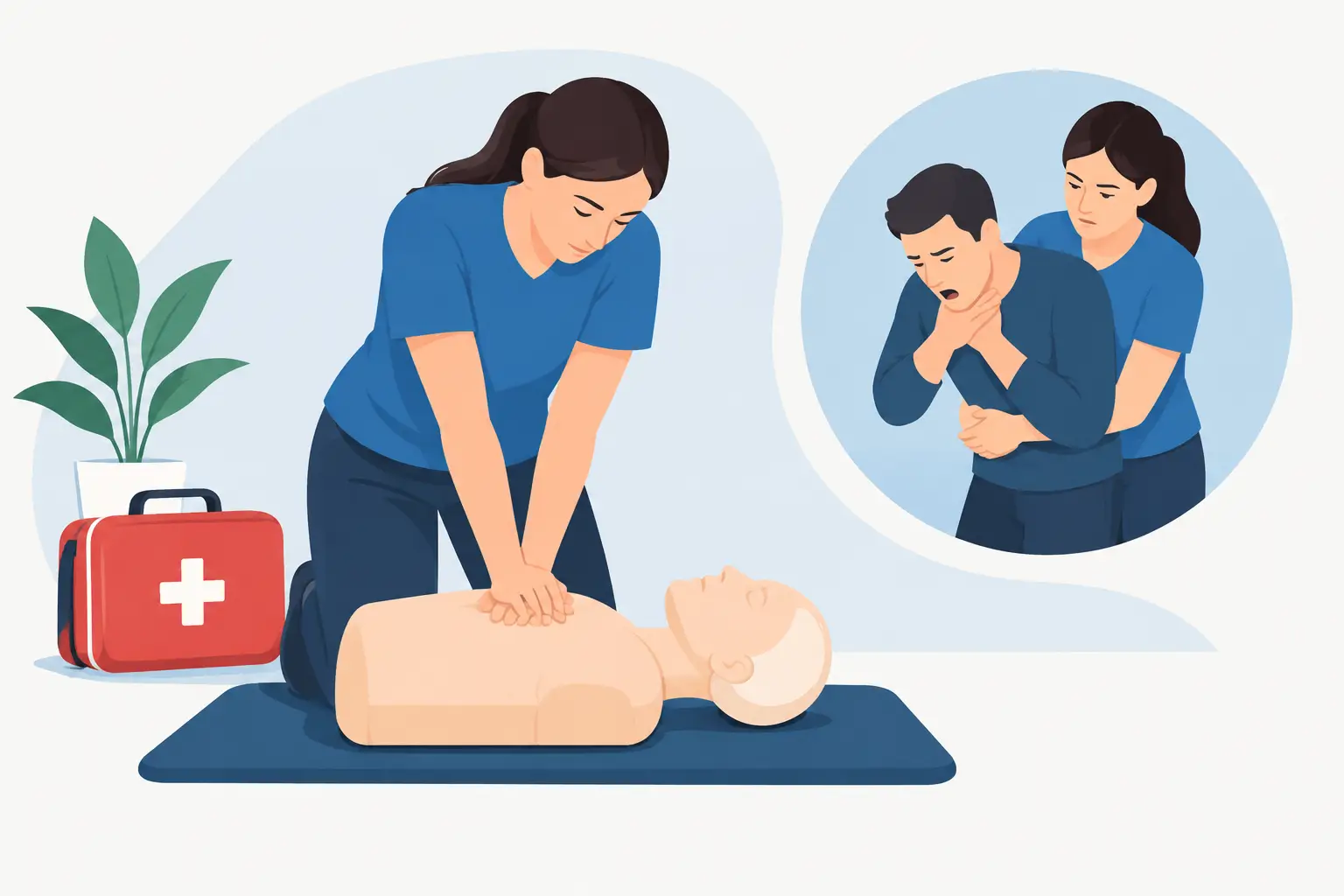
A person who cannot speak, cough, or breathe needs action before an ambulance arrives. That is why people often ask, does CPR training include choking response skills? In most recognized first aid and CPR courses, the answer is yes. However, the exact choking procedures taught, the age groups covered, and the depth of practice depend on the course level and certification provider.
For employment, workplace compliance, or personal preparedness, do not assume that every short CPR class covers the same material. Review the course description before registering, especially if your employer requires a specific certification level.
Does CPR Training Include Choking in Most Courses?
Most comprehensive CPR and first aid courses include how to recognize and respond to choking emergencies. This usually covers a conscious adult or child with a severe airway blockage, an infant who is choking, and the steps to take if the person becomes unresponsive.
Choking response is commonly taught alongside CPR because the two emergencies can overlap. A blocked airway can lead to unconsciousness and cardiac arrest. Training helps participants recognize when someone needs choking first aid, when they need CPR, and when to activate emergency medical services.
A recognized Intermediate First Aid Level C with AED course generally provides broader emergency-response training than a CPR-only session. It is designed to prepare learners for workplace and public emergencies, not only cardiac arrest scenarios. In Ontario, this distinction matters for workers and employers seeking training that meets WSIB-recognized first aid requirements.
What Choking Skills Are Usually Taught?
A practical course should teach more than a single maneuver. Choking response changes based on the person's age, level of consciousness, and ability to cough or speak. Participants should understand the sequence of care and practice the physical skills under an instructor's supervision.
Recognizing a Severe Airway Blockage
Training explains the difference between mild and severe choking. Someone with a mild blockage may still be able to cough forcefully or speak. In that situation, the appropriate response is usually to encourage coughing and closely monitor the person.
A severe blockage is more urgent. The person may be unable to speak, breathe, or cough effectively. They may make little or no sound, clutch their throat, or show signs of distress. Training emphasizes calling 911 or directing another person to call while beginning first aid.
Care for Conscious Adults and Children
For a conscious adult or child with severe choking, learners are typically taught a cycle of back blows and abdominal thrusts. The goal is to dislodge the object while reassessing whether the airway has cleared.
There are exceptions. Abdominal thrusts may not be appropriate for a person who is pregnant or when the rescuer cannot safely reach around the person's abdomen. A certified course teaches the alternative technique and gives learners an opportunity to practice proper body position, force, and hand placement.
Care for Infants
Infant choking response is different. Infants do not receive abdominal thrusts. Training typically covers cycles of back blows and chest thrusts while supporting the infant's head and neck correctly.
This is one reason online-only instruction is not a full substitute for a hands-on certified course. Reading the steps is useful, but practicing on training equipment helps participants understand positioning and control. These details matter when the patient is small and vulnerable.
When the Person Becomes Unresponsive
If a choking person becomes unresponsive, the emergency response changes. The rescuer must carefully lower the person to the ground, call 911 if that has not already happened, and begin CPR.
During CPR, the rescuer looks in the mouth for a visible object before giving breaths. They should remove an object only if it can be clearly seen and easily removed. Blind finger sweeps are not recommended because they can push the obstruction deeper into the airway or cause injury.
CPR-Only Classes vs. First Aid and CPR Certification
The course name can be misleading if you are registering quickly. A short CPR course may teach essential CPR and AED skills, but its choking coverage may be brief. It may also focus on adults rather than adults, children, and infants.
A combined first aid and CPR course usually gives choking more context. It connects airway emergencies with scene safety, emergency activation, recovery position, shock, secondary assessment, and ongoing care until responders arrive. This is often the better choice for employees, supervisors, security staff, parents, and anyone who may need to respond to a range of emergencies.
CPR level also affects what you learn. Level C training generally includes CPR skills for adults, children, and infants, making it a practical option when age-specific choking response is required. Basic life support courses may cover airway obstruction as well, but they are often geared toward healthcare providers and follow a different scope and pace.
The right course depends on the requirement. If an employer asks for Intermediate First Aid with CPR Level C and AED certification, taking a standalone CPR class may not satisfy the requirement, even if it includes choking response. Confirm the exact certificate name before paying for a course.
Why Hands-On Choking Practice Matters
Choking emergencies are time-sensitive and physically demanding. Knowing the words “back blows” and “abdominal thrusts” is not the same as knowing how to carry them out safely.
In-person instruction allows participants to practice the movement sequence, ask questions about special situations, and receive corrections from a qualified instructor. It also helps learners transition from choking care to CPR without hesitation if the person becomes unresponsive.
Blended training can be an efficient option when it includes both required online learning and a scheduled in-person skills session. The online portion can cover theory, recognition, and decision-making. The classroom session confirms that participants can perform key skills correctly and complete the certification requirements.
What to Check Before You Register
Course outlines should clearly state the first aid level, CPR level, AED content, certification provider, and delivery format. If choking skills are a priority, look for wording that confirms airway obstruction or choking response is included.
Before enrolling, verify these four points:
- Whether the course teaches choking response for adults, children, and infants.
- Whether it includes hands-on instruction and skills evaluation.
- Whether the certificate meets your employer, job, or workplace requirement.
- Whether the course includes AED training and the first aid level requested by your employer.
For Ontario workers, a WSIB-recognized course may be necessary when training is being used to meet workplace first aid obligations. Canada First Aid offers Intermediate First Aid Level C with AED certification through a blended format that combines online coursework with in-person instruction. Review the current course details and confirm the certificate requirement with your employer before registering.
Choking Questions That Training Should Answer
A good course gives learners a decision-making framework, not just a memorized routine. Participants should leave able to identify when to encourage coughing, when to call 911, how care differs for an infant, and what to do if the person loses consciousness.
Training should also address common mistakes. Do not give food or water to someone with a suspected airway obstruction. Do not leave the person alone while looking for help if no one else is present. Do not attempt a blind finger sweep. Once an object is expelled, the person may still need medical assessment, particularly if they received abdominal thrusts, had prolonged breathing difficulty, or continue to cough or feel pain.
Certification does not turn someone into a medical professional, but it gives them a structured response when seconds matter. Choose a course that includes realistic choking practice, covers the age groups relevant to your role, and provides the recognized credential you need. The right training lets you respond with purpose instead of trying to remember a procedure under pressure.