WSIB First Aid Requirements in Ontario
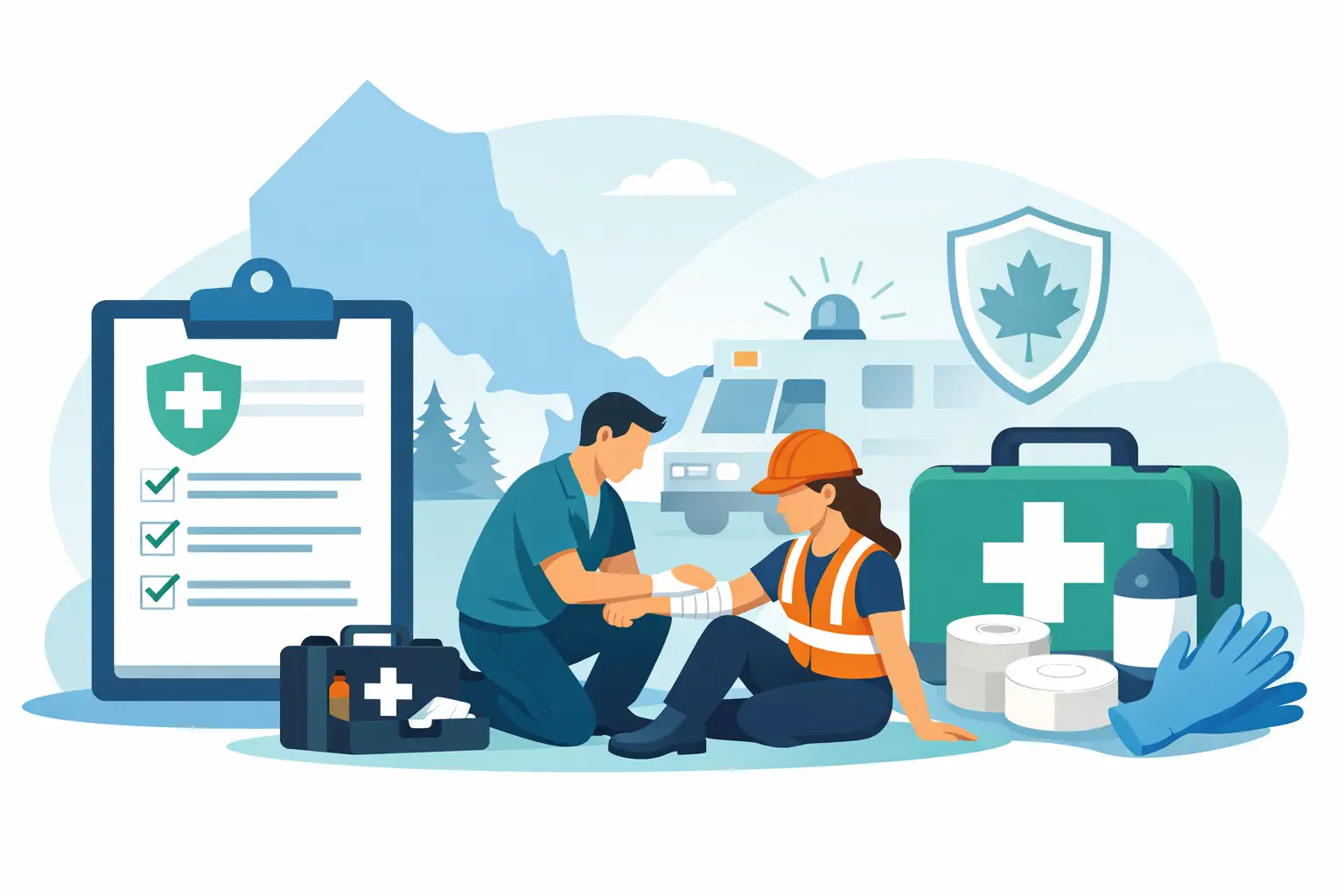
A job posting says first aid certification is required. A supervisor asks whether your site is compliant. An employee gets assigned as the workplace first aider and needs a recognized course fast. That is usually when questions about wsib first aid start - not as a theory issue, but as a practical requirement with real deadlines.
For workers and employers in Ontario, the main concern is straightforward: what training is recognized, who needs it, and how do you get certified without wasting time on the wrong course. The answer depends on your workplace size, hazard level, and job role, but the standard is always the same. Training has to be credible, current, and appropriate for workplace needs.
What wsib first aid usually means
When people refer to wsib first aid, they are usually talking about workplace first aid training that meets Ontario expectations for job sites, employees, and employers. In practice, this is less about using a phrase and more about meeting a legal and operational requirement. A valid course should align with recognized workplace standards and provide certification that employers can rely on when assigning safety responsibilities.
That matters because not every first aid class serves the same purpose. Some courses are designed for general knowledge. Others are built for regulated workplace compliance. If an employer needs documented training for staff, a casual or unrecognized course may not solve the problem.
For most learners, the safest approach is to confirm three things before registering: the course level, whether it is accepted for workplace requirements, and whether the provider issues current certification documentation. If any of those points are unclear, it is worth stopping and checking before you pay.
Who needs WSIB first aid training
The need for first aid certification usually falls into two groups. The first is employers meeting workplace safety obligations. The second is individuals who need recognized credentials for hiring, placement, or ongoing employment.
Employers often need a certain number of trained workers available during operating hours. That can include office staff, warehouse workers, construction personnel, manufacturing teams, retail supervisors, and private security staff. The required level may vary by environment. A lower-risk workplace may not need the same training depth as a higher-risk site, but both still need trained personnel and proper first aid readiness.
Individuals often need certification because a job posting requires it or because an employer has asked for an updated card before a start date. This is common in security, childcare support roles, fitness settings, transportation, education support, and general workplace positions where emergency response readiness is expected.
If you are not sure whether you need basic or intermediate training, do not guess. The wrong level can delay onboarding or create a compliance issue for the employer.
WSIB first aid and course levels
Course selection is where most confusion happens. People often use the term first aid as if it means one universal course, but it does not. Course levels are different, and the right one depends on the workplace requirement.
Basic-level training may be enough in some lower-risk settings, especially where the role is mainly to provide immediate assistance until emergency services arrive. Intermediate First Aid, especially when paired with CPR Level C and AED, is often the stronger fit for workplaces that want broader emergency response coverage and more complete certification. It gives learners practical skills for adult, child, and infant emergencies, cardiovascular events, breathing issues, bleeding control, and other common workplace incidents.
That is one reason blended Intermediate First Aid Level C with AED has become a practical option for many Ontario learners. It gives employers and workers a recognized pathway without requiring all learning to happen in one classroom block. There is still in-person instruction and skill assessment, but part of the training can be completed online first.
The trade-off is simple. Fully in-person formats may feel more traditional and can work well for learners who prefer everything face to face. Blended formats are usually more efficient for people balancing work schedules, shift demands, or commuting time. Neither option is automatically better in every case. The right choice depends on scheduling needs and the employer's acceptance criteria.
Why blended training works for busy workers
For many adults, the issue is not whether training is necessary. It is how to fit it into an already full week. That is where blended first aid training solves a real problem.
A format that combines 8 hours of online coursework with 8 hours of in-person instruction gives learners more control over the academic portion while preserving the practical, hands-on assessment that first aid certification requires. You still need to demonstrate skills properly. You still need structured instruction. But you are not forced to complete every part in a single classroom schedule.
This is especially useful for job seekers with start dates approaching, shift workers, supervisors who cannot be away from the workplace for multiple full days, and employers trying to certify several staff members without disrupting operations more than necessary.
From a compliance standpoint, blended training only makes sense when the provider delivers recognized instruction and the course outcome matches workplace expectations. Convenience is useful, but only if the credential is valid for the reason you are taking the course.
How to choose a training provider
A first aid course should not be selected on price alone. Cost matters, but legitimacy matters more. If the training is not recognized or the certification is not accepted, the lower price does not help.
Look for a provider that is clear about the course name, certification level, CPR component, AED inclusion, format, and schedule. If the provider is vague about what you receive at the end, that is a problem. The documentation should be easy to understand before registration, not after.
It is also worth checking whether the provider serves your area with actual in-person training access. For people in Toronto and Peel, location is not a minor detail. It affects attendance, punctuality, and whether finishing the course is realistic around work obligations.
Canada First Aid is one example of a provider focused on this practical model, offering blended Intermediate First Aid Level C with AED certification for Ontario learners who need a recognized workplace credential without unnecessary delays.
What employers should confirm before enrolling staff
If you are registering employees, make sure you are matching the course to the actual workplace requirement. That sounds obvious, but it is where many mistakes happen. A manager may assume any first aid card is enough, while the site or contract requires a specific level.
Confirm the number of workers who need training, the required certification level, renewal timing, and whether CPR and AED are included. Also confirm scheduling. Sending staff to training only helps if they can complete both the online and in-person portions on time.
Employers should also think beyond minimum compliance. A workplace may technically meet a requirement with one certified person on shift, but that may not be operationally realistic if the employee is absent, on break, or assigned elsewhere. Having additional trained staff can reduce risk and improve response readiness.
Common mistakes people make with first aid certification
The most common mistake is assuming all first aid certificates are interchangeable. They are not. Another is waiting until the last minute, then choosing the first available class without checking whether it meets the job requirement.
Some learners also overlook renewal timing. A card that is close to expiration may not satisfy an employer looking for active certification through a probation period or contract term. Others register for online-only learning and assume that is enough, only to find out later that practical skill evaluation was still required.
There is also a documentation issue. Keep your certification record accessible. Employers may ask for proof during hiring, onboarding, audits, or site verification. If you complete the course and then misplace the documentation, you create an avoidable delay.
When timing matters most
First aid training often becomes urgent for predictable reasons. A new job starts next week. A contract requires updated credentials. A site inspection is approaching. An existing certificate has expired. In all of those cases, speed matters, but accuracy matters more.
The fastest option is not useful if it results in the wrong certification. A course should solve the requirement clearly: recognized training, correct level, documented completion, and a schedule that allows you to finish without complications.
That is the practical value of wsib first aid training in Ontario. It is not just about checking a box. It is about making sure a worker on site can respond properly, and making sure the certification behind that role stands up when an employer needs proof.
If you need first aid for work, choose the course the way you would handle any safety requirement - verify the standard first, then register with a provider that makes the process clear and efficient.