Intermediate First Aid Course Guide for Ontario
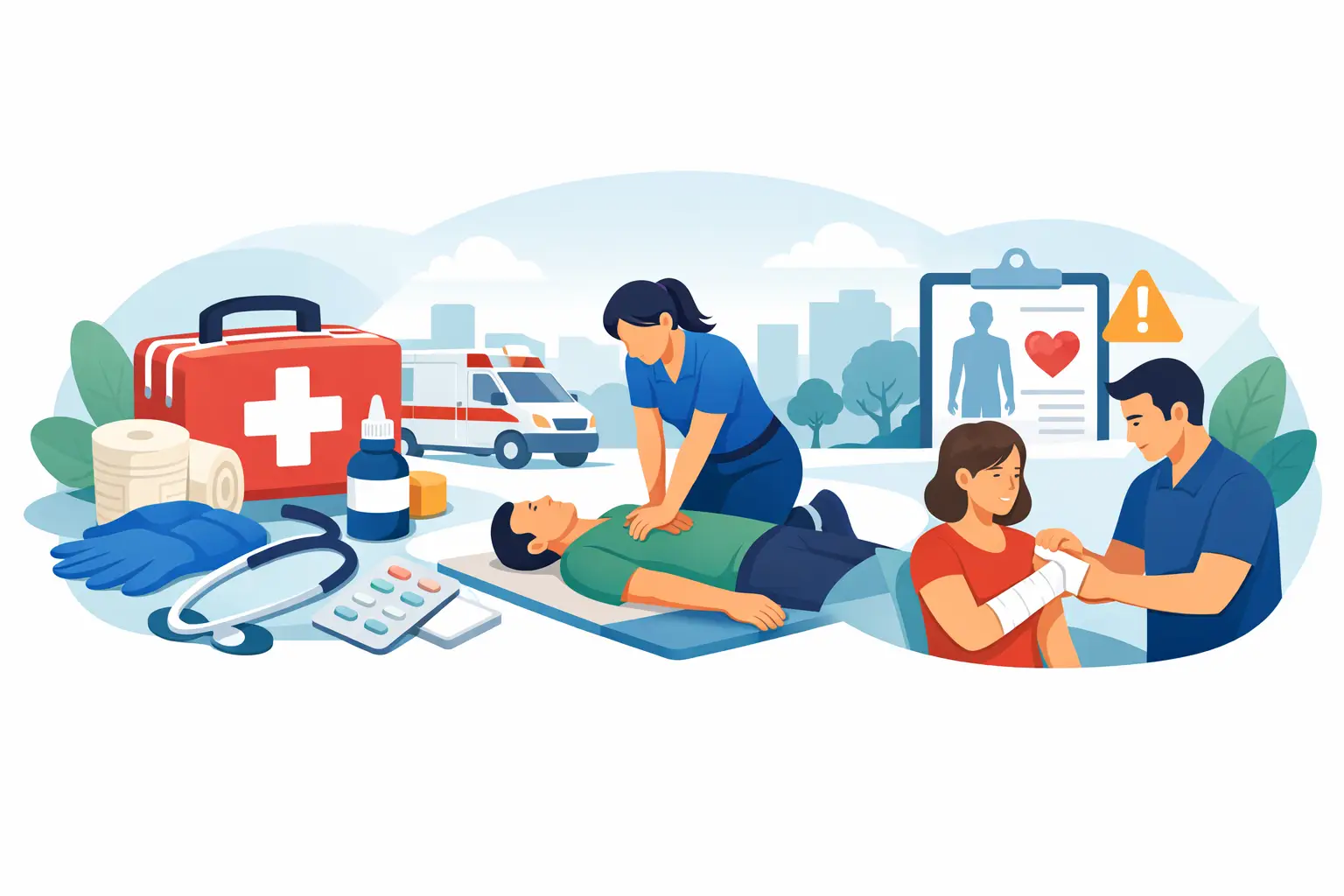
A workplace incident rarely gives people time to search for instructions. Whether a coworker collapses, suffers a serious cut, experiences a seizure, or stops breathing, the first few minutes require calm, practical action. This intermediate first aid course guide explains what the training covers, who needs it, and how to choose a recognized course that meets real workplace and employment requirements.
Intermediate First Aid with CPR/AED certification is designed for people who need more than a basic introduction to emergency response. It combines hands-on skills with the judgment needed to assess a scene, protect yourself and others, call for help, and provide care until emergency responders take over.
What This Intermediate First Aid Course Guide Covers
Intermediate First Aid is commonly required or requested in workplaces where employees may face higher injury risks, work independently, supervise others, or serve as designated first aid attendants. Security personnel, supervisors, warehouse staff, construction workers, child care workers, community staff, and job seekers may all benefit from this credential.
The course is also a practical choice for adults who want formal training for home, travel, sports, or volunteer responsibilities. The certificate matters for employment, but the value of the course is the ability to recognize a serious emergency and respond without making the situation worse.
In Ontario, employers should confirm the specific first aid requirements that apply to their workplace and role. A course may be recognized for workplace purposes, but the right certification level can still depend on the work setting, number of workers, schedule, and hazards present. If an employer has named a required course, follow that requirement before registering.
Intermediate First Aid vs. Emergency First Aid
Emergency First Aid is generally a shorter course focused on immediate, life-threatening situations. It is appropriate when basic response skills are sufficient for the workplace or role.
Intermediate First Aid provides broader training and more time for practice. Learners address a wider range of medical emergencies and injuries, including bleeding, burns, fractures, head and spinal injuries, sudden medical conditions, poisoning, environmental emergencies, and multiple-casualty situations. The exact curriculum can vary by training standard and certifying organization, so review the course description rather than assuming every program covers the same material.
For many Ontario workplaces, the difference is operational. A person with intermediate-level training is better prepared to manage an incident while waiting for paramedics, document what happened, communicate with emergency services, and use available first aid equipment appropriately.
What Level C and AED Training Add
CPR Level C prepares learners to provide CPR for adults, children, and infants. That scope is relevant when a workplace serves the public, employs workers of different ages, or requires a broadly applicable CPR credential.
AED training teaches participants how to safely use an automated external defibrillator in a cardiac arrest emergency. An AED does not replace CPR. It works alongside early recognition, emergency activation, and chest compressions. Training gives participants the chance to understand the device prompts, pad placement, safety checks, and the importance of continuing care until emergency responders arrive.
A course that includes Intermediate First Aid, CPR Level C, and AED training is often a practical option for employees and job seekers because it combines the credentials employers commonly ask about into one training path.
How Blended Intermediate First Aid Training Works
Blended delivery divides the course between online learning and in-person skills practice. This format is useful for working adults because the theory portion can be completed before attending a scheduled classroom session.
Canada First Aid delivers Intermediate First Aid Level C with AED certification through eight hours of online coursework and eight hours of in-person instruction. The online component covers core knowledge, including emergency scene management, legal considerations, injury recognition, and the steps behind common first aid decisions. The in-person portion is where learners demonstrate the skills that cannot be properly assessed through a screen.
Expect practical work with CPR manikins, AED trainers, bandaging materials, and emergency scenarios. You may be asked to assess a simulated casualty, respond to choking, control severe bleeding, place someone in a recovery position, or work through a multi-step response sequence with a partner.
Blended learning is efficient, but it is not a shortcut. Complete the online material carefully and arrive prepared to participate. The classroom session is typically skills-focused and moves at a set pace. Learners who have reviewed the theory are more able to focus on technique, questions, and instructor feedback.
What to Check Before You Register
Course selection should be based on recognition, scheduling, and the exact credential required. Price matters, but choosing a course that does not meet an employer's standard can mean paying twice and losing time.
Before enrolling, confirm these points:
- The course name matches what your employer, job posting, or workplace policy requires.
- The provider offers a recognized certification suitable for Ontario workplace needs, including WSIB-recognized training where applicable.
- CPR Level C and AED instruction are included if those credentials are required.
- You can complete the online portion before the in-person date.
- The classroom location, start time, identification requirements, and attendance rules work with your schedule.
- You understand the provider's policy for rescheduling, missed sessions, and certificate issuance.
Employers arranging training for a team should also verify whether they need individual certificates, attendance records, training dates, or a refresher schedule for internal compliance files. A certificate is only one part of a functional workplace first aid program. First aid kits, emergency procedures, incident reporting, and clear communication responsibilities should support the trained worker.
Preparing for the In-Person Session
Wear comfortable clothing that allows you to kneel, bend, and work on the floor. CPR practice is physical. Learners may need to perform chest compressions for multiple practice rounds, assist with recovery-position scenarios, and handle equipment under instructor observation.
Bring any required identification and proof that you completed the online modules if the provider requests it. Arrive early enough to sign in and settle before instruction begins. Late arrival can affect participation because first aid training follows a timed schedule and skills must be observed directly.
Do not treat the course as a passive lecture. Ask direct questions about the situations you may encounter at work. A security guard may need clarity on scene safety and communicating with emergency services. A supervisor may want to understand delegation and post-incident procedures. A parent or community volunteer may be most concerned about choking, allergic reactions, or pediatric CPR. A competent instructor can explain how the core response principles apply without overpromising what first aid can accomplish.
Certification, Recertification, and Workplace Records
Certification validity depends on the issuing organization and course standard. Many first aid and CPR certificates are valid for a set period, often up to three years, but employers may require renewal sooner or have their own policy. Check the certificate details after completing the course and set a reminder well before the expiry date.
Do not wait until a certificate has expired if you need it for a job, contract, licensing application, or workplace assignment. Renewal options may differ from initial training, and available dates can fill quickly. Keeping a digital and printed copy of your certificate can also make it easier to provide proof when an employer requests it.
For employers, maintain an organized record of trained personnel, certificate expiry dates, course level, and any designated first aid responsibilities. This reduces last-minute compliance gaps when staff change roles, take leave, or move to another shift.
The Standard Is Practical Competence
A recognized credential gives employers evidence that you completed structured training. It does not mean you will remember every detail forever or that you should act outside your training. Good first aid is controlled, safe, and focused on the priorities in front of you: assess the scene, get help, provide appropriate care, and continue monitoring the person.
Choose a course that meets the credential requirement, gives you meaningful hands-on practice, and fits your schedule without compromising completion. When an emergency occurs, the best outcome starts with a trained person who can take the next correct step.