Who Needs AED Training? Jobs, Risks, and Rules
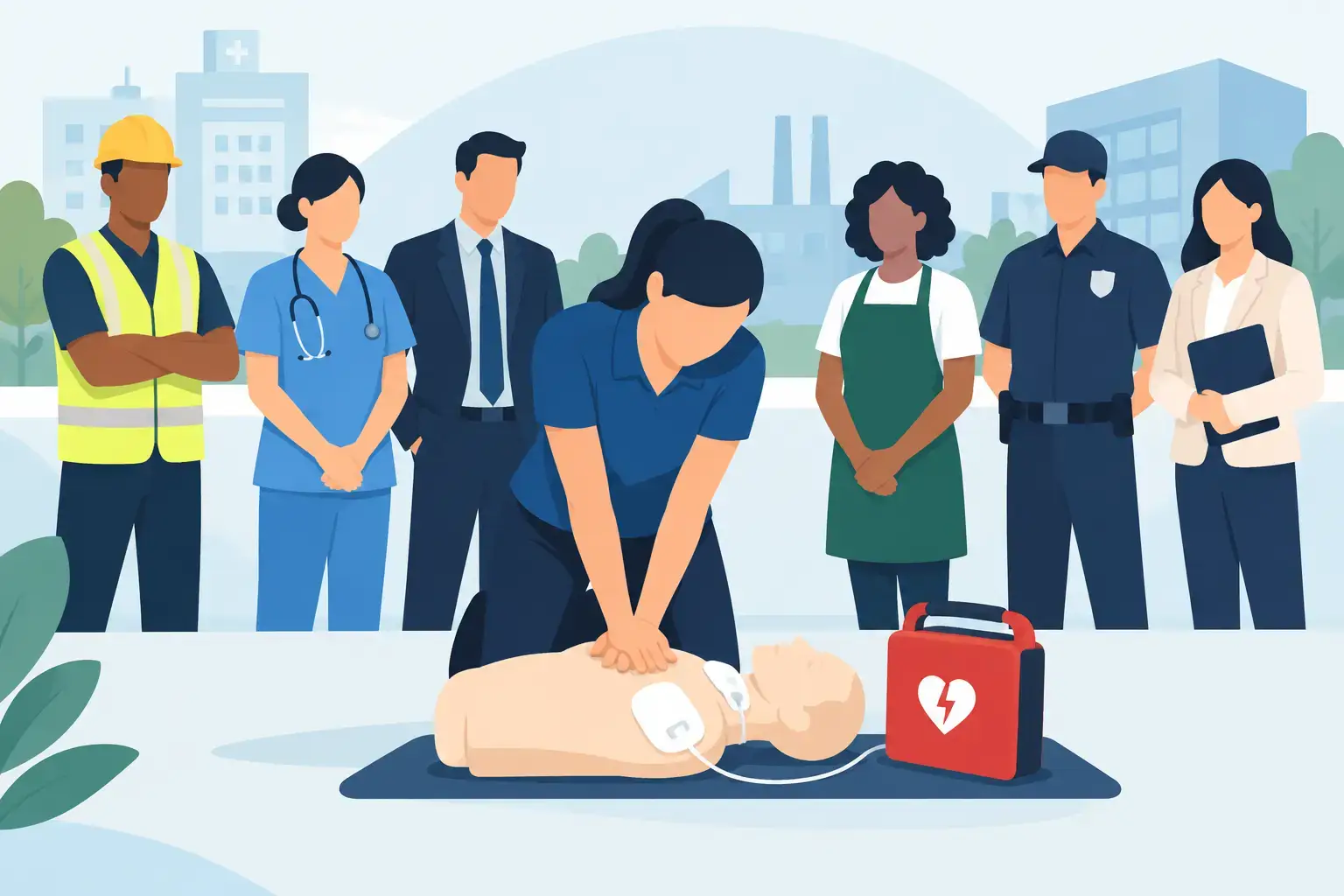
A collapse at work, in a gym, or during a public event does not leave time to search for a qualified responder. That is why the question of who needs AED training is broader than many people expect. Anyone who may be first on scene during a cardiac emergency can benefit, but certain roles, workplaces, and employers have a stronger operational reason to make training a priority.
An automated external defibrillator, or AED, is designed to analyze a heart rhythm and deliver a shock when appropriate. The device gives voice prompts, but it is not a substitute for CPR training, scene assessment, or a calm response under pressure. Formal instruction teaches people how to recognize cardiac arrest, begin high-quality CPR, use the AED safely, and continue care until emergency services arrive.
Who needs AED training at work?
The most direct answer is that employees designated to provide first aid should have current CPR and AED skills that match their workplace responsibilities. In Ontario, employers must consider workplace first aid requirements and ensure workers have the level of training required for the site. AED training may be included within a recognized first aid and CPR course, giving designated responders the practical skills to use equipment that is available in the workplace.
The need is particularly clear where workers are regularly responsible for others, work in public-facing environments, or may be exposed to delayed emergency response times. A certificate alone does not make a workplace prepared. Employers also need an appropriate first aid plan, accessible equipment, clear reporting procedures, and workers who know their assigned role.
Supervisors, managers, and shift leads
Supervisors are often the people employees look to when an emergency begins. They may need to direct someone to call 911, clear the area, locate the AED, meet paramedics, and document the incident after the immediate response. Even when a supervisor is not the designated first aid attendant, AED and CPR training helps them make faster, more informed decisions.
For employers, training supervisors also reduces a common gap in coverage: the trained employee may be on break, off shift, or working in another part of the building. More than one trained responder is usually more practical than relying on a single certificate holder.
Security personnel and building staff
Security guards, concierge staff, facility operators, and building managers are frequently first to arrive when someone collapses. They patrol common areas, respond to calls for assistance, and may be responsible for guiding emergency services through a large property. AED training is highly relevant to these roles because a fast, organized response can make a meaningful difference before paramedics arrive.
Security personnel also benefit from scenario-based practice. A cardiac emergency in a crowded lobby, parking garage, apartment building, or event venue introduces practical issues such as crowd control, access routes, communication, and personal safety. Training should cover the core clinical response while reinforcing those real workplace responsibilities.
Staff in higher-traffic or physically active settings
Employees working in fitness centers, recreation programs, schools, child care environments, hotels, retail locations, restaurants, transportation hubs, and event spaces may encounter a cardiac emergency involving a customer, visitor, student, or coworker. The likelihood varies by setting, but the public-facing nature of these workplaces makes AED readiness sensible.
Physical activity can also increase the need for immediate response planning. A gym or sports facility may have trained athletes and healthy-looking members, but sudden cardiac arrest can affect people without warning. Staff should know the exact AED location, who calls emergency services, and how to bring the device to the scene without delay.
Who needs AED training outside the workplace?
Formal AED training is not limited to employees. Parents, caregivers, coaches, volunteers, and community group leaders may be the closest capable adult during an emergency. They may not have a legal workplace duty to respond, but training gives them practical readiness when seconds matter.
Parents and caregivers can benefit because cardiac events may affect adults in the home or public spaces, while CPR skills also support response to choking and breathing emergencies. Coaches, camp leaders, and youth program volunteers often supervise groups during active events, sometimes away from immediate medical support. For these individuals, a course that includes CPR and AED instruction provides a useful foundation for protecting participants and meeting organization requirements.
People who care for older relatives should also consider training. Age, heart disease, and certain health conditions can increase the risk of cardiac events, but an AED is only effective when someone recognizes the emergency, acts quickly, and follows the device prompts. CPR and AED training builds familiarity before an emergency creates stress and confusion.
When AED certification is required versus recommended
Whether AED training is required depends on the job, employer policy, industry, worksite risk, and the specific certification requested. Some positions clearly state that applicants must hold current CPR and AED certification. This is common in security, education, child care, recreation, health-related support roles, and public-facing service positions.
Other roles may only require first aid certification, with AED instruction included as part of the approved course. Employers should review the exact requirement rather than assuming any CPR card will be accepted. A job posting may call for Emergency First Aid, Standard First Aid, Intermediate First Aid, CPR Level C, or a course with AED certification. These are not interchangeable credentials.
For Ontario employers, a WSIB-recognized course may be necessary to meet workplace first aid obligations. Workers should confirm the certificate level, issuing organization, renewal period, and whether the course meets their employer's stated standard. This prevents a common problem: completing a shorter course that does not satisfy the role or workplace requirement.
What effective AED training should cover
AED training works best when it is taught with CPR, not as an isolated skill. A responder needs to recognize that an unresponsive person is not breathing normally, call for emergency help, start chest compressions, send someone for the AED, and apply the pads correctly. The device then guides the next steps, including when to stand clear and when to resume CPR.
A quality course should include hands-on practice with an AED trainer and realistic CPR scenarios. Participants should practice pad placement, safe operation around water or metal surfaces, communication with other responders, and what to do when the person is a child or has special considerations such as a medication patch or implanted medical device.
The training format matters as well. Online coursework can efficiently cover theory, legal considerations, and emergency response steps. In-person instruction is still essential for practicing compressions, receiving feedback, and demonstrating AED use. A blended format can suit working adults because it allows them to complete knowledge components before attending a focused practical session.
How employers should decide who to train
Employers should not select trainees only by job title. Start by considering who is present across all shifts, who works in separate areas, who interacts with the public, and who can realistically reach an AED quickly. A small office may need a different coverage plan than a warehouse, condominium, school, or retail operation.
Consider these practical questions when assigning training:
- Is there trained coverage during breaks, evenings, weekends, and vacation periods?
- Can responders access the AED without keys, security barriers, or long travel distances?
- Do staff know who calls 911 and who meets emergency services at the entrance?
- Does the selected course meet the employer's required first aid and CPR level?
Training should be renewed before it expires, and workplace procedures should be reviewed whenever staff, floor plans, equipment locations, or operations change. An AED mounted on a wall does not create preparedness if employees do not know it is there or hesitate to use it.
Choosing the right course level
For job seekers and employees, the right course is the one that meets the stated requirement without leaving gaps in practical skills. If an employer requests Intermediate First Aid Level C with AED certification, choose that level rather than assuming a basic CPR course will qualify. If you are training for personal preparedness, CPR and AED instruction may still be the most useful combination because cardiac arrest response depends on both skills.
Canada First Aid offers blended Intermediate First Aid Level C with AED certification, combining online coursework with in-person practical instruction for learners who need recognized workplace credentials. Before registering, confirm the course level, schedule, certification requirements, and any employer-specific expectations.
The best time to learn AED response is before you need it. Choose training that matches your role, practice the skills properly, and make sure the people around you know where the AED is kept.