Online CPR Modules: What Counts for Certification
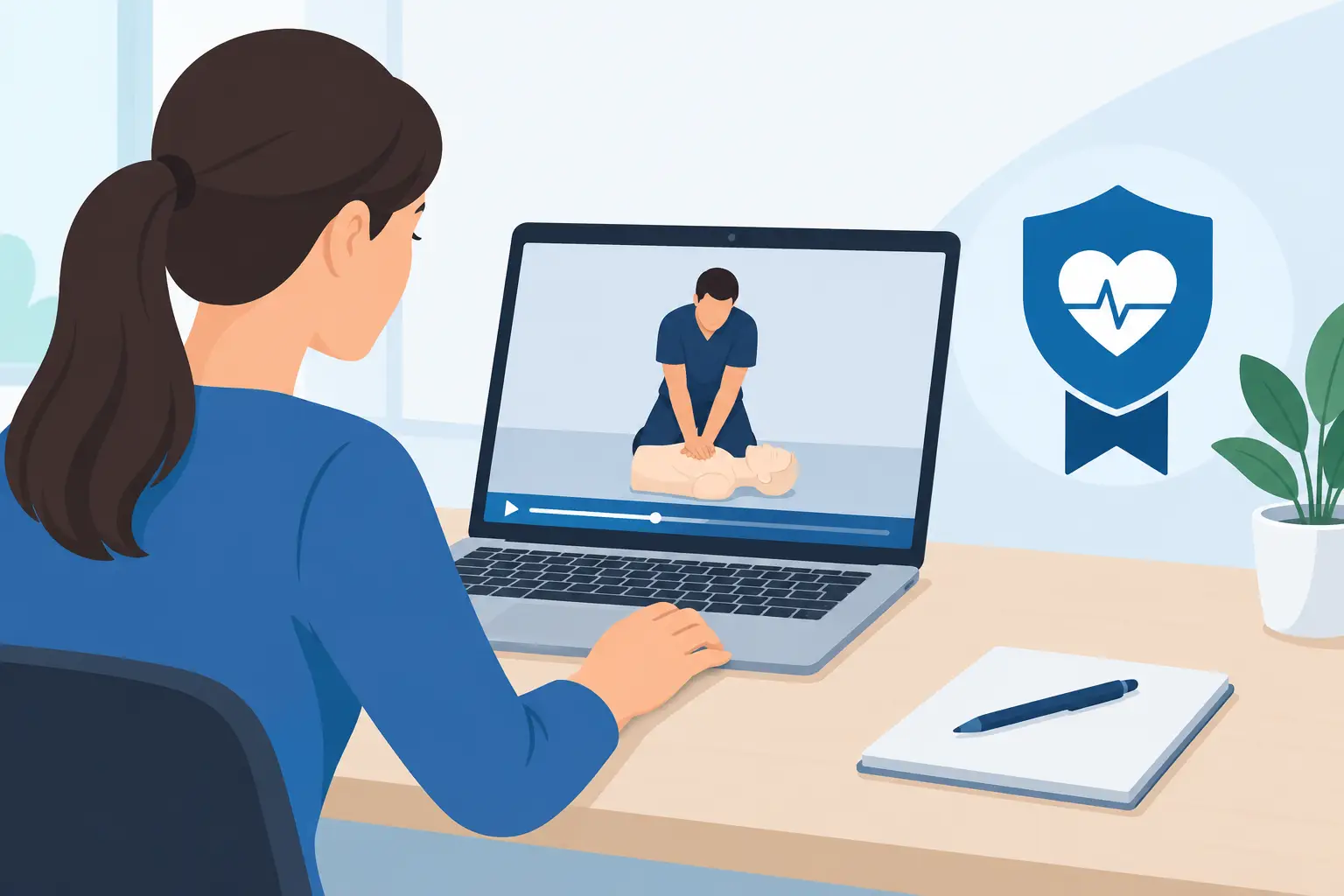
A short online lesson can explain where to place your hands during CPR. It cannot reliably show whether you are compressing deeply enough, maintaining the correct rhythm, or using an AED safely under pressure. That distinction matters when selecting online CPR modules for a job requirement, workplace program, or personal certification.
For many Ontario learners, the right option is not fully online training or fully classroom-based training. It is blended learning: online coursework for the knowledge component, followed by instructor-led practical training and skills evaluation. This format saves time while preserving the hands-on assessment required for recognized first aid and CPR credentials.
What Online CPR Modules Are Designed to Do
Online CPR modules are structured learning units completed through a computer, tablet, or phone. They typically cover emergency scene safety, recognizing cardiac arrest, calling 911, chest compressions, rescue breaths when applicable, AED awareness, choking response, and the legal responsibilities of a first aid responder.
The online portion is useful because learners can work through the material before attending class. Instead of spending an entire training day reviewing definitions and basic response steps, they arrive prepared to practice. For busy employees, job seekers, supervisors, and security personnel, that can make certification easier to fit around work schedules.
A quality module should require active participation. Learners should be expected to review scenarios, answer knowledge checks, and complete the assigned content rather than simply play a video in the background. The goal is to establish a working understanding of the response sequence before practical instruction begins.
However, knowledge is only one part of CPR training. A person may correctly answer a question about compression rate and still struggle to perform effective compressions on a manikin. That is why course format matters as much as course content.
Can Online CPR Modules Provide Recognized Certification?
It depends on the purpose of the certification and the requirements set by an employer, regulator, or workplace safety program. A certificate generated after a fully online CPR course may be useful as awareness training, but it may not meet the standard required for a position that demands an assessed, recognized credential.
For workplace first aid requirements in Ontario, practical skills evaluation is generally a central part of credible training. The learner must demonstrate that they can assess an emergency, provide CPR, use an AED trainer, manage choking, and respond appropriately until emergency services take over. These are physical skills that need instructor observation and correction.
Before registering, ask what your employer actually requires. Confirm the certificate level, whether CPR and AED training must be included, the accepted training standard, and whether an in-person practical component is mandatory. Do not assume that the words “CPR certified” mean every course is accepted for the same purpose.
This is especially relevant for security staff, supervisors, childcare workers, fitness professionals, and employees working in public-facing or higher-risk environments. Employers may need proof that training was completed through an approved format, not just proof that an online quiz was passed.
Why Blended CPR Training Is Often the Practical Choice
Blended training combines independent online study with a scheduled classroom session. It is designed for learners who need a recognized result without unnecessary time away from work or other obligations.
At Canada First Aid, Intermediate First Aid Level C with AED certification is delivered with eight hours of online coursework and eight hours of in-person instruction. The online component covers the theory. The classroom portion focuses on the skills that must be practiced, observed, and assessed.
The in-person session gives learners the opportunity to work with CPR manikins and AED training devices, practice emergency sequences, and receive direct feedback. Small corrections matter. An instructor can identify shallow compressions, incorrect hand position, poor body mechanics, missed scene-safety steps, or hesitation during AED use before those errors occur in a real emergency.
Blended learning also creates a more efficient classroom experience. Since core concepts have already been introduced online, practical time can be used for application. Learners are not starting from zero when they enter the room. They can focus on performing the response correctly and building the confidence to act.
What to Check Before You Enroll
Not all online CPR courses have the same outcome. The course description should clearly state what is included, how long the online component takes, whether practical training is required, and what certificate is issued after successful completion.
Look for clear information in four areas:
- Certification level: Confirm whether the course includes CPR Level C and AED training, or another level your employer specifically requests.
- Practical assessment: Verify that hands-on instruction and skills testing are part of the course when a recognized workplace credential is needed.
- Course duration: Know how much time is required online and in person so you can plan for completion before a job start date or certificate expiry.
- Provider recognition: Check that the training provider and certificate meet the standards relevant to your employer, workplace, or provincial requirement.
Price should be considered, but it should not be the only decision point. A low-cost course that does not meet an employer's requirements can result in a second registration, lost time, and delayed hiring. The better question is whether the course provides the credential you need the first time.
Preparing for the In-Person CPR Session
Complete every assigned module before arriving for practical training. If the online work is incomplete, you may not be eligible to participate in the skills portion or receive certification on schedule. Set aside uninterrupted time rather than trying to finish the material in short gaps during a busy day.
Bring any required identification and follow the provider's instructions about confirmation details, attendance time, and clothing. Wear comfortable clothing that allows you to kneel and move on the floor. CPR practice is physical. You will likely spend time working from a kneeling position, performing repeated chest compressions, and participating in response scenarios.
You do not need prior medical experience. Effective first aid training is built for ordinary people who may become the first person available during an emergency. Ask questions when a step is unclear. The purpose of practical training is not to test whether you already know everything. It is to ensure you can respond correctly when seconds matter.
Online Learning Does Not Remove the Need to Practice
CPR guidance can be remembered in broad terms: call for help, begin compressions, use an AED as soon as one is available, and continue until professional help takes over or the person shows signs of life. Performing those steps calmly and correctly is different from reading them.
Real emergencies are stressful, noisy, and often confusing. A bystander may be uncertain whether a person is breathing normally, reluctant to touch an AED, or unsure how to coordinate with another responder. Practical drills help reduce that hesitation. They turn instructions into actions that can be recalled under pressure.
That is the value of a properly structured blended course. Online modules provide the foundation, while in-person instruction confirms that the learner can apply it. For workers who need accepted certification and for employers responsible for safety compliance, both parts matter.
Choose training based on the credential you need, not the fastest certificate you can download. When the course includes meaningful online preparation and supervised practical assessment, it supports a safer workplace and gives you a clearer path to responding when help is needed.