CPR Level C with AED: What to Expect
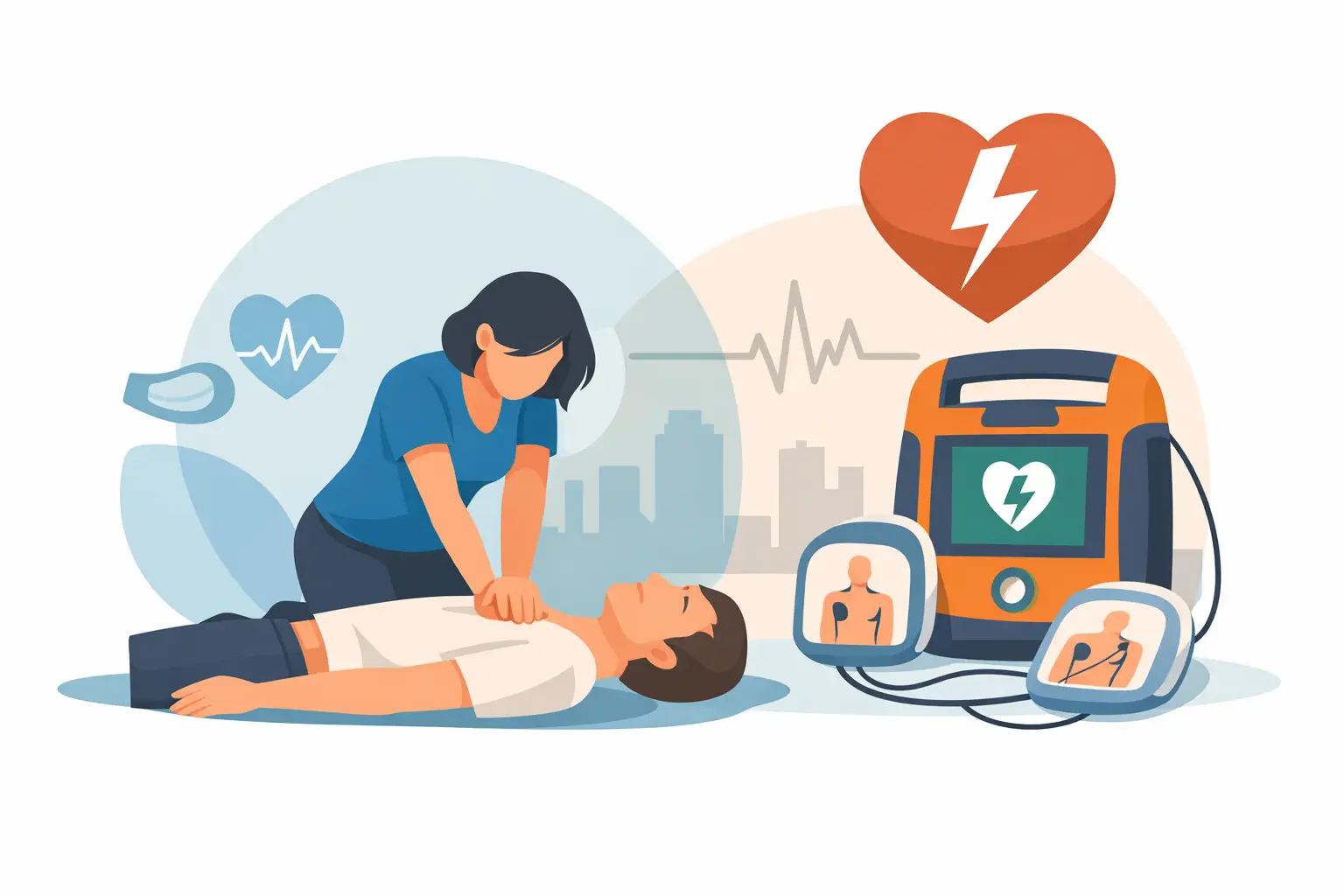
If an employer asks for cpr level c with aed, they are not asking for a basic awareness course. They want a recognized certification that shows you can respond to cardiac and breathing emergencies involving adults, children, and infants, and that you know how to use an automated external defibrillator in a real emergency. For many workers in Ontario, that distinction matters because hiring, workplace compliance, and site readiness often depend on it.
What cpr level c with aed actually includes
CPR Level C is broader than entry-level adult-only CPR. It is designed for people who may need to respond to emergencies involving multiple age groups, which is why it is commonly requested in workplaces, childcare settings, security roles, public-facing jobs, and supervisory positions. When AED training is included, the course also covers how to assess the scene, recognize cardiac arrest, prepare the device, follow voice prompts, and continue care until EMS takes over.
In practical terms, cpr level c with aed training usually covers adult, child, and infant CPR, choking response for all three age groups, and AED application in a structured emergency sequence. Most recognized programs also include barrier device use, responder safety, and the steps for activating emergency medical services. The goal is not just to help you pass a course. The goal is to make sure your response is organized and usable under pressure.
Why employers ask for Level C instead of basic CPR
A job posting that asks for CPR without specifying the level can create confusion. Some candidates assume any CPR card will do. That is not always the case. Level C is often required because it reflects a wider scope of response. If your work puts you around families, staff teams, visitors, students, patients, tenants, or members of the public, an employer may need certification that includes child and infant care, not just adult care.
This is especially common in sectors where the risk is not high enough to require advanced medical training, but the duty to respond is still real. Security personnel, fitness staff, teachers, care workers, camp staff, and many workplace first aid attendants fall into that category. A lower-level CPR certificate may be faster to complete, but it may not satisfy the requirement listed by the employer or safety coordinator.
That is the main trade-off. A narrower course can seem cheaper or quicker, but if it does not match the requested standard, you may end up rebooking and paying again. For most people who need a recognized workplace credential, Level C with AED is the safer choice.
How the course is usually delivered
The most practical training format for working adults is blended learning. Instead of sitting through all theory in a classroom, part of the course is completed online and the hands-on portion is done in person. That structure works well for people balancing work shifts, commuting, or employer deadlines.
A typical blended format includes about 8 hours of online coursework followed by 8 hours of in-person instruction. The online section handles knowledge-based content such as emergency principles, legal considerations, scene assessment, and response steps. The in-person session focuses on skill testing, instructor guidance, manikin practice, AED application, and scenario work.
This format is efficient, but only if the provider runs it properly. The in-person portion still matters because CPR is a physical skill. Compression depth, hand placement, infant techniques, and AED pad placement need to be practiced, corrected, and evaluated. If you only want the fastest possible certificate, a blended course may feel demanding. If you want training that can hold up in a workplace setting, that hands-on component is necessary.
What happens during the in-person training
The classroom portion is usually direct and skill-focused. You should expect demonstrations, coached practice, and formal evaluation. Instructors normally move through the CPR sequence step by step, then test your ability to perform it without prompting. That includes assessing responsiveness, calling for help, starting compressions, giving ventilations where required by the course standard, and using an AED correctly.
Good training is not built around memorizing a script. It is built around repeating the right sequence until it becomes automatic. That matters because emergencies do not happen in quiet training rooms. They happen in lobbies, job sites, schools, warehouses, and public spaces where noise, stress, and bystanders can affect your judgment.
You should also expect standards. If your compressions are too shallow, your timing is off, or your AED sequence is incomplete, you may be corrected and retested. That is not a problem. It is part of legitimate certification.
Who should take cpr level c with aed
This certification fits a wide range of adults, but the reason for taking it usually falls into one of three categories. The first is employment. Many applicants need current CPR certification to qualify for interviews, onboarding, or role-specific licensing. The second is workplace compliance. Existing staff may need renewal to remain assigned to safety-sensitive duties. The third is practical preparedness. Some learners want a recognized credential because they are responsible for others at work or at home.
If you work in security, education, customer service, recreation, transportation, social services, or general workplace supervision, Level C is often the right standard. It is also a common fit for people who want broader coverage than basic adult CPR but do not need the higher medical scope of health care provider courses.
If you are unsure, the best approach is simple. Check the exact wording in your job posting, employer policy, or contract requirement. Terms matter. “CPR,” “CPR C,” “Level C,” and “CPR with AED” are sometimes used loosely by employers, but your certificate still needs to match what they will accept.
Recognition and certification value
Not all CPR cards carry the same practical value. For a course to be useful, it needs to be recognized by employers and suitable for workplace requirements. That is why learners should pay attention to recognition status, provider credibility, and course structure before registering.
A WSIB-recognized training pathway is relevant for many Ontario workplaces because it aligns with accepted standards for job-related certification. That does not mean every learner needs the same course level, but it does mean recognition should be confirmed before payment. A cheap course that fails an employer screening is not a bargain.
This is also where local delivery matters. If your course includes an in-person assessment in Toronto or Peel, scheduling access and location convenience can affect whether you complete certification on time. For people working around rotating shifts or urgent hiring deadlines, a clear blended format with predictable classroom scheduling is usually the most workable option.
How to choose the right provider
When comparing providers, focus on the parts that affect acceptance and completion. Ask whether the certification is recognized, whether AED training is included, whether the course is blended or fully in person, how long the training takes, and how the practical evaluation is conducted. If those details are vague, move on.
You should also look at whether the provider is set up for straightforward registration and local attendance. A course can look acceptable on paper but still create delays if communication is poor or class availability is limited. Canada First Aid is one example of a provider built around this practical model, with blended learning, WSIB-recognized training, and in-person instruction designed for learners in Toronto and Peel who need clear certification outcomes.
Price matters, but only after the course meets the requirement. The lowest-cost option is not useful if the credential is rejected or the training is incomplete. For most adult learners, the best course is the one that gets accepted the first time and fits their schedule without guesswork.
Before you register
Make sure you know whether you need a new certificate or a renewal, whether your employer requires first aid along with CPR, and whether your deadline is tied to hiring or current employment. Many people search for cpr level c with aed when they actually need a broader first aid course that includes it. That is a common issue, especially in roles where Intermediate First Aid or workplace first aid certification is listed alongside CPR.
A few minutes of checking can prevent the wrong booking. Confirm the required course name, the certification period, and whether blended learning is accepted by your employer. Once those points are clear, registration becomes straightforward.
The right CPR course should not leave you guessing about recognition, format, or what your certificate will cover. If the training is clear, recognized, and properly delivered, you finish with more than a card - you leave ready to respond when someone actually needs help.