CPR Recertification Options for Ontario Workers
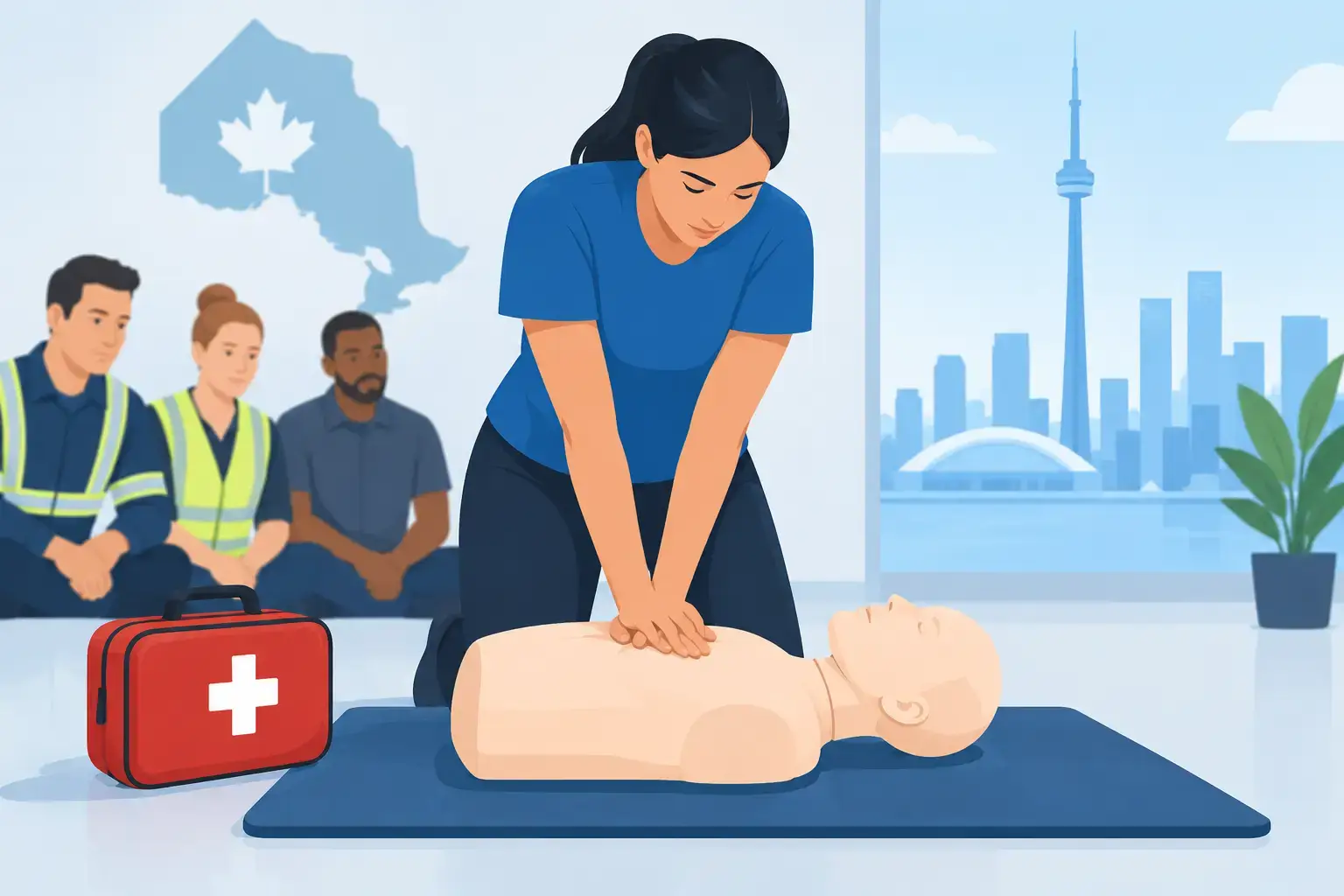
A CPR credential that expires before a job start date, contract renewal, or workplace audit can create an avoidable problem. CPR recertification options are not all the same, and the right choice depends on your current certificate, employer requirement, role, and the level of first aid training you need to maintain.
For Ontario workers, the decision is usually practical: choose a course that meets the required standard, confirm that your prior certification makes you eligible for a renewal course, and complete training before the expiration date. A lower-cost refresher is only useful if it produces the credential your employer or workplace actually accepts.
Start With the Certification Your Role Requires
Before registering, review the exact wording of your employer's requirement. Some positions require CPR only. Others require CPR Level C with AED training, while workplaces with designated first aid attendants may require Intermediate First Aid with CPR Level C and AED certification.
CPR Level C is commonly required for workers who may respond to adults, children, and infants. It covers the skills needed to recognize cardiac arrest, provide high-quality CPR, use an automated external defibrillator (AED), and respond to choking. Security personnel, supervisors, child-care staff, fitness professionals, and many public-facing employees may be asked for this level.
If your employer requires a full first aid credential, a CPR-only class will not be an equivalent replacement. Likewise, a basic CPR renewal may not meet a requirement for Intermediate First Aid. The course name on your new certificate should match the requirement, not merely resemble it.
Common CPR Recertification Options
The most appropriate route depends on whether you need to renew a standalone CPR certificate or a broader workplace first aid credential.
CPR and AED renewal
This option suits people whose employer requires current CPR and AED skills but does not require a full first aid certificate. It is generally a shorter format than a first aid program because it focuses on lifesaving interventions: assessing an unresponsive person, calling for emergency help, delivering CPR, using an AED, and responding to choking.
A CPR and AED renewal may be appropriate for an employee who only needs CPR Level C or for someone keeping skills current for personal preparedness. Confirm whether your employer specifies a particular level of CPR before booking.
First aid with CPR Level C and AED recertification
Workers with broader job duties may need to renew first aid and CPR together. This training includes CPR and AED use, along with assessment and treatment of common emergencies such as severe bleeding, shock, burns, fractures, medical emergencies, and environmental injuries.
For workplace compliance, this is often the more relevant choice. It supports staff who may be expected to provide first aid until emergency medical services arrive, rather than only perform CPR during cardiac arrest.
Blended learning
Blended learning divides the program between online theory and in-person skills instruction. It can reduce the amount of classroom time while protecting the hands-on assessment that CPR training requires.
Canada First Aid delivers Intermediate First Aid Level C with AED certification through a blended format that includes eight hours of online coursework and eight hours of in-person instruction. This structure can work well for employees and employers who need recognized training without scheduling every course hour in a classroom.
The online portion is not a substitute for practical CPR training. Learners still need in-person instruction and evaluation to demonstrate compressions, rescue skills, AED operation, and first aid techniques correctly.
Full in-person training
A traditional classroom course may be the better option when a learner wants more instructor-guided practice, is returning after a long gap, or needs a program that does not offer a valid recertification pathway. It is also useful when an employer has a specific training format requirement.
Full courses typically take longer than recertification courses because they teach the complete curriculum rather than reviewing existing knowledge. That added time can be worthwhile if your prior certificate has expired, your skills feel rusty, or your role has changed.
Check Whether You Qualify for a Renewal Course
Do not assume that every previous certificate qualifies you for recertification. Training organizations set their own renewal rules, and course eligibility can depend on the certificate issuer, training level, expiration date, and number of times a credential has already been renewed.
In many cases, a valid, unexpired certificate is required. If your credential has already expired, you may need to complete the full course instead of a shorter renewal. A certificate from a different provider may also require a full course, even if the title appears similar.
Before selecting a class, confirm these details:
- The exact name and level of your current certificate
- The issue date and expiration date shown on the certificate
- The organization that issued the credential
- Your employer's required first aid and CPR level
- Whether you need AED training included on the new credential
Keep a digital copy of your existing certificate and bring it to class if requested. This avoids registration issues and helps the training provider verify that you are enrolled in the correct program.
Do Not Wait Until the Certificate Expires
Waiting until the final week of validity limits your options. A preferred course date may be full, the in-person component may not fit your work schedule, or you may discover that you need a longer full course rather than a recertification class.
A better approach is to check your certificate several months before it expires. This gives you time to verify your employer's policy, compare available formats, and schedule training around shifts, travel, or family obligations.
Employers should keep a simple certification tracker for staff who are designated first aid attendants or whose roles require CPR. Record the course level, certificate number if applicable, completion date, and expiration date. A scheduled reminder is more reliable than finding out a credential has lapsed during an inspection, client onboarding process, or job application.
Choose Format Based on Compliance, Not Convenience Alone
Online-first aid content can be useful, but CPR is a practical skill. A recognized credential for workplace purposes generally requires a hands-on component where an instructor can assess technique. This is especially relevant for chest compression depth and rate, AED pad placement, response sequence, and safe positioning of a casualty.
Choose a training provider that clearly states the certification level, course format, practical training requirements, and documentation provided after successful completion. If your workplace needs training that meets Ontario safety expectations, ask whether the program is suitable for that purpose before registering.
Price matters, but it should not be the only decision point. A less expensive course that lacks AED instruction, does not include the required first aid level, or is not accepted by your employer may lead to paying for training twice. The most efficient option is the one that meets the requirement the first time.
When a Full Course Is the Better Choice
Recertification is efficient for eligible learners, but it is not always the right route. Take a full course when your certificate is expired, your employer requires a different level, you cannot verify the previous issuer, or you want more time to practice essential skills.
A full course is also a sound choice for someone moving into a new role. For example, an employee who previously held CPR-only training may now be assigned as a workplace first aid attendant. That person needs the broader first aid curriculum, not simply a CPR renewal.
If you have not used your skills since your last class, do not treat recertification as a formality. CPR and first aid performance depends on recall under pressure. Ask questions, practice deliberately, and use the in-person session to correct habits before an emergency tests them.
Register With Your Next Requirement in Mind
The right certification is the one that remains current, matches your job requirement, and prepares you to act when someone needs help. Check your expiration date now, verify the required level with your employer, and book the course format that gives you a valid, practical credential before the deadline becomes urgent.