Emergency Response Skills That Work Under Pressure
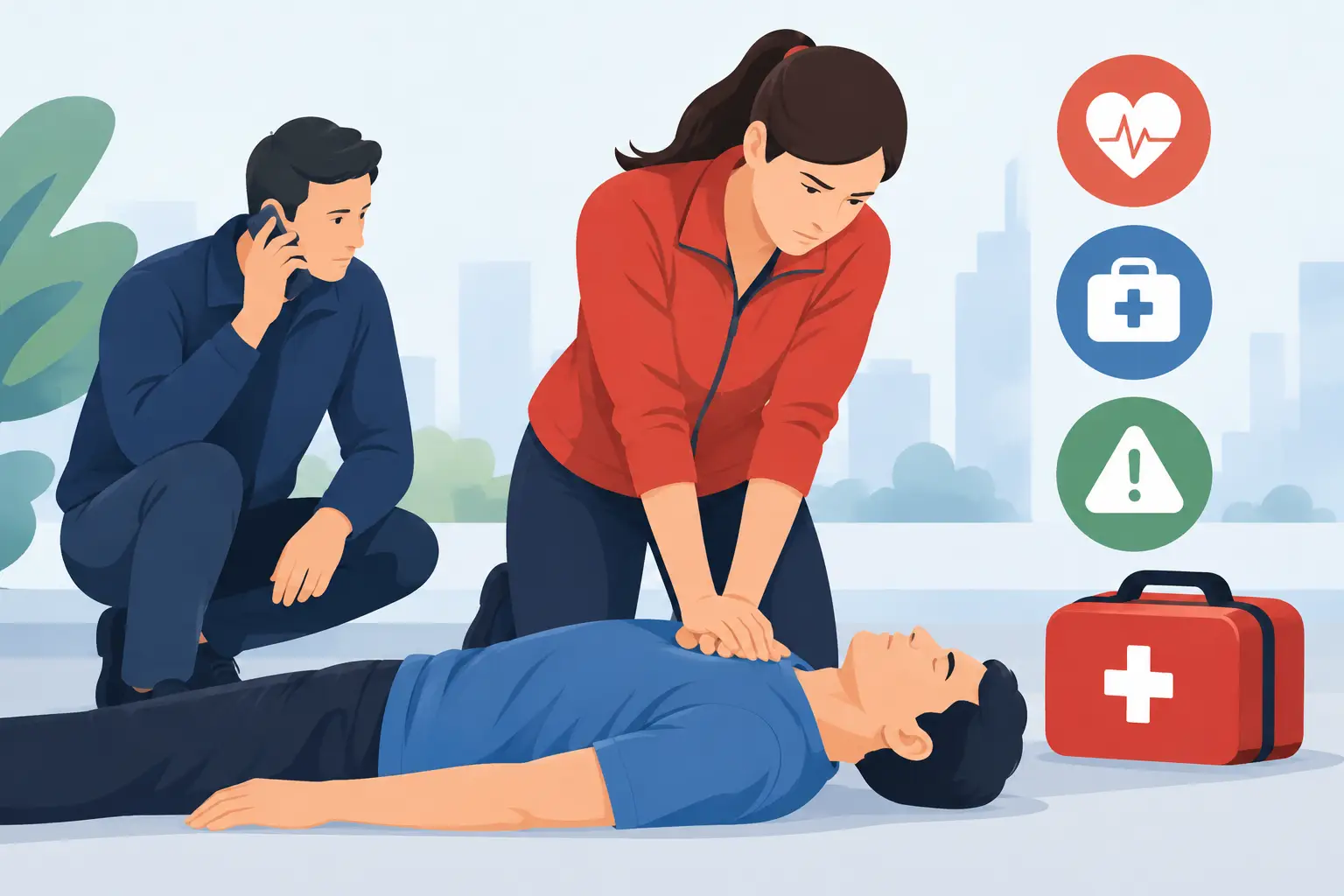
A coworker collapses in a break room. A customer falls near an entrance. A worker cuts an arm on equipment and bleeding does not stop quickly. In these moments, emergency response skills are not about remembering every detail from a manual. They are about recognizing immediate hazards, making sound decisions, and providing appropriate care until emergency services take over.
For employees, supervisors, security personnel, and job seekers, formal first aid training provides a practical framework for responding without hesitation or guesswork. It also supports workplace preparedness when an employer requires recognized certification.
What Emergency Response Skills Actually Include
Emergency response is more than CPR. A capable responder needs to assess the scene, protect themselves and others, identify the most serious problem, call for help, and provide care within their level of training. The order matters. Rushing toward a casualty without checking for traffic, violence, electrical hazards, fire, or unsafe equipment can create another victim.
The first priority is scene safety. Look for hazards, use available personal protective equipment, and ask bystanders to stay clear when necessary. If the setting is unsafe, do not enter it. Call 911 and wait for trained emergency personnel if moving closer puts you or others at risk.
Once the scene is reasonably safe, determine whether the person is responsive and breathing normally. Ask what happened if they can answer. If they cannot respond, or if their breathing is absent or abnormal, activate emergency services immediately and begin the appropriate lifesaving steps. In a workplace, this may also mean directing someone to retrieve the first aid kit and automated external defibrillator, or AED.
Good emergency response skills also include clear communication. A concise 911 call should identify the location, the condition of the casualty, the main hazard or mechanism of injury, and the care being provided. Assigning specific tasks is more effective than asking generally for help. For example, tell one person to call 911, another to bring the AED, and another to meet paramedics at the entrance.
The Skills That Matter Most in a Medical Emergency
The most useful skills are those that address life-threatening conditions first. Training helps responders follow a consistent sequence rather than reacting to the most visible injury or the loudest person in the area.
CPR and AED response
Cardiac arrest requires immediate action. If an unresponsive person is not breathing normally, call 911, start CPR, and use an AED as soon as it is available. Modern AEDs provide voice prompts and are designed to guide a trained responder through the process. The device analyzes the heart rhythm and advises whether a shock is needed.
The critical factor is speed. Early CPR helps maintain blood flow to the brain and vital organs. Early defibrillation can significantly improve the chance of survival when a shockable rhythm is present. Waiting for someone with more confidence to arrive wastes valuable time.
A CPR Level C course is particularly relevant for people who may need to respond to adults, children, and infants. The appropriate technique differs by age and size, which is why hands-on practice is necessary. Watching a video can introduce the process, but it cannot confirm that compressions are deep enough, fast enough, or performed with correct body position.
Severe bleeding and shock
Severe external bleeding can become life-threatening quickly. Direct pressure with a dressing or clean cloth is the first response in many situations. If blood soaks through, add more material without removing the original dressing. Where trained and appropriate, a tourniquet may be used for severe limb bleeding that cannot be controlled with direct pressure.
A casualty may develop shock after significant blood loss, a serious injury, or a medical emergency. Signs can include pale or clammy skin, weakness, anxiety, confusion, nausea, and rapid breathing. Keep the person still, maintain a comfortable body temperature, monitor their condition, and wait for emergency services. Do not give food, drink, or medication unless directed by a medical professional.
Choking, seizures, and sudden illness
Not every emergency involves an injury. A person may choke during a meal, experience a seizure, show signs of a stroke, or have chest discomfort. The correct response depends on what you observe, which is why assessment is as important as physical skills.
For a conscious person with a severe airway obstruction, first aid training teaches a sequence of interventions and when to call emergency services. For a seizure, focus on preventing injury, timing the event, and monitoring breathing afterward. Do not restrain the person or put anything in their mouth. For suspected stroke, note the time symptoms began if known and call 911 without delay. Sudden facial drooping, arm weakness, speech difficulty, severe headache, or confusion require urgent assessment.
Why Training Changes Performance Under Stress
People often assume they will know what to do when an emergency happens. Under pressure, however, memory narrows and simple decisions can feel difficult. Training provides a repeatable process: assess the scene, check the person, call for help, provide care, and continue monitoring.
Practical instruction is particularly valuable because emergency care involves physical actions, not just knowledge. Learners need to practice chest compressions, AED placement, recovery positions, choking response, bandaging, and patient assessment with instructor feedback. This builds muscle memory and corrects errors before they matter.
Blended training can work well for busy adults because it separates knowledge-based material from in-person skill practice. Online coursework allows learners to review core concepts at a manageable pace. The classroom portion confirms practical competence, provides scenario-based instruction, and gives participants the opportunity to ask questions about workplace situations.
Certification is not the same as medical expertise. A first aider should work within the scope of their training, avoid unnecessary movement of an injured person, and transfer care to emergency services as soon as possible. The goal is not to diagnose every condition. It is to recognize danger, provide appropriate immediate care, and prevent the situation from becoming worse.
Emergency Response Skills in the Workplace
Workplaces need more than a certificate on file. They need people who understand how their environment affects an emergency response. An office may face fainting, allergic reactions, cardiac events, and slips or falls. A warehouse, construction area, or security setting may add equipment hazards, aggressive behavior, confined spaces, or trauma risks.
Employers should confirm the level of first aid certification required for their workplace, location, and staffing conditions. In Ontario, WSIB-recognized training may be required to meet workplace first aid obligations. Requirements can vary based on the work setting and number of workers, so a generic course selection is not always enough.
A prepared workplace also makes equipment easy to locate and maintain. Staff should know where first aid kits, AEDs, emergency exits, incident reporting materials, and site-specific emergency contacts are kept. During an actual event, searching for supplies or debating who is responsible creates delay.
For supervisors and designated first aiders, regular review is useful. Walk through likely scenarios: a worker becomes unresponsive, a visitor is injured at reception, or a person collapses in a parking area. Clarify who calls 911, who meets responders, and how access to the site will be managed. These discussions do not need to be complicated, but they should be specific.
Choosing a Course That Supports Real Responsibilities
A first aid course should match the reason you need it. A job applicant may need current CPR and AED certification. A supervisor or workplace first aider may need Intermediate First Aid Level C with AED certification. Security professionals often benefit from training that addresses both medical emergencies and the need to manage a scene calmly until help arrives.
Before registering, confirm four points: the certification level requested by the employer, whether the provider is recognized for the required workplace standard, the course format, and the renewal period. A lower-level course may be less expensive or shorter, but it may not meet a job requirement. Conversely, taking a more extensive course than required can be worthwhile when your role carries greater responsibility.
Canada First Aid offers blended Intermediate First Aid Level C with AED training for learners who need a recognized, practical certification path. The format combines online course content with in-person instruction, helping participants complete required knowledge and demonstrate hands-on skills efficiently.
Emergency response is rarely neat or predictable. The person who makes the biggest difference is usually not the person who knows the most medical terms. It is the person who recognizes the emergency, calls for help early, uses trained skills with control, and stays with the casualty until care is transferred.