Ontario Training Requirements for First Aid
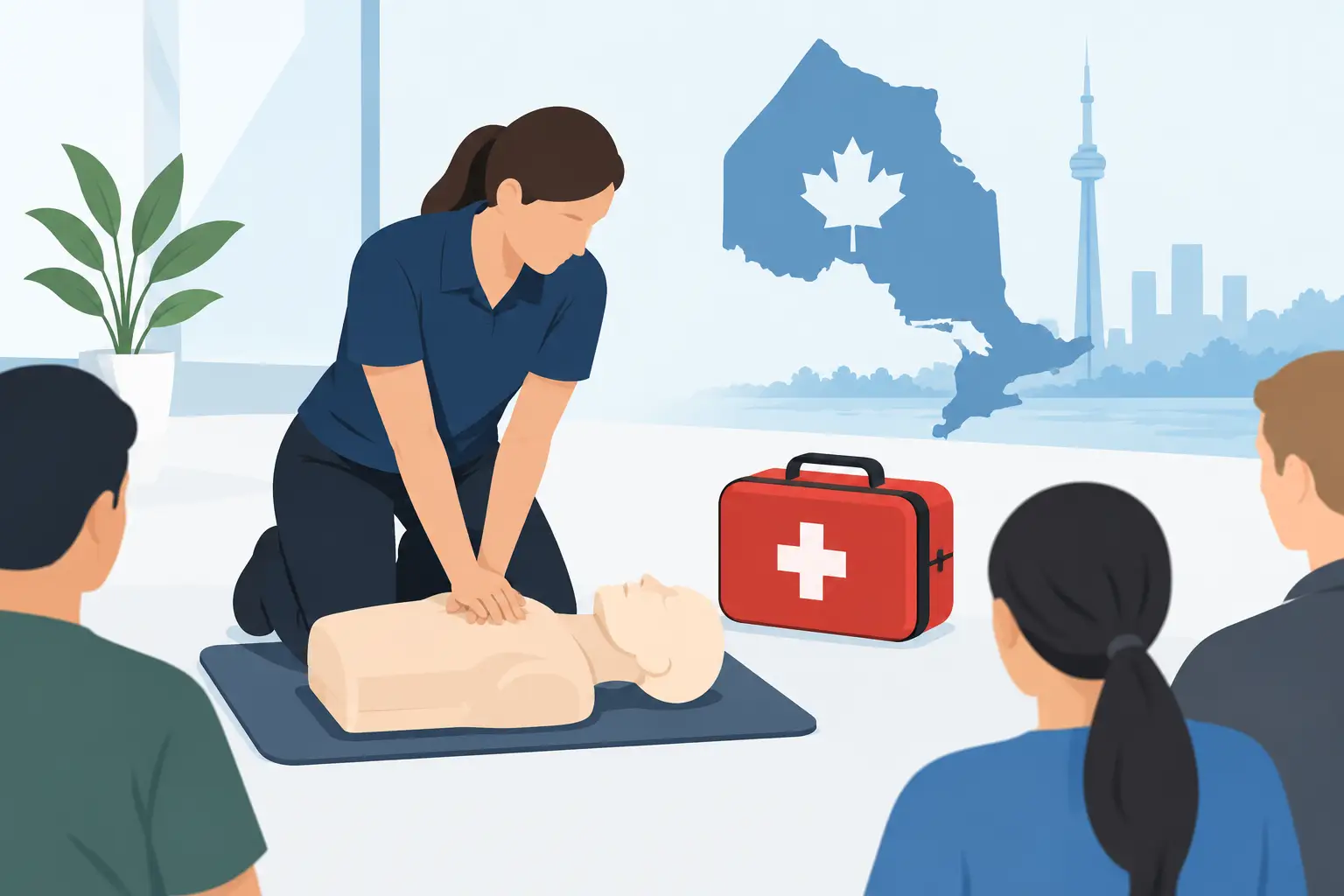
A first aid certificate only helps an employer meet its duty when it matches the workplace, the shift, and the level of risk. Ontario training requirements are not simply a matter of booking the shortest available course. Employers must ensure workers can receive prompt, appropriate care, while employees and job seekers need credentials that their workplace will recognize.
For many Ontario workplaces, Intermediate First Aid with CPR and AED training is the practical standard because it provides a recognized level of emergency response training for workers, supervisors, security personnel, and other designated first aiders. The right course, however, depends on why certification is needed and how the workplace is organized.
Ontario Training Requirements for Workplace First Aid
Ontario employers have first aid obligations under the Workplace Safety and Insurance Act and Regulation 1101, First Aid Requirements. The regulation applies to most workplaces covered by the Workplace Safety and Insurance Board, commonly called WSIB. Its purpose is direct: workers must have access to trained first aid personnel, required supplies, and a way to get emergency help when an injury occurs.
The employer is responsible for maintaining a first aid program. That includes providing an appropriate first aid station, ensuring required notices and records are available, and having trained people present during every working shift. A certificate held by one employee who only works weekdays, for example, does not solve coverage for an evening, overnight, or weekend team.
The required level of first aid training is generally tied to the number of workers on a shift and the workplace's proximity to a hospital or medical facility. Smaller, low-risk workplaces may require a basic level of coverage. Larger workplaces, remote worksites, or operations with greater potential for injury often need a higher level of training, more than one trained worker, or additional equipment.
That distinction matters. A course can be valid without being sufficient for a particular employer's first aid plan. Before registering staff, employers should confirm the number of people working on each shift, the work location, the hazards present, and the level of certification their policy or client contract requires.
Which First Aid Course Do You Need?
Intermediate First Aid is commonly requested for employment and workplace compliance because it covers a broader range of emergency situations than an entry-level course. When combined with CPR Level C and AED training, participants learn how to respond to adult, child, and infant cardiac emergencies, severe bleeding, choking, shock, fractures, medical emergencies, and other urgent situations until professional help arrives.
It is often a suitable choice for supervisors, designated workplace first aiders, security guards, construction personnel, recreation staff, and employees in public-facing roles. It may also be required by an employer even when the minimum legal requirement for a specific worksite is lower. Employers can set standards that exceed the minimum, particularly where the work involves vulnerable people, physical hazards, isolated workers, or public safety responsibilities.
Basic First Aid may be enough in some settings. That does not make Intermediate First Aid unnecessary. The decision depends on the workplace requirement, not a general assumption that one certificate fits every role. Applicants should read the job posting, ask the employer which certification is accepted, and confirm whether CPR and AED training must be included.
CPR Level C and AED Training
CPR Level C is relevant when a role requires the ability to respond to cardiac arrest for people of different ages. AED training teaches participants how to use an automated external defibrillator safely as part of the response. In many workplaces, these components are included with Intermediate First Aid because they address the emergencies most likely to require immediate action before paramedics arrive.
A course title alone is not enough. Check the certificate details. If an employer asks for Intermediate First Aid, CPR Level C, and AED certification, the completed course should clearly provide those components rather than leaving the participant to obtain separate training later.
What a Recognized Course Should Include
For WSIB-covered workplaces, first aid training should align with Ontario workplace standards and be accepted for the intended compliance purpose. Employers should avoid relying on informal instruction, unverified online certificates, or courses that do not include the required practical skills assessment.
A credible workplace program combines knowledge with demonstrated performance. Participants need to practice CPR, choking response, wound care, emergency scene management, and the use of first aid equipment. Reading material or watching videos can prepare a learner, but it cannot fully assess whether that person can perform skills correctly under instruction.
When comparing providers, confirm the certification level, the training organization or recognition status, the course duration, the expiration period shown on the certificate, and whether hands-on instruction is included. If training is being booked for a company, confirm that attendance records and certificates can be provided for the employer's files.
Do not assume a certificate remains valid indefinitely. First aid and CPR credentials have renewal periods, and employers should track expiry dates before trained staff fall out of compliance. Scheduling recertification early also prevents gaps in shift coverage.
How Blended Training Meets Practical Needs
Blended learning can be a practical option for adults who need recognized training without spending two consecutive days in a classroom. In a typical Intermediate First Aid Level C with AED blended format, participants complete 8 hours of online coursework and then attend 8 hours of in-person instruction.
The online portion covers core theory and prepares learners for the classroom session. The in-person component is where participants apply procedures, practice skills with an instructor, and complete required evaluations. Both parts matter. Missing the practical session or failing to complete the online work means the certification process is not complete.
This format works well for employees balancing work schedules and for employers training multiple staff members. It can reduce time away from the workplace while preserving the hands-on learning needed for emergency response. It is not the best choice for every learner, though. Someone who has limited comfort with online coursework, unreliable internet access, or a need for extensive instructor support may prefer a fully classroom-based option.
Canada First Aid offers Intermediate First Aid Level C with AED certification through this 8-hour online and 8-hour in-person structure for learners who need a practical, WSIB-recognized training path.
A Practical Checklist Before You Register
Before choosing a class, verify four points: the exact certificate requested by the employer, whether the course is recognized for the workplace purpose, the required completion deadline, and the location and timing of the in-person session. These checks take only a few minutes and can prevent paying for training that does not meet the job or compliance requirement.
Employers should also plan coverage rather than certifying staff one at a time without a schedule. If only one worker is certified and that person is absent, on vacation, or assigned elsewhere, the workplace may not have adequate first aid coverage. Training enough people across all shifts is usually more reliable than treating certification as a single-person responsibility.
For job seekers, keep a clear copy of the certificate and know its expiration date. A current credential can remove delays during hiring, especially in security, construction, childcare support, facilities, customer service, and supervisory roles where first aid is routinely requested.
The most useful first aid certification is the one that meets the actual requirement and leaves the learner prepared to act. Confirm the standard before enrolling, complete both portions of the course, and treat renewal as part of maintaining a safe workplace rather than an afterthought.