The Best First Aid Courses for Supervisors
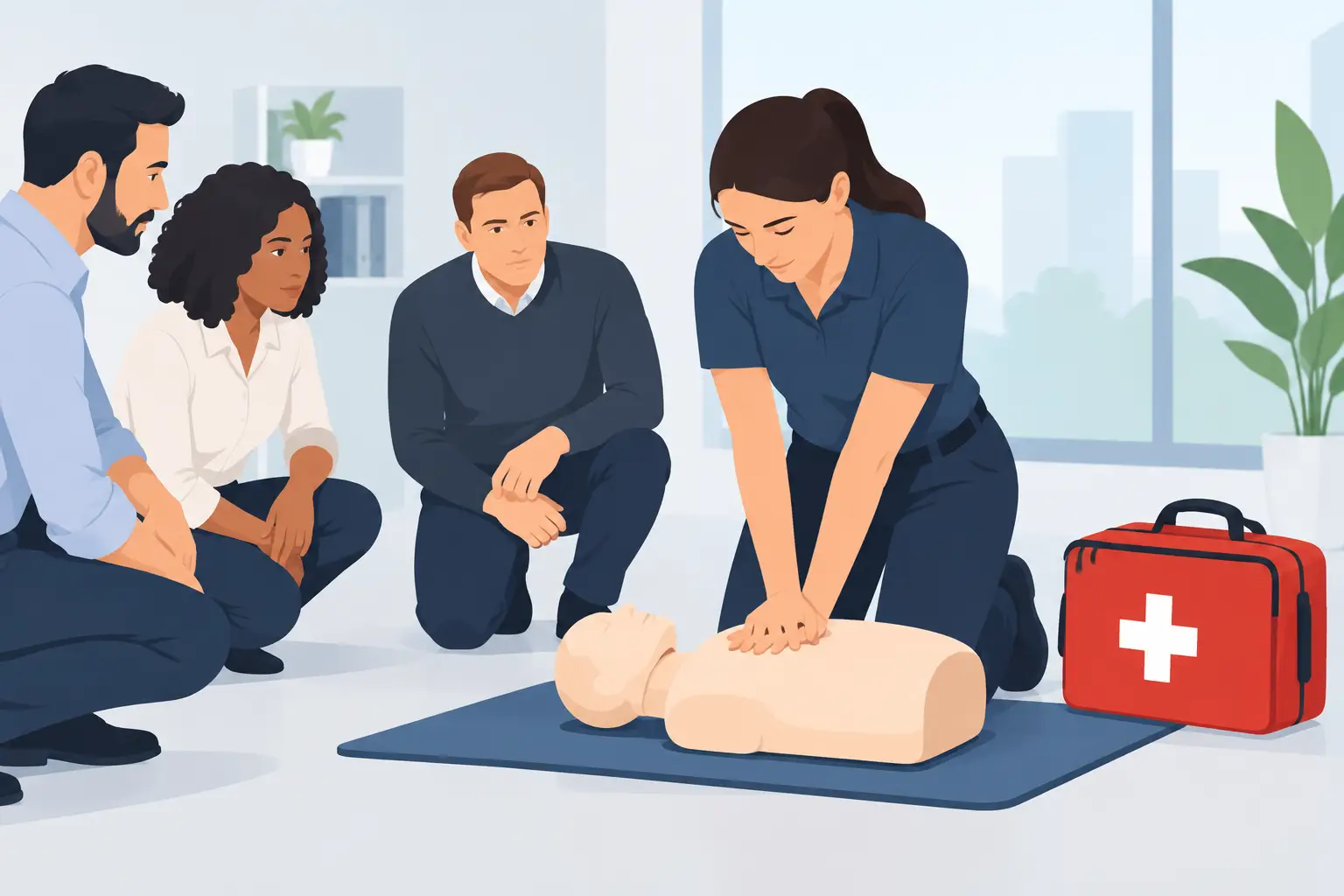
A supervisor may be the first person employees look to when someone collapses, is cut, or shows signs of a medical emergency. That is why the best first aid courses for supervisors do more than provide a certificate. They prepare supervisors to respond calmly, direct others, document what happened, and meet workplace safety expectations.
For many Ontario workplaces, Intermediate First Aid with CPR Level C and AED training is the most practical starting point. It covers a broad range of emergencies, provides recognized workplace credentials, and gives supervisors skills that apply to real incidents rather than only low-risk situations.
What Supervisors Need From First Aid Training
Supervisors have responsibilities that go beyond their own safety. They may need to assess an emergency, assign someone to call 911, locate the first aid kit or AED, manage bystanders, preserve the scene when required, and report the incident through the employer's process. A short awareness session may be useful, but it does not replace recognized first aid certification.
The right course should give a supervisor practical response skills and a credential that fits the workplace. In Ontario, employers should review their legal first aid obligations, workplace hazards, staffing levels, and shift coverage before choosing a course. A course that is appropriate for an office may not be sufficient for a warehouse, security operation, construction site, or workplace with public-facing staff.
A strong supervisor course includes hands-on assessment and practice. Reading about CPR is not the same as performing compressions, using an AED trainer, applying a dressing, or responding to a choking emergency while other workers are waiting for direction.
Best First Aid Courses for Supervisors by Workplace Need
Intermediate First Aid with CPR Level C and AED
For most supervisors, Intermediate First Aid with CPR Level C and AED is the strongest all-around choice. This level is suited to people who need comprehensive workplace first aid training and may be expected to respond to more than minor injuries.
CPR Level C prepares learners to respond to adults, children, and infants. AED instruction teaches the safe use of an automated external defibrillator, an essential skill where sudden cardiac arrest is a foreseeable risk. The first aid component commonly addresses scene assessment, bleeding, shock, fractures, burns, seizures, diabetic emergencies, poisoning, environmental emergencies, and other conditions that supervisors may encounter at work.
This course is particularly appropriate for supervisors in security, manufacturing, logistics, retail, property management, recreation, food service, and workplaces with active operations. It is also a sound choice when an employer wants consistent training across departments rather than different skill levels for different leads.
The trade-off is time. Intermediate training is more substantial than an emergency-level course because it must cover more skills and include meaningful practical evaluation. For supervisors responsible for people, equipment, or higher-risk work, that additional time is usually justified.
Emergency First Aid with CPR and AED
Emergency First Aid is a reasonable option for lower-risk workplaces where the supervisor needs basic emergency response skills and the employer's first aid assessment supports that level of training. It generally focuses on urgent, life-threatening situations, including CPR, AED use, choking, severe bleeding, and basic scene safety.
This option can work well for small offices, low-hazard retail settings, or teams where several people are trained and the supervisor is not the only designated first aider. It may also suit a supervisor who needs an initial credential quickly while the employer develops a broader safety plan.
However, emergency-level training is narrower. If the supervisor may be the main trained responder, works alone or on evenings, manages field staff, or oversees employees exposed to physical hazards, Intermediate First Aid is usually the better fit. Choosing the shortest course simply because it is convenient can leave a gap between the credential and the actual risk.
Specialized or Industry-Specific Add-Ons
Some supervisors need training beyond standard first aid. A construction supervisor may benefit from stronger incident-scene management and trauma awareness. A security supervisor may need to coordinate a response in public spaces until emergency services arrive. A supervisor working with children, older adults, or vulnerable individuals may need training that reflects the emergencies more likely in that setting.
These needs do not always require a separate first aid certification. Often, the practical answer is a recognized Intermediate First Aid course combined with workplace-specific emergency procedures, hazard training, and clear reporting protocols. First aid teaches the immediate response. Your workplace plan should explain who calls for help, where supplies are kept, who meets emergency responders, and how the incident is recorded.
Why CPR Level C and AED Training Matter
A supervisor should not assume that emergency response will be handled by someone else. Cardiac arrest, choking, severe allergic reactions, and serious bleeding can happen in nearly any workplace. The first minutes matter, especially before paramedics arrive.
CPR Level C is valuable because supervisors may work around adults, children, or infants depending on the workplace and public access. AED training matters because an AED gives a clear voice-guided process, but employees still need to know how to retrieve it, prepare the person safely, minimize interruptions to CPR, and follow the device prompts.
Training also improves team coordination. In a real emergency, a supervisor can direct one person to call 911, another to bring the AED and first aid kit, and another to guide emergency responders to the correct location. That is a practical leadership function, not just a first aid skill.
Choose a Course With Recognized Workplace Value
A certificate only helps if an employer, client, or regulator recognizes it. Before registering, confirm the training provider, certification level, practical component, expiration period, and whether the course aligns with your workplace requirements.
For Ontario employers, WSIB-recognized training is a central consideration. Recognition signals that the course is designed to meet established workplace first aid standards. Supervisors seeking training for employment should also confirm whether their employer specifies a particular certification level or provider.
Do not rely on course names alone. “First aid and CPR” can describe programs with very different durations, skill coverage, and assessment standards. Ask direct questions: Is hands-on practice included? Is CPR Level C included? Is AED training included? Is the credential recognized for Ontario workplace requirements? When will the certificate be issued?
Blended Learning Can Be the Right Format
Supervisors often have limited time away from operations. Blended learning can make recognized training more manageable by placing knowledge-based material online and reserving classroom time for practical instruction and evaluation.
A blended Intermediate First Aid course may include eight hours of online coursework followed by eight hours of in-person instruction. The online portion allows learners to complete foundational material at a controlled pace. The in-person session is where they practice assessments, CPR, AED use, bandaging, patient positioning, and scenario-based decision-making with an instructor.
This format is efficient, but it requires commitment. Learners must complete the online work before attending the practical session, and they should not treat it as background reading. Supervisors gain the most from blended learning when they arrive ready to apply the material, ask workplace-specific questions, and participate fully in scenarios.
Canada First Aid provides this blended structure for Intermediate First Aid Level C with AED certification, giving Ontario supervisors a practical route to WSIB-recognized training without removing the hands-on component that effective first aid requires.
How Employers Should Select Training for Supervisors
The best course is not necessarily the most advanced course available. It is the course that matches the hazards, staffing model, and response role of the supervisor. Employers should consider these five factors:
- The workplace risk level, including machinery, public interaction, remote work, physical tasks, and known medical risks.
- The number of employees per shift and whether trained first aiders are always present.
- Whether supervisors work alone, oversee multiple locations, or manage after-hours operations.
- The required certification standard and whether WSIB recognition applies.
- The need for practical skills, including CPR Level C and AED use.
It is also worth planning for renewals when scheduling initial training. A certificate that expires during a busy season can create avoidable compliance issues. Keep a current training record, monitor expiry dates, and schedule recertification early enough to avoid gaps.
Registration Questions to Settle Before Booking
Before a supervisor enrolls, confirm the course date, total training time, location, required pre-course work, certification issued, and any identification or attendance requirements. If the training is for several supervisors, check whether all participants will receive the same credential and whether the course schedule supports operational coverage.
For individual job seekers, the decision is simpler: choose the certification level commonly requested in your field and make sure the provider offers a recognized credential with practical training. For many security, supervisory, and general workplace roles, Intermediate First Aid with CPR Level C and AED provides the broadest practical value.
A well-trained supervisor does not need to become a paramedic. They need to recognize an emergency, take control of the immediate response, use their training within its limits, and get professional help moving quickly. Choose training that supports that responsibility before an incident puts it to the test.