CPR Level C vs Basic CPR: Which Course Fits?
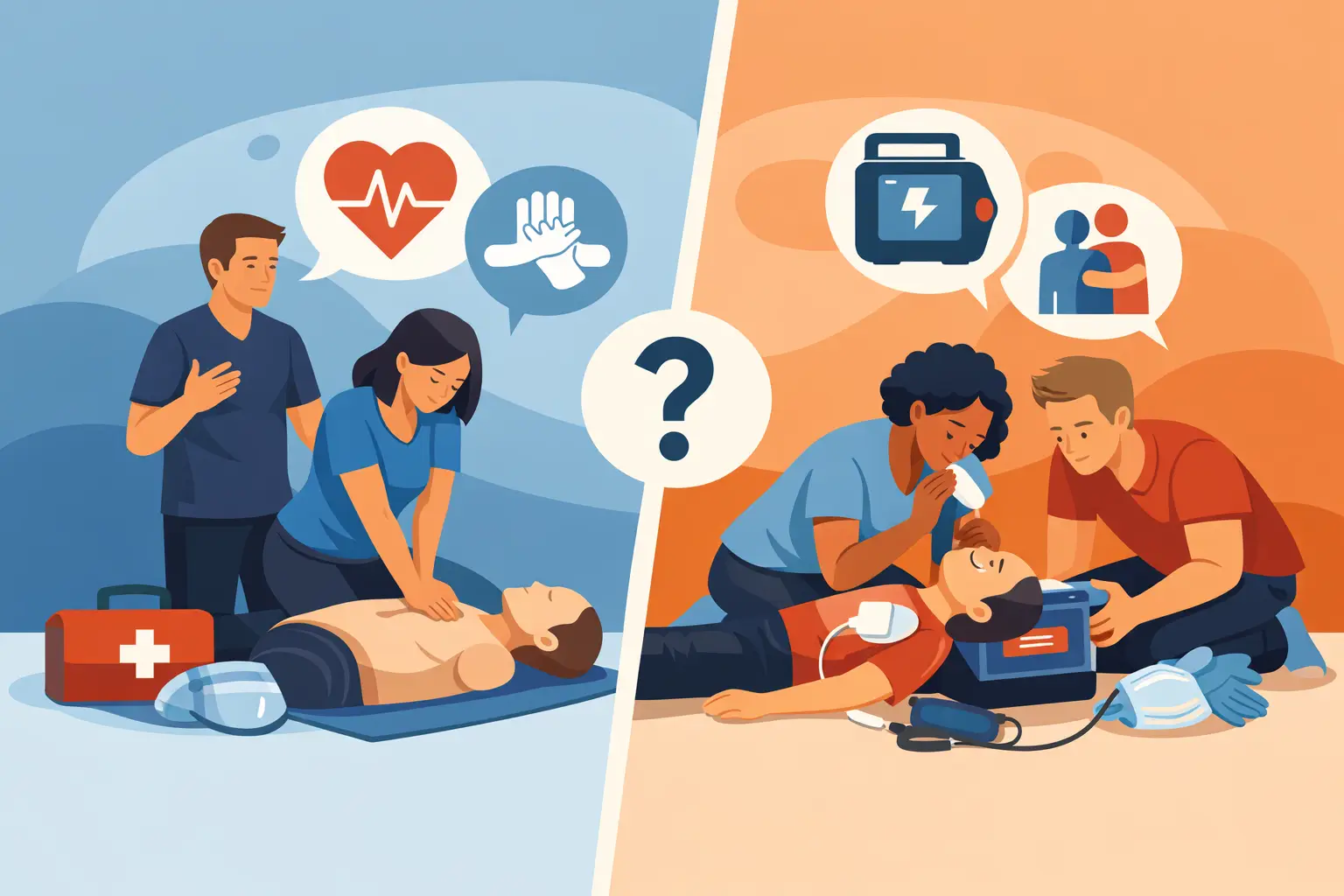
A job posting asks for CPR certification. Your workplace safety plan names a first aid requirement. You want to be ready for an emergency involving a child, coworker, or family member. In each case, the choice between CPR Level C vs basic CPR can affect whether your training actually meets the requirement.
The terms are often used loosely, but they do not always mean the same thing. CPR Level C is a defined Canadian certification level that prepares participants to respond to cardiac and breathing emergencies for adults, children, and infants. “Basic CPR” is a general description. It may refer to an entry-level CPR course, adult-only CPR, or informal CPR instruction, depending on the provider or employer.
For Ontario workers and employers, the correct choice should be based on the required credential, the people you may need to assist, and whether first aid certification is also required.
CPR Level C vs Basic CPR: The Main Difference
CPR Level C is generally the broader CPR certification. It covers CPR and choking response for adults, children, and infants, along with AED use. Training also addresses situations where there is more than one rescuer, which is relevant in workplaces, public settings, schools, security roles, and organized teams.
Basic CPR may cover fewer scenarios. In some cases, it means adult CPR and AED training only. In others, it is simply a non-standard phrase used to describe introductory CPR. That is why a course title alone is not enough. Before registering, confirm the certificate level, the age groups covered, the issuing organization, and the expiry period.
If an employer specifically requests CPR Level C, an adult-only or generic basic CPR course may not be accepted. The same applies when a position requires First Aid and CPR Level C rather than CPR training by itself.
What CPR Level C Typically Covers
A recognized CPR Level C course is designed for people who may need to act quickly before emergency medical services arrive. Participants learn how to recognize a cardiac arrest, activate emergency response procedures, provide CPR, use an automated external defibrillator, and respond to choking.
The key distinction is the age range. Level C includes procedures for adults, children, and infants. This matters because CPR techniques, compression depth, rescue breaths, and choking response vary by age and size.
Course content commonly includes the following practical skills:
- Adult, child, and infant CPR
- Adult, child, and infant choking response
- AED operation and safety procedures
- One-rescuer and team-response procedures
- Scene safety, emergency activation, and recovery position
Training is hands-on. Participants need to demonstrate the required skills, not just review information online. A course that includes an in-person skills session gives learners the opportunity to practice compressions, AED pad placement, and response sequences with an instructor.
What “Basic CPR” May Mean
Basic CPR is not always a formal certification category. A provider may use the phrase for a short introductory course, a public awareness class, or an adult-focused CPR and AED program. The content can be useful, particularly for personal preparedness, but it may not match a workplace credential requirement.
For example, an adult-only CPR course can be appropriate for someone who wants foundational skills for a home, office, or community setting where they are unlikely to supervise children. It may also suit an employer that has confirmed adult CPR and AED certification is sufficient for a specific role.
However, basic CPR can be the wrong choice when the certificate must state CPR Level C, when the role involves children or families, or when the employer requires a first aid credential in addition to CPR. Security personnel, supervisors, camp staff, educators, coaches, and many public-facing workers are often better served by broader training.
The practical rule is straightforward: do not assume “basic” means “acceptable.” Ask for the exact requirement in writing when possible.
CPR-Only Training vs First Aid With CPR Level C
Many people compare CPR Level C and basic CPR without realizing there is a separate decision involved: CPR-only certification versus a full first aid course that includes CPR Level C and AED training.
CPR-only training focuses on cardiac arrest, choking, AED use, and related emergency response skills. It is often a practical option when an employer requests CPR certification only, or when you want a shorter course for personal readiness.
First aid training goes further. It addresses medical emergencies and injuries that are more likely to occur in a workplace or public setting, such as severe bleeding, shock, burns, fractures, allergic reactions, seizures, poisoning, and sudden illness. The appropriate level depends on the workplace assessment, job duties, and provincial requirements.
In Ontario, a CPR certificate on its own does not necessarily meet workplace first aid obligations. Employers should review their workplace needs and confirm the required certification level before enrolling staff. Employees and job seekers should ask whether the posting requires CPR only, Emergency First Aid with CPR, or Intermediate First Aid with CPR Level C.
When CPR Level C Is the Better Choice
CPR Level C is usually the safer choice when you need broad applicability. It prepares you to assist people of any age and is commonly requested for roles where the public, families, children, or vulnerable individuals may be present.
Choose CPR Level C when an employer names it directly, when you work around children, when your role includes public safety responsibilities, or when you want a more versatile CPR credential. It is also a sensible option for parents, caregivers, coaches, and volunteers who want training that applies beyond adult-only situations.
There is a trade-off. A broader course may take more time than a limited adult CPR class. But choosing a narrower certificate and later learning that it does not meet a job or workplace requirement creates a larger problem: another registration, another training day, and a delay in compliance.
When Basic CPR May Be Enough
Basic CPR can be appropriate when the required standard is clearly limited to adult CPR and AED skills. It can also suit someone seeking introductory knowledge rather than a credential for employment.
The deciding factor is not whether the shorter course is easier or less expensive. It is whether the certificate matches the purpose. If you are taking training for a job, do not select a basic course based on the name alone. Confirm that the provider issues a recognized certificate and that the course includes every skill your employer requires.
If you are registering for personal preparedness, consider who you are most likely to assist. A person who lives with or regularly cares for infants or children should not treat adult-only CPR as equivalent to Level C.
How to Choose the Right Course Before You Register
Start with the wording of the requirement. If a job posting, employer, regulator, or volunteer organization specifies a course level, follow that wording exactly. If it says “First Aid and CPR Level C,” make sure the program includes both components and AED training.
Next, verify the certificate issuer and recognition status. For workplace use in Ontario, this step matters as much as the curriculum. Employers should ensure the training aligns with applicable workplace requirements. Participants should keep a copy of their certificate and know its expiry date, since CPR and first aid credentials must be renewed periodically.
Finally, consider the delivery format. Blended programs can reduce classroom time by placing theory online before an instructor-led practical session. This format works well for busy employees and job seekers, provided the course includes the required in-person skill assessment. Canada First Aid offers blended Intermediate First Aid with CPR Level C and AED certification for learners who need a practical, recognized workplace credential.
The Best Choice Is the One That Meets the Requirement
CPR Level C is not automatically necessary for every person, and basic CPR is not automatically inadequate. The correct choice depends on your role, your employer’s requirements, and the people you may need to help.
When the requirement is unclear, choose clarity before convenience. Get the exact course name, confirm the certification standard, and register for training that gives you a credential you can use with confidence when it matters.