CPR Level C versus CPR HCP Certification Compared
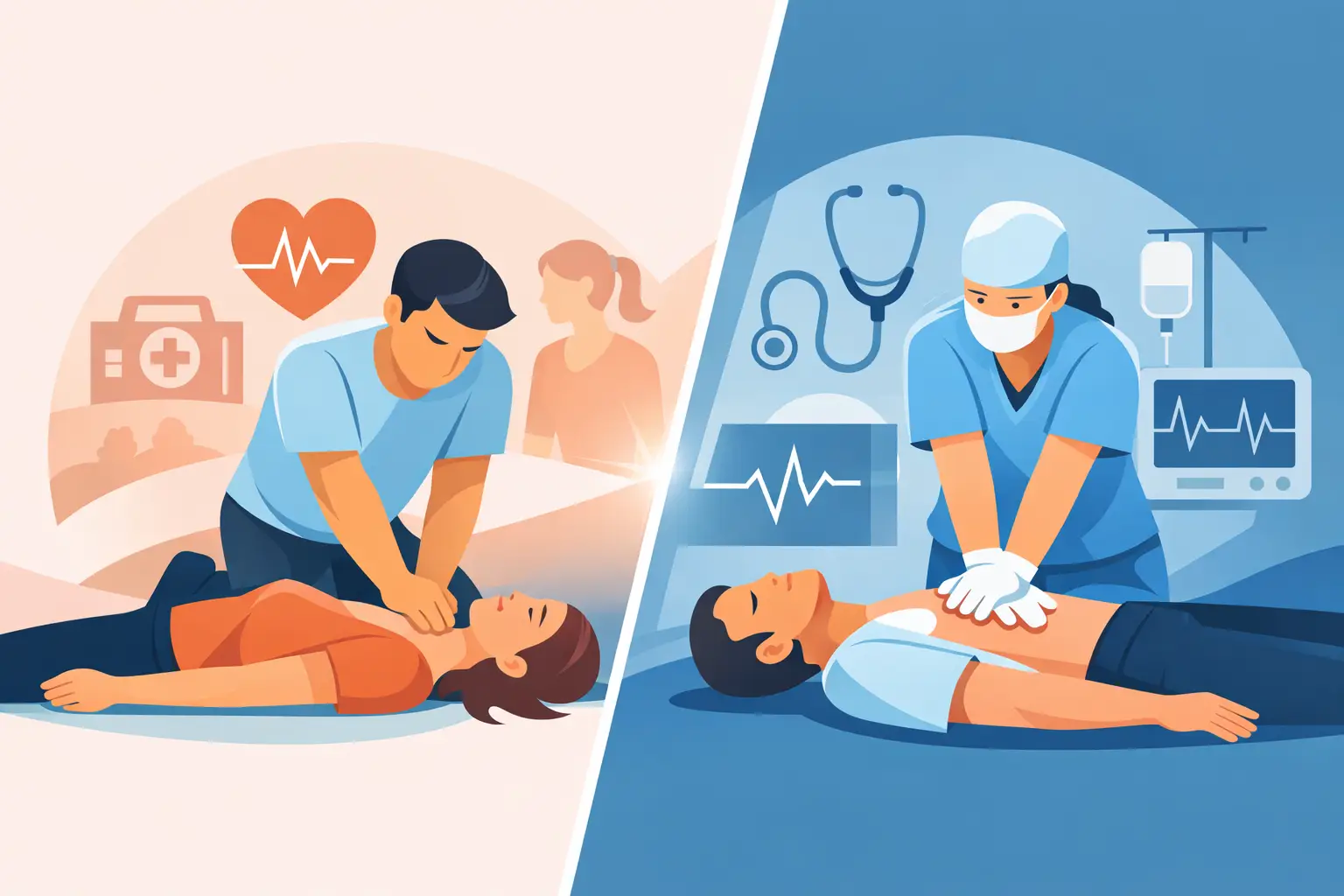
A job posting may simply say “CPR required,” but that wording leaves room for an expensive mistake. CPR Level C versus CPR HCP is not a choice based on which course sounds more advanced. The right course is the one that matches your employer’s stated standard, your role, and the type of emergencies you may reasonably be expected to manage.
For most Ontario workplaces, security roles, supervisors, and members of the public, CPR Level C is the practical credential. CPR HCP is designed for people working in clinical settings who need a higher level of resuscitation practice, including skills used as part of a professional health care team.
CPR Level C versus CPR HCP: the main difference
CPR Level C teaches CPR and AED use for adults, children, and infants. It prepares a lay responder to recognize cardiac arrest, start high-quality chest compressions, use an automated external defibrillator, and provide care until emergency services take over. Depending on the course, learners may also cover choking response and two-rescuer CPR scenarios.
CPR HCP, often called CPR for Health Care Providers, is intended for clinical personnel or students entering health care programs. It covers the same core age groups but places greater emphasis on team-based resuscitation and health care response procedures. Training may include use of a bag-valve mask, more detailed two-rescuer coordination, and skills performed in a professional care environment.
The key distinction is context. Level C prepares someone to act safely and effectively as a trained first responder in a workplace or public setting. HCP prepares someone who may be expected to participate in a clinical resuscitation team.
Course names and exact skill lists can vary by training organization and current program standards. Do not assume that every course labeled “HCP,” “BLS,” or “Level C” has identical content. When certification is required for a job, ask the employer which provider and course standard they accept before registering.
What CPR Level C covers
Level C is the broad public and workplace CPR standard because it addresses all three age groups: adult, child, and infant. Learners practice the sequence that matters in a real emergency: checking scene safety, assessing responsiveness and breathing, calling for emergency help, delivering compressions, providing breaths where required, and using an AED as soon as one is available.
The course is appropriate for employees who may be designated first aid responders, as well as people who want the ability to help at home, at work, or in the community. Security guards, teachers, coaches, fitness staff, childcare personnel, supervisors, and many job seekers commonly need this level of training.
Level C should not be confused with a complete workplace first aid course. CPR training focuses on resuscitation and related emergencies. A workplace role may also require first aid instruction covering bleeding, shock, fractures, medical emergencies, and incident response. In Ontario, an employer may require an approved first aid certificate with CPR Level C, not CPR training alone.
For that reason, Canada First Aid offers Intermediate First Aid Level C with AED certification in a blended format. The course combines online learning with in-person skills instruction, giving participants time to complete the knowledge portion before demonstrating hands-on competency with an instructor.
What CPR HCP is designed for
CPR HCP is most relevant when a person’s role involves direct patient care or formal clinical responsibilities. This can include nurses, paramedics, physicians, respiratory therapists, dental professionals, and students whose school or placement specifically requires HCP-level CPR.
In these environments, the responder may not be working alone. They may need to coordinate compressions, ventilation, AED or defibrillator preparation, and patient handoff with other trained staff. HCP training therefore places more attention on efficient role allocation, communication, and ventilation techniques used in professional care.
A bag-valve mask is a common example. It is a clinical ventilation device that requires practice to use properly, especially when two trained rescuers are working together. It is not usually a practical tool for a typical office, retail location, construction site, or public-facing security post.
That added clinical focus does not automatically make HCP the better choice for every worker. If your work does not require it, Level C may be the more appropriate and efficient credential. Higher-level training can also create confusion when an employer needs a specific WSIB-recognized first aid certification rather than a standalone clinical CPR course.
Which course do employers usually require?
Read the job posting, onboarding documents, collective agreement, school requirements, or employer safety policy closely. If the requirement says “Standard First Aid and CPR-C,” “Intermediate First Aid with CPR Level C,” or an equivalent recognized workplace first aid course, register for that exact combination.
If the requirement says “CPR HCP,” “Health Care Provider CPR,” or a named basic life support standard, choose the clinical course specified. Health care schools and employers may have strict rules about accepted providers, issue dates, renewal periods, and whether an online-only certificate is accepted.
When the requirement only says “CPR certification,” get clarification. Ask three direct questions: Is Level C sufficient? Is a full first aid certificate also required? Does the certificate need to be issued by a specific training organization or meet a provincial workplace standard?
Do not register based only on a coworker’s recommendation. Their role may have different compliance requirements. A security employee working alone in a public building, for example, may need workplace first aid with CPR Level C, while a nursing student at the same building may need HCP or BLS training for clinical placement.
Level C or HCP for common roles
For most non-clinical roles, CPR Level C is the expected standard. This includes security personnel, supervisors, office staff, camp staff, teachers, personal trainers, community workers, and employees assigned to a workplace emergency response team. It is also a strong choice for parents, caregivers, and individuals seeking practical family emergency preparedness.
HCP is generally the right choice for workers and students in direct health care settings. That includes roles where professional equipment, patient care protocols, or a clinical response team are part of normal duties. Some dental, medical, and allied health programs may require a particular HCP or BLS course even before a placement begins.
There are exceptions. A hospital administrative worker may only need the workplace certification required by their employer, while a personal support worker may need a course specified by an agency or school. The certificate requirement belongs to the role, not the building or industry label alone.
Consider format, recognition, and hands-on practice
The certificate name is only one part of a sound training decision. For workplace compliance, confirm that the training provider and course meet the recognition standard your employer requires. In-person evaluation matters because CPR is a physical skill. Learners need to demonstrate compression depth and rate, AED operation, positioning, and response sequence under instructor observation.
Blended learning can be a practical option when it includes both online coursework and mandatory in-person skill assessment. It allows participants to complete theory on a flexible schedule while preserving the hands-on component needed to build usable CPR skills. A course that is convenient but does not meet an employer’s recognition requirements will not solve the certification problem.
Also check the course duration, location, issue process, and renewal requirement before enrolling. If you need certification for a start date, placement, or contract renewal, leave enough time for the in-person session and certificate processing. Waiting until the last week can limit available class options.
Make the decision before you register
Choose CPR Level C when you need broad adult, child, and infant CPR and AED skills for a non-clinical workplace or personal preparedness. Choose CPR HCP when your employer, school, licensing body, or clinical role specifically requires health care provider-level resuscitation training.
If your requirement includes Ontario workplace first aid compliance, look beyond CPR alone and confirm whether Intermediate First Aid Level C with AED certification is required. The best course is not the one with the most complex title. It is the recognized credential that fits your responsibilities and leaves you ready to respond when someone needs help.