First Aid Training for Warehouse Staff Explained
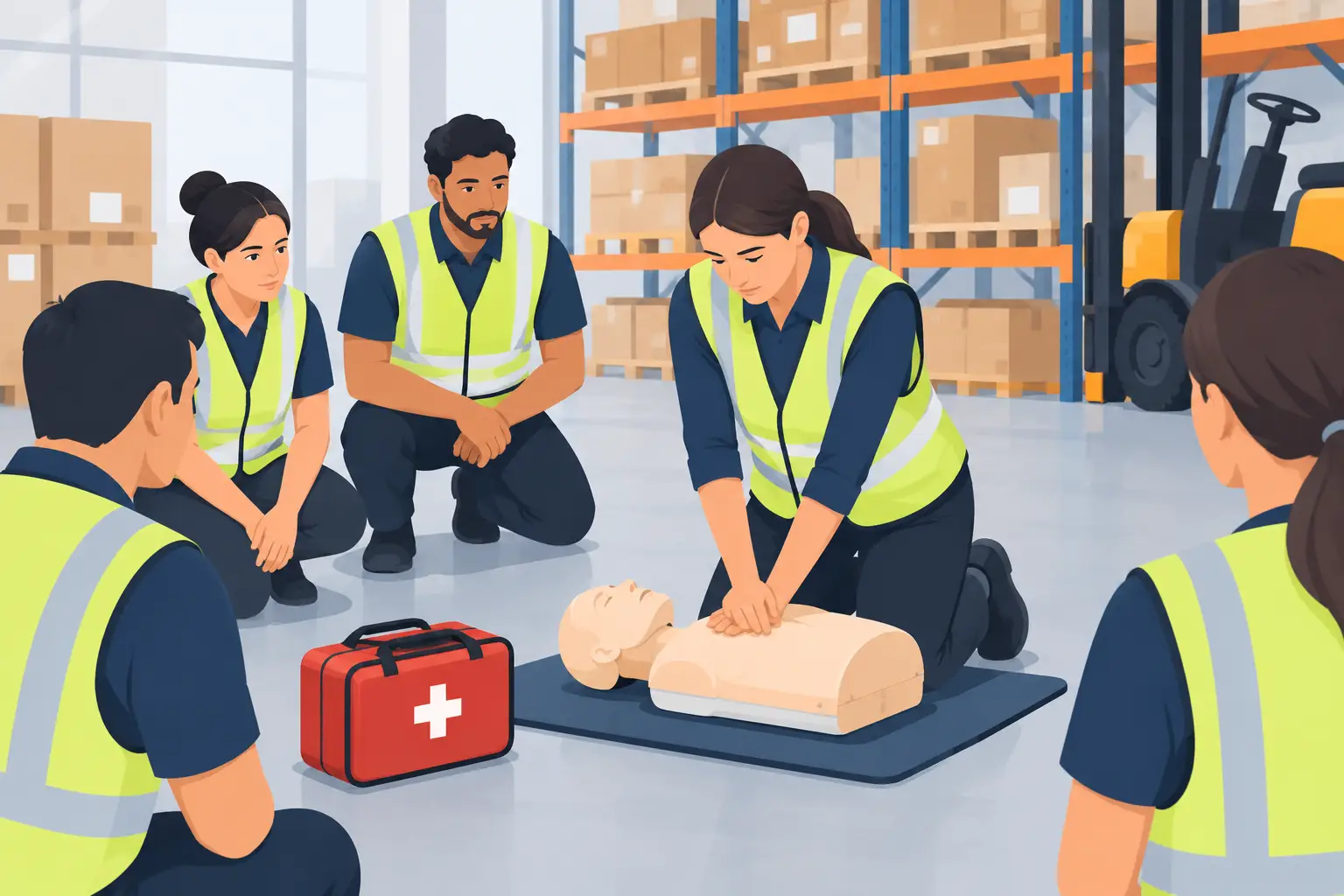
A pallet shifts, a worker falls from a loading dock, or a hand is caught in a conveyor before anyone has time to react. First aid training for warehouse staff gives employees a practical response plan for the first critical minutes after an injury. It is not a substitute for hazard controls, emergency medical services, or a formal workplace safety program. It is the training that helps a team provide appropriate care while those systems do their work.
Warehouse operations move quickly, often with forklifts, powered equipment, racking, loading areas, and manual handling happening in the same space. Supervisors and employers need workers who can recognize an emergency, protect themselves and others from further danger, call for help, and provide care within the limits of their training.
Why Warehouse First Aid Training Matters
Warehouses can have excellent safety procedures and still experience injuries. A worker may suffer a cut from packaging equipment, a strain while lifting, a burn from a battery-related incident, or a medical emergency unrelated to work. The location of the injury also matters. A person who is hurt in a remote loading area or large distribution center may not be immediately visible to a supervisor or coworker.
Effective first aid training creates a common response standard. Staff understand how to assess the scene, use personal protective equipment, identify life-threatening concerns, and communicate clearly with emergency services. That consistency reduces confusion when an incident is stressful and time-sensitive.
For employers, training should support a broader workplace program that includes hazard assessments, incident reporting, emergency equipment inspections, and clear escalation procedures. A certificate alone does not make a warehouse safe. Proper training gives designated responders and other employees the skills to act when prevention measures do not fully prevent an incident.
Common Warehouse Emergencies
The exact risks depend on the operation, shift pattern, equipment, and building layout. However, warehouse first aid responders should be prepared for incidents such as:
- Cuts, punctures, crush injuries, and severe bleeding
- Slips, trips, falls, and suspected fractures
- Back injuries, sprains, and other musculoskeletal injuries
- Burns, including thermal, chemical, or battery-related burns
- Sudden medical emergencies such as cardiac arrest, seizures, diabetic emergencies, or allergic reactions
Training should address the immediate response, but it should also reinforce the decision to call 911 or local emergency services. Staff should never delay emergency care because they are trying to manage an incident beyond their level of training.
What First Aid Training for Warehouse Staff Should Cover
A warehouse-appropriate program needs more than basic bandaging. It should prepare participants to assess an emergency, manage urgent injuries, and transfer care effectively. CPR and AED training are particularly relevant because cardiac emergencies can happen at any workplace, including among employees, contractors, drivers, and visitors.
Intermediate First Aid Level C with AED certification is a practical option for many Ontario workplaces that need a recognized credential and broader hands-on emergency response training. Course content typically includes scene assessment, emergency medical response, CPR, AED use, choking, severe bleeding, shock, fractures, burns, environmental emergencies, and medical conditions that may require immediate care.
The best training also gives learners time to practice. A responder must know where to place AED pads, how to control serious bleeding, and how to communicate with a casualty and emergency services. Reading about those steps is useful, but practical scenarios build the confidence needed to perform them under pressure.
Course requirements can vary based on the workplace, jurisdiction, and results of the employer's first aid needs assessment. Employers should confirm which certification level, number of trained workers, first aid kit contents, and emergency procedures apply to their operation. In Ontario, WSIB-recognized training may be relevant for workplaces that need to meet provincial first aid requirements.
Match Training to the Warehouse Operation
A small warehouse with a limited daytime team does not have the same needs as a multi-shift distribution center with dock workers, forklift operators, and hundreds of employees. Training decisions should reflect the actual operation rather than a generic checklist.
Start by reviewing where injuries could occur and how quickly emergency help can reach each area. Consider loading docks, mezzanines, cold storage rooms, battery charging stations, shipping yards, and isolated work zones. Also consider whether employees work alone, whether contractors are frequently onsite, and whether different shifts have trained responders available.
The number of certified employees matters, but so does coverage. Training six people on the same shift may leave the overnight team without a qualified responder. Employers should plan for vacations, absences, turnover, and shift changes. Designated first aid personnel need to be available when work is being performed, not only when training records are reviewed.
Make the Emergency Plan Usable
First aid training is stronger when it is connected to a simple, documented emergency plan. Workers should know how to report an injury, who contacts emergency services, where first aid supplies and AEDs are located, and who meets paramedics at the entrance.
Large facilities benefit from precise location language. “Near shipping” may not help a dispatcher or responder locate an injured worker in a building with multiple loading bays. A practical plan identifies entrances, dock numbers, aisle zones, and any access issues that could delay emergency crews.
Supervisors should also make clear that employees can report injuries without being pressured to minimize them. Minor incidents can become more serious when care is delayed or when hazards are not corrected after the initial response.
Blended Learning Can Reduce Time Away From Operations
Scheduling is a real concern for warehouses. Taking an entire team off the floor for multiple days may create operational problems, especially during peak shipping periods. Blended first aid training can make certification more manageable by separating knowledge-based learning from hands-on practice.
Canada First Aid offers Intermediate First Aid Level C with AED certification through a blended format that combines eight hours of online coursework with eight hours of in-person instruction. The online portion allows participants to complete foundational learning before attending practical training, while the in-person session focuses on skills that require instructor feedback and evaluation.
This format is not right for every team. Employees still need protected time to complete the online component, and employers need a process for confirming completion before the practical session. However, for many workplaces, it reduces the amount of full-day classroom time while maintaining the hands-on instruction that first aid skills require.
What Supervisors Should Reinforce After Certification
Certification should lead to ongoing readiness, not a binder stored in an office. Supervisors can support trained employees by reviewing emergency procedures during orientation, safety meetings, and shift briefings. Short reminders are useful when they focus on practical information: the nearest first aid kit, AED location, emergency contact process, and any recent change to the warehouse layout.
First aid supplies need regular inspection. A kit that is missing gloves, dressings, or required items creates problems when it is needed most. AEDs also require routine checks according to the manufacturer's instructions, including pad and battery expiry dates.
It is equally important to document incidents properly and investigate the underlying cause. First aid addresses the immediate injury. Corrective action addresses the hazard that caused it, whether that means improving housekeeping, changing a lifting process, repairing equipment, or updating traffic controls.
Choose Training That Supports Real Response
Warehouse teams do not need complicated safety messaging. They need recognized training, practical skills, and a clear plan for what happens after someone is hurt. Select a course that includes CPR and AED skills, gives participants meaningful hands-on practice, and aligns with your workplace's first aid assessment and regulatory obligations.
When workers know how to respond calmly, call for help quickly, and provide care within their training, the first few minutes of an emergency become more organized. That preparation supports safer operations long before an incident occurs.