Workplace First Aid Compliance Guide for Ontario
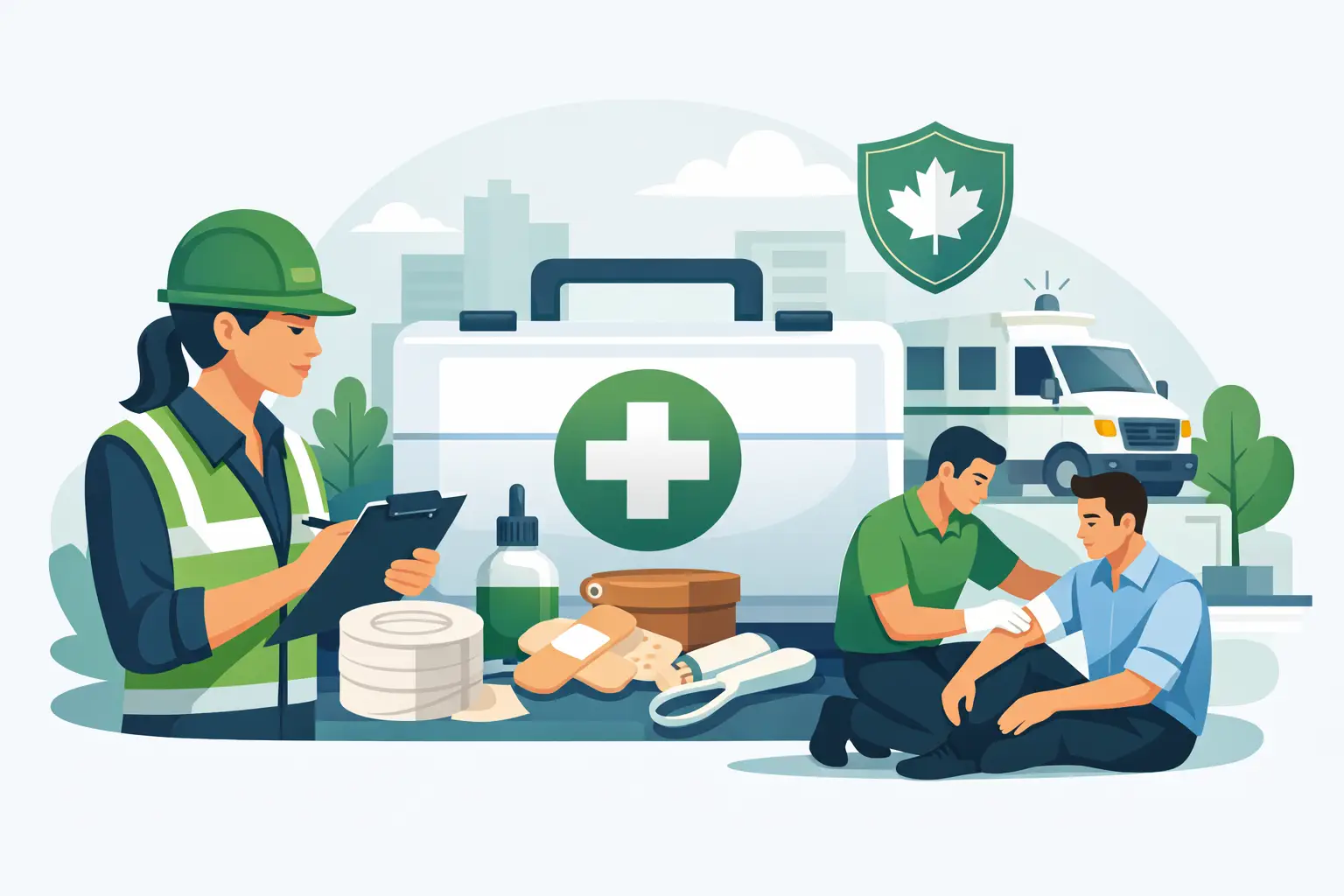
A workplace emergency rarely arrives at a convenient time. It may happen during a busy shift, in a loading area, at a client site, or when the usual supervisor is away. A workplace first aid compliance guide gives employers a practical way to prepare before that moment, with trained staff, accessible equipment, clear records, and a response plan that works under pressure.
For Ontario employers, compliance is not just about placing a first aid kit on a wall. The workplace must have appropriate first aid resources for its risks, enough trained people available across operating hours, and a process for responding to and documenting incidents. The details depend on the work performed, the size of the workforce, and the location.
What first aid compliance means in practice
First aid compliance begins with a realistic assessment of the workplace. A low-risk office with regular daytime hours has different needs from a warehouse, construction project, security operation, manufacturing site, or workplace where staff drive between locations. The goal is not to overbuild a program. It is to ensure the people, equipment, and procedures match foreseeable hazards.
Employers should confirm the current first aid requirements that apply to their operation, including provincial workplace rules and WSIB expectations where relevant. Requirements can change, and some industries or sites may have additional client, contract, or licensing obligations. A certificate alone does not make a workplace compliant if no trained person is present when an emergency occurs.
Match training to the work being done
The right training level depends on the hazards employees may encounter. Common workplace risks include slips and falls, cuts, burns, electrical exposure, violence, heat illness, medical emergencies, and vehicle-related incidents. Staff who work alone, work overnight, travel between sites, or supervise the public may require additional planning because help may not be immediately available.
For many Ontario workplaces, Intermediate First Aid Level C with AED certification is a practical standard for designated responders. It prepares participants to assess emergencies, provide CPR, use an automated external defibrillator, control bleeding, manage common injuries, and coordinate the next steps until emergency services arrive.
Training should be current, recognized for the employer's requirements, and appropriate to the role. If a contract specifies a particular credential, confirm that requirement before registration. Employers should also avoid relying on informal experience or expired certificates. In an incident, the organization needs designated personnel with valid training and a clear understanding of their responsibilities.
Plan for every shift, not just headcount
A frequent compliance gap is counting trained employees without checking whether they are actually available. One certified employee may be enough for a small, consistently staffed office, but that person cannot cover lunch breaks, vacations, sick days, remote work, multiple floors, or night shifts alone.
Build coverage around operations. Identify who is trained on each shift, who provides backup, and what happens when staff are assigned off-site. Supervisors should be able to quickly identify the first aid responder on duty without searching through an old training file.
A workplace first aid compliance guide for employers
A useful compliance program is simple enough to maintain. It should assign ownership, establish review dates, and give employees a clear path to follow during an emergency. The following areas should be checked together rather than treated as separate tasks.
1. Complete a hazard-based first aid assessment
Start with the worksite, not the training catalog. Walk through the location and consider the tasks employees perform, the equipment they use, the public access they manage, and how quickly emergency medical services can reach the site.
Ask practical questions. Are employees exposed to sharp tools, heavy lifting, chemicals, aggressive behavior, extreme temperatures, or traffic? Is there a higher risk of cardiac events because of the workforce or customer population? Are workers spread across a large building, a construction area, or multiple mobile locations?
Document the findings and use them to determine the number of trained responders, the type and placement of first aid supplies, and the emergency communication process. Repeat the assessment when the business moves, expands, changes shifts, adds equipment, or begins new work.
2. Provide appropriate first aid equipment
First aid supplies must be available when and where they are needed. A kit kept in a locked office, at the far end of a large facility, or inside a vehicle that is often away from the site does not provide reliable access.
Place equipment in clearly marked locations and make sure employees know where it is. The required kit contents and station setup can vary by workplace category, workforce size, and risk level, so employers should verify the current standard that applies. An AED may also be appropriate based on the workplace risk profile, public access, travel time for emergency services, and organizational policy.
Assign a person to inspect supplies on a scheduled basis. Replace used, expired, damaged, or missing items immediately. Record the inspection date, the person who completed it, and any corrective action taken. This is a small administrative step that prevents a major failure during an emergency.
3. Train designated employees and retain proof
Select responders who are likely to be present, can act calmly, and understand the workplace. Do not designate a single employee simply because they volunteered years ago. First aid coverage should be a deliberate staffing decision.
Keep a training record that includes the employee's name, certificate type, training date, expiration date, and usual work location or shift. Set renewal reminders well before certificates expire. This protects continuity and gives supervisors a reliable record during an audit, client review, or incident investigation.
Blended training can reduce time away from work while preserving hands-on skill practice. For example, Canada First Aid delivers Intermediate First Aid Level C with AED certification through 8 hours of online coursework and 8 hours of in-person instruction. The in-person component matters because CPR, AED use, bleeding control, and scene response require practical demonstration and evaluation.
4. Establish a response procedure employees can follow
A first aid kit and a trained responder are only part of the system. Employees must know what to do when someone is injured or becomes ill. The procedure should be clear enough for a new worker to follow during a stressful event.
It should address how to call 911, how to contact the designated first aid responder, where emergency supplies are located, who meets emergency services, and how the area will be controlled if there is an ongoing hazard. In workplaces with security staff, public-facing employees, or multiple entrances, communication and access directions should be especially clear.
Post emergency contacts where employees can see them. Include the workplace address, floor or unit details, and any instructions needed to direct responders to the correct entrance. If employees work at client sites, provide a process for confirming site-specific emergency information before each assignment.
5. Document incidents and review what happened
After an incident, record the facts promptly. Documentation should identify the date, time, location, person involved, first aid provided, responder, witnesses where applicable, and whether medical care or emergency services were required. Keep records private and limit access to those who need the information for workplace administration and legal obligations.
The record is not merely paperwork. It can identify hazards that need correction. Repeated cuts may indicate poor tool storage. Frequent strains may point to manual handling issues. A delayed emergency response may reveal that staff do not know whom to call or that the first aid station is poorly located.
Common compliance mistakes to avoid
Most first aid failures are predictable. Employers often have a kit but no inspection log, trained staff but no shift coverage, or certificates on file that have expired. Another common issue is treating first aid as a one-time purchase instead of an operational responsibility.
Avoid assuming every site needs the same setup. A small office, a security team working across several properties, and a warehouse operating around the clock require different coverage plans. The assessment should drive the decision, while current regulatory requirements set the minimum standard.
Also avoid hiding emergency procedures in a policy binder. Cover them during orientation, discuss them in safety meetings, and review them after changes to the workplace. Employees are more likely to respond correctly when the process is familiar before an incident occurs.
Keep the program current
Set a regular review cycle, at least annually and whenever there is a material change in operations. Check certificates, responder availability, kit contents, signage, incident records, and emergency contact details. A short scheduled review is more effective than waiting for an inspection or an injury to expose a gap.
First aid compliance is practical risk control. When training, equipment, staffing, and documentation are maintained together, employees know who will respond and employers can show that their emergency readiness is more than a policy on paper.