First Aid and CPR Training Near Me
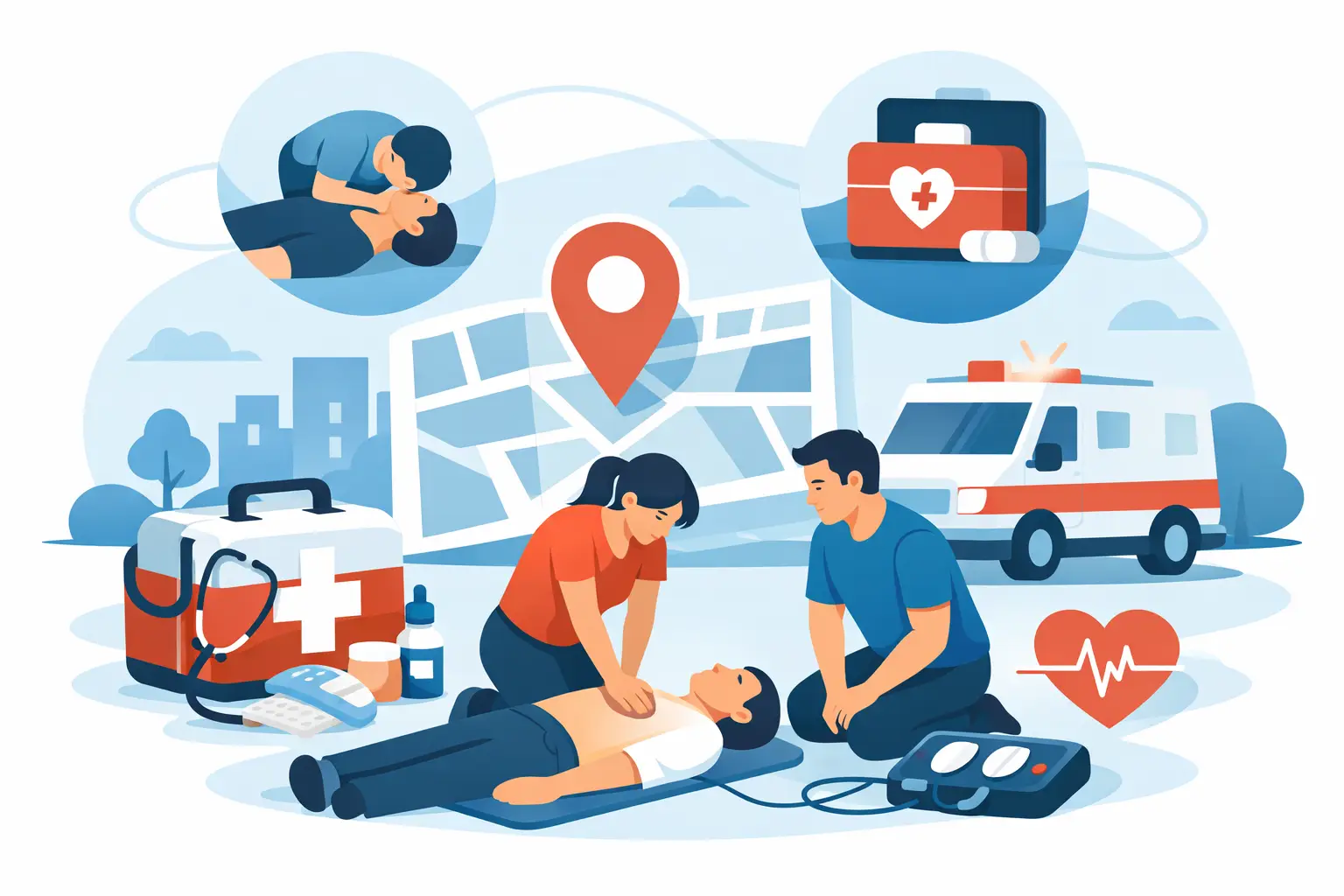
If you are searching for first aid and CPR training near me, you are usually not browsing casually. You need a recognized course, a clear schedule, and certification that meets a real requirement for work, hiring, or workplace compliance. That means location matters, but so do recognition status, course format, and whether the credential will actually be accepted when you need to present it.
A nearby class is only useful if it solves the full problem. Many learners focus first on distance, then realize too late that the course level was wrong, the provider was not recognized, or the schedule did not fit their deadline. A better approach is to choose training based on acceptance, efficiency, and local access in that order.
How to choose first aid and CPR training near me
The first question is not simply where the class is. It is what kind of certification you need. Employers, job postings, and workplace policies often specify a particular standard, such as Intermediate First Aid Level C with AED. If you register for a general awareness session or a course that does not match the required level, you may still need to retrain.
Recognition is the next filter. For many Ontario learners, especially those training for work, WSIB-recognized instruction matters because it aligns with accepted workplace safety expectations. This is especially relevant for supervisors, security staff, childcare workers, warehouse employees, and candidates entering regulated or safety-sensitive roles. If the course is not recognized, a low price or convenient location does not help much.
Format also affects whether you finish on time. A blended course often makes more sense than a full classroom day because it lets you complete theory online and attend in person for hands-on skills. That structure can reduce scheduling friction without removing the practical component that first aid and CPR training requires.
What local learners should look for
When comparing providers, most people need five answers quickly: what certificate they will receive, how long the course takes, where the in-person portion is held, how much it costs, and how soon they can register. If any of those details are vague, the process becomes harder than it needs to be.
The certificate itself should be described clearly. CPR levels differ. First aid levels differ. AED inclusion should be stated, not assumed. For job-related training, these details are not minor. A hiring manager or employer may reject a certificate that sounds similar but does not match the required standard.
The schedule should also be realistic. Some providers advertise convenience but offer limited in-person dates, which creates delays if you need certification by a hiring deadline. Others list courses without making it obvious which parts are online and which parts require attendance. Clear delivery information saves time and avoids rebooking.
Location still matters, especially for the in-person skills session. A provider with a practical footprint in Toronto and Peel gives local learners a stronger option than a provider that appears nearby in search but sends students elsewhere for completion. When the class is truly local, attendance is easier and completion is more predictable.
Blended learning is often the practical choice
For many working adults, blended learning is the most efficient path. Instead of spending a full block of time in one setting, you complete the academic portion online and then attend a focused in-person session for demonstrations, scenarios, and skills verification. That model works well for people balancing shifts, commuting, or arranging training around work.
It is also a better fit for how adults learn. The online section gives you time to review principles at your own pace. The classroom section is then used for what actually needs direct evaluation: chest compressions, AED use, recovery position, airway management, and scene response. That division is practical, not cosmetic.
There is a trade-off. Blended learning requires self-discipline during the online portion. If you delay the coursework, the flexible structure becomes less useful. But for most people who need recognized certification quickly, the time savings outweigh that risk.
A provider such as Canada First Aid uses this model in a way that aligns with workplace needs: 8 hours online and 8 hours in person for Intermediate First Aid Level C with AED certification. For learners who need a recognized credential without wasting time, that structure is straightforward and efficient.
Not every CPR course meets every requirement
One of the most common mistakes is assuming any CPR class will satisfy an employer. In practice, employers often want a specific combination of first aid, CPR level, and AED training. Some roles require more than basic CPR awareness. Others require a recognized first aid certification that includes hands-on assessment.
Security personnel are a good example. They are often expected to respond in public-facing environments where medical incidents happen without warning. A short, minimal course may not be enough for the employer's standard or the realities of the role. The same issue comes up in construction, warehousing, education support, and supervisory positions.
This is why the phrase first aid and CPR training near me should lead to more than a map result. It should lead to a provider that states the exact course level, recognition status, and delivery structure. If that information is hard to find, keep looking.
Questions to ask before you register
Before booking a seat, confirm whether the course is recognized for workplace use, whether the certificate includes Level C CPR and AED, and how long the certification remains valid. Ask whether the provider issues proof of completion promptly. If you are training for a job start date, timing matters.
You should also verify what happens on the in-person day. Some learners expect a lecture and are surprised by the amount of practical assessment. Others assume it will be simple and underestimate the value of arriving prepared. A legitimate course should involve active participation, scenario-based learning, and skills testing. That is a strength, not an inconvenience.
Price deserves attention, but it should be considered in context. The cheapest option may be missing recognition, hands-on training quality, or local availability. The more useful comparison is total value: accepted credential, realistic schedule, and a clear path to completion.
For employers, standardization matters
If you are booking training for staff, consistency is just as important as convenience. Different employees showing up with different certificate types can create compliance problems and unnecessary retraining costs. A provider that offers a standardized, recognized course format makes internal tracking easier.
This matters for onboarding as well. Employers in Toronto and Peel often need staff certified quickly to meet job requirements, contract obligations, or internal safety standards. A blended structure reduces time away from operations while still delivering the in-person evaluation needed for credible certification.
Employers should also think beyond the certificate itself. Training should prepare staff to respond in actual emergencies, not just pass a checklist. A disciplined program with direct instruction and practical skills assessment supports both compliance and readiness.
Local access should reduce friction, not create it
The best training option is the one that removes barriers. Registration should be direct. Course details should be easy to understand. Contact information should be available if you need clarification before enrolling. If a provider makes the process complicated at the registration stage, that often signals how the rest of the experience will go.
For most learners, the right decision is simple: choose a local provider with recognized certification, a clear blended format, and course information that answers practical questions upfront. That is especially true if you need training for work, hiring, or regulatory expectations rather than casual interest.
Searching for first aid and CPR training near me should end with a booking that gives you a valid credential, usable skills, and a schedule you can actually complete. If the provider is clear about course level, recognition, timing, and local delivery, you are probably looking at the right option. The goal is not just to find a class nearby. It is to finish with certification that stands up when your employer asks for it and skills that hold up when an emergency happens.