How to Control External Bleeding at Work
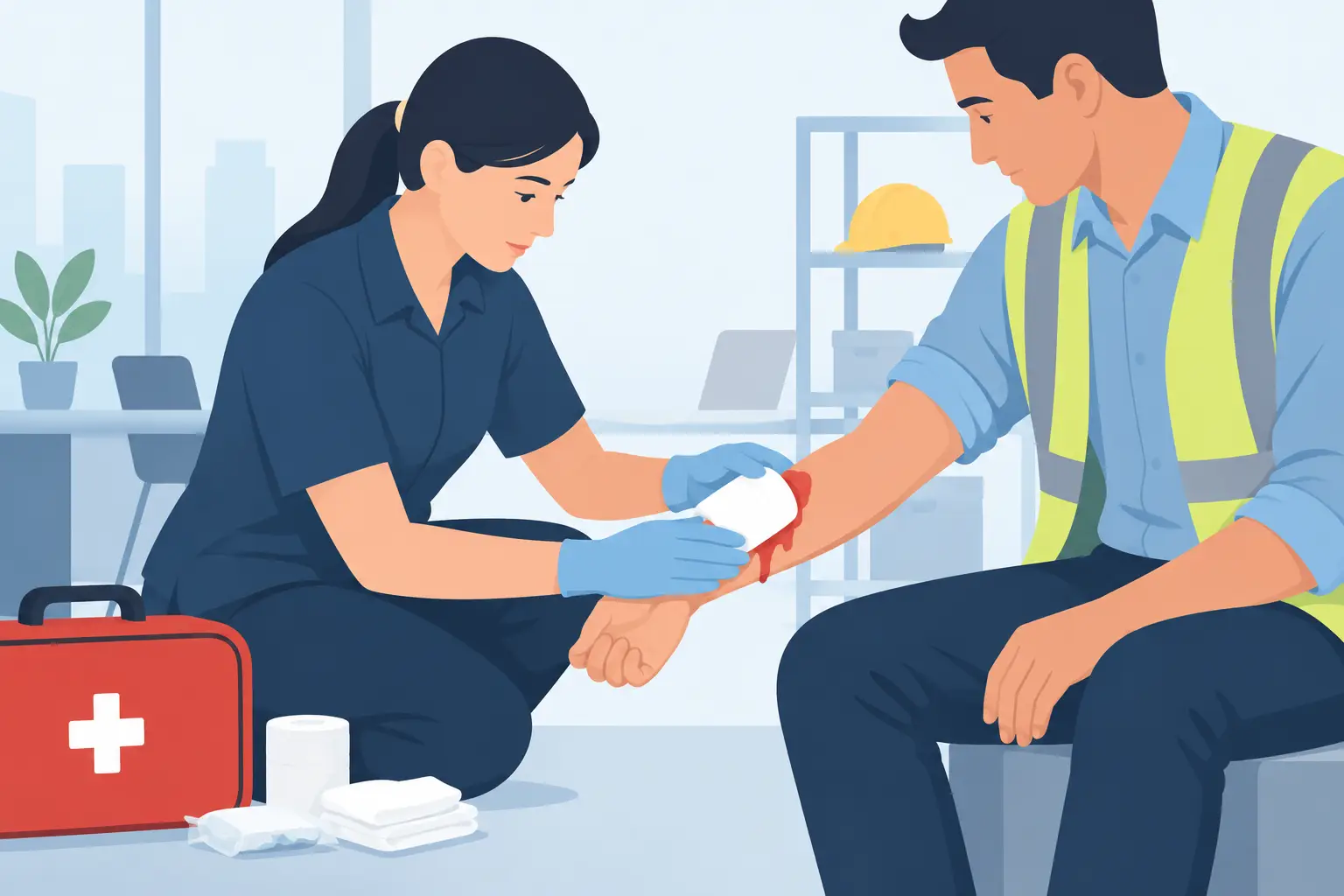
A bleeding emergency can change quickly. Knowing how to control external bleeding means recognizing when a wound is life-threatening, applying the right intervention without delay, and getting emergency medical help on the way. In a workplace, at home, or in public, early action can reduce blood loss and give the injured person a better chance of recovery.
This is practical first aid information, not a substitute for emergency medical care. Call 911 for severe bleeding, and follow dispatcher instructions when they are available.
Start with scene safety and a rapid assessment
Do not rush into a situation that may injure you as well. Look for traffic, broken glass, machinery, violence, electrical hazards, or other immediate dangers. If the area is unsafe, move away and call 911 rather than becoming another casualty.
When it is safe to help, use disposable gloves if they are available. If gloves are not available, use a clean barrier such as gauze, a plastic bag, or clothing between your hands and the person’s blood when possible. Blood exposure precautions matter, but they should not prevent you from giving urgent care for life-threatening bleeding.
Ask someone nearby to call 911 and bring the first aid kit or AED if available. If you are alone, use speakerphone so you can call while beginning care. For a bleeding emergency, do not wait to see whether it improves on its own.
Signs that bleeding may be life-threatening
External bleeding needs immediate escalation when blood is spurting or flowing continuously, when a pool of blood is forming quickly, or when clothing and dressings become soaked through despite pressure. A deep wound, partial or complete amputation, or blood loss associated with weakness, confusion, pale or cool skin, rapid breathing, or loss of consciousness also requires emergency care.
The exact amount of visible blood does not always tell the whole story. Some wounds are deep, concealed by clothing, or located where bleeding is harder to see. Treat severe or uncontrolled bleeding as an emergency.
How to control external bleeding with direct pressure
For most external wounds, firm, continuous direct pressure is the first action. Place sterile gauze, a clean cloth, or a dressing directly over the wound. Press firmly with the palm of your hand and maintain steady pressure.
Do not repeatedly lift the dressing to check whether the bleeding has stopped. Each time pressure is released, a forming clot can be disturbed. Maintain pressure until emergency responders take over or until the bleeding is controlled and the person can receive appropriate medical assessment.
If blood soaks through the first dressing, add more gauze or cloth on top. Keep pressing. Do not remove the original dressing, because pulling it away can restart bleeding.
Once bleeding is controlled, secure the dressing with a bandage if you can do so without reducing pressure. The bandage should be snug enough to hold the dressing in place, but not so tight that it causes numbness, worsening pain, blue or pale skin beyond the bandage, or loss of circulation.
Direct pressure is appropriate for many cuts, lacerations, and wounds. It may not be enough for massive bleeding from an arm or leg, a deep wound that cannot be compressed effectively, or a wound in the groin, armpit, neck, or torso. Those situations may require a different method while emergency services are en route.
Use a tourniquet for severe arm or leg bleeding
A commercial tourniquet is a critical first aid tool for life-threatening bleeding from an arm or leg. Use it when direct pressure does not control severe bleeding, when the bleeding is clearly massive, or when maintaining direct pressure is not possible because of the environment or multiple casualties.
Place the tourniquet two to three inches above the wound, between the wound and the torso. Do not place it over a joint such as an elbow or knee. If the exact wound location is unclear, place it as high on the limb as possible.
Tighten the tourniquet until the bleeding stops. This will be painful, but a tourniquet that is merely uncomfortable and still allows bleeding is not effective. Secure the device and note the time it was applied. Do not loosen, remove, or periodically release a tourniquet. Leave that decision to trained medical professionals.
If bleeding continues after a properly applied tourniquet, apply a second tourniquet above the first one. A commercially manufactured tourniquet is preferred because it is designed to apply reliable pressure. Improvised devices are less dependable and should not delay use of an available commercial tourniquet.
Pack deep wounds where a tourniquet cannot be used
Wound packing is used for severe bleeding in areas where a tourniquet cannot be applied, particularly the groin, armpit, shoulder area, or some deep limb wounds. This technique is best performed with hemostatic gauze when available, although plain gauze can also be used.
Find the source of bleeding if possible. Push gauze firmly into the wound cavity, filling the space from the deepest point outward. Continue adding gauze until the wound is packed, then apply firm direct pressure over the packed wound. Maintain that pressure while waiting for emergency responders.
Do not pack wounds to the chest, abdomen, skull, or eye. These injuries require urgent emergency care, but the approach differs. For a chest wound, cover the injury with an appropriate chest seal if one is available and follow 911 instructions. For abdominal injuries with organs exposed, do not push organs back inside. Cover them loosely with a clean, moist dressing if available and keep the person still.
Special situations that require a different response
An object embedded in a wound should generally be left in place. Removing it can cause much heavier bleeding. Apply pressure around the object, build up dressings to stabilize it, and call 911.
For a partial or complete amputation, control bleeding with direct pressure or a tourniquet when indicated. If a body part is completely separated, wrap it in clean, moist gauze or cloth, place it in a sealed bag, and keep that bag cool by placing it near ice or cold packs. Do not place the body part directly on ice or in water. Send it with the person to the hospital if emergency responders direct you to do so.
Nosebleeds are common but are usually not life-threatening. Have the person sit up, lean forward, and pinch the soft part of the nose continuously. Leaning forward helps prevent blood from being swallowed. Seek medical help for heavy bleeding, bleeding after a serious injury, symptoms of shock, or a nosebleed that does not stop.
Prevent shock while help is coming
Severe blood loss can lead to shock, even when the bleeding appears controlled. Keep the person as still and calm as possible. Protect them from cold by covering them with a coat or blanket, if available. Continue to monitor breathing and responsiveness.
Do not give food, drink, alcohol, or medication to a person with serious bleeding. They may need surgery or other medical treatment, and swallowing can become unsafe if their condition worsens. If they become unresponsive and are not breathing normally, begin CPR and use an AED as soon as one is available.
Stay with the person until emergency responders arrive. Tell responders what happened, what first aid was provided, whether a tourniquet was used, and the time it was applied. Clear communication helps the next level of care begin without delay.
What not to do when controlling bleeding
Avoid actions that interrupt effective care. Do not wash a severe wound before controlling the bleeding, and do not remove blood-soaked dressings. Do not probe the wound with fingers or tools. Do not use a belt, scarf, or cord as a first choice when a proper tourniquet is available.
Do not assume a small-looking puncture wound is minor, especially after a workplace incident involving sharp tools, machinery, or penetrating trauma. The external opening may be small while damage beneath the skin is significant. Prompt medical assessment is often needed.
Training makes the response faster and more reliable
Reading the steps is useful, but skills such as maintaining effective pressure, packing a wound, and applying a tourniquet are best learned through hands-on practice. Workplace first aid training also prepares participants to assess hazards, use protective equipment, communicate with emergency services, and work within an organized emergency response plan.
For Ontario workers, supervisors, security personnel, and employers, recognized first aid training provides a practical way to build these skills before an incident occurs. Canada First Aid's blended Intermediate First Aid Level C with AED training combines online learning with in-person instruction so participants can practice the actions that matter under realistic guidance.
When someone is bleeding severely, the goal is not to perform a perfect procedure. It is to act safely, control the bleeding with the right method, call for help early, and stay with the person until qualified care takes over.