Can Online Courses Teach CPR for Certification?
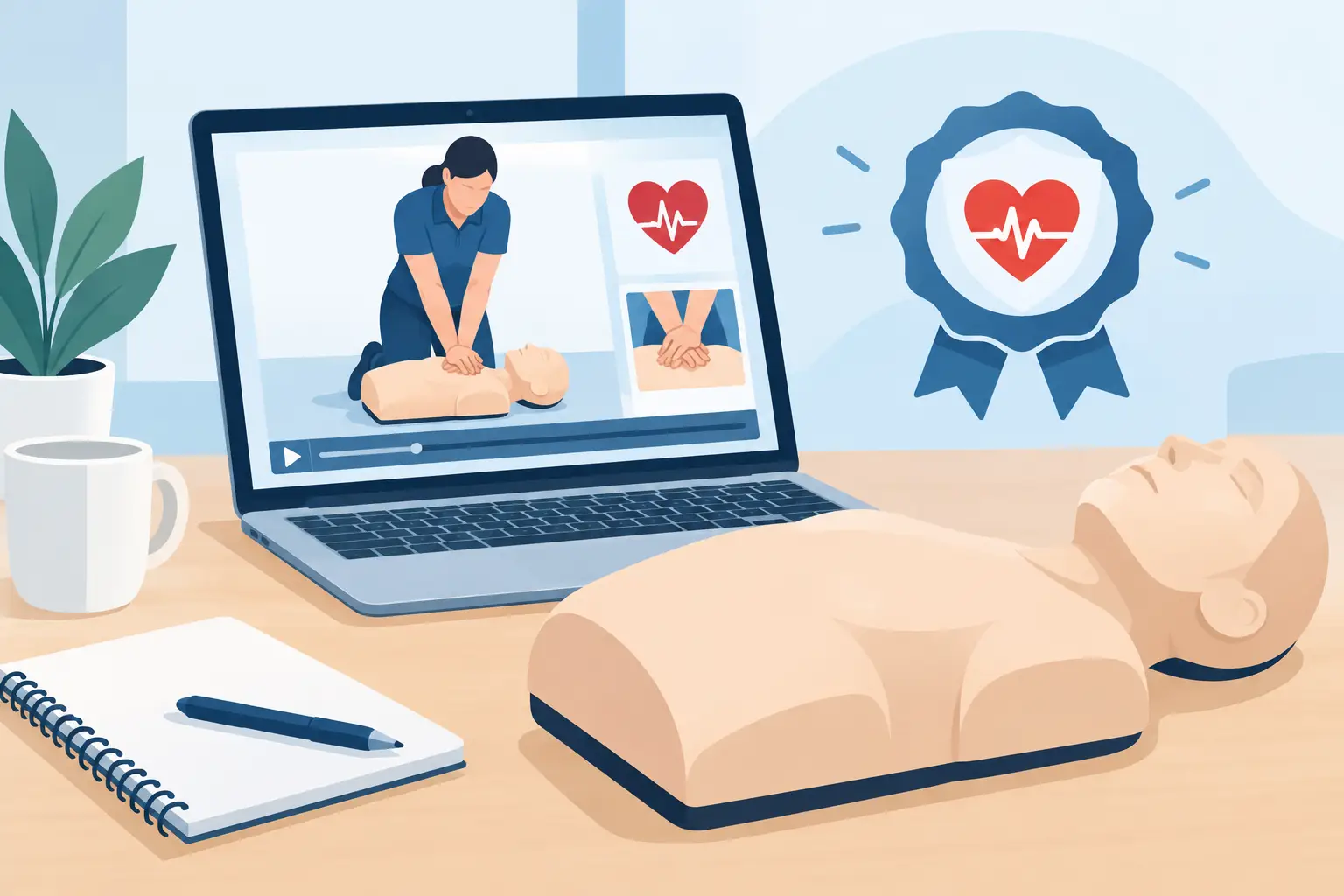
A person in cardiac arrest does not need someone who can recognize the correct answer on a screen. They need someone who can assess the scene, call for help, deliver effective compressions, use an AED, and continue until emergency responders arrive. That is why people asking, “can online courses teach CPR,” need to separate learning CPR knowledge from earning a recognized CPR certification.
Online learning can teach a substantial part of CPR. It can explain the response sequence, show demonstrations, test decision-making, and prepare learners for practical training. But a fully online course is not always enough when an employer, workplace policy, or provincial standard requires hands-on skill assessment.
Can Online Courses Teach CPR Skills?
Online courses can teach the principles behind CPR clearly and efficiently. Learners can review how to identify an unresponsive person, contact 911, obtain an AED, and follow the steps for adult, child, and infant emergencies. Video instruction is particularly useful for showing hand position, compression depth and rate, rescue-breathing technique, and AED pad placement.
The online format also gives learners control over the theory portion. They can pause a demonstration, repeat a module, and complete knowledge checks without trying to absorb every concept in a single classroom session. For people balancing work, job searches, family responsibilities, or shift schedules, that flexibility has real value.
However, CPR is a physical skill. A course can show the correct position for chest compressions, but it cannot confirm that a learner is pushing deeply enough, maintaining a steady rhythm, allowing full chest recoil, or minimizing interruptions. Those details affect whether CPR is effective.
A qualified instructor can observe technique, correct errors immediately, and verify that the participant can perform the required skills under realistic conditions. That practical evaluation is the main difference between CPR education delivered online and certification training that includes an in-person component.
What Online CPR Training Does Well
Online learning is well suited to the knowledge and decision-making parts of emergency response. A properly structured course can cover how cardiac arrest differs from a heart attack, why early CPR matters, when to use an AED, and how to respond when more than one rescuer is present.
It can also prepare learners for situations that are harder to recreate in a classroom. For example, an online module may ask what to do when a scene is unsafe, how to respond if an AED advises no shock, or how to adapt when a victim is a child or infant. These scenario-based questions build judgment before participants begin practical exercises.
For workplaces, online coursework can make training more efficient. Employees can complete the theory portion before attending a scheduled skills session. Class time can then focus on hands-on practice, instructor feedback, CPR scenarios, and assessment rather than long lectures.
This approach is especially practical for organizations that must train several staff members while limiting time away from daily operations. It also helps individual learners arrive at their in-person session prepared instead of encountering unfamiliar terminology for the first time.
Why Hands-On CPR Assessment Still Matters
CPR performance cannot be confirmed by a multiple-choice quiz alone. Even when learners understand the sequence, they may struggle with body mechanics, fatigue, pressure, timing, or confidence when working with a training manikin.
In-person instruction gives participants the opportunity to practice the skills that matter most during an emergency. They can work through a response from the initial scene check to CPR, AED use, and transfer of care. Instructors can identify issues that a screen cannot see, such as bent arms during compressions, incorrect hand placement, or delays before using an AED.
Practical instruction also creates space for questions that are specific to real situations. Participants often want to know how to respond in a crowded workplace, what to do if they are alone, whether they should move a person, or how to manage a bystander who is panicking. These conversations build readiness, not just course completion.
The trade-off is simple: online-only training is more convenient, while instructor-led skills assessment provides stronger proof that the learner can perform CPR correctly. For general awareness, an online course may be useful. For employment, workplace compliance, or a recognized credential, a blended format is often the more appropriate choice.
How Blended CPR Certification Works
Blended learning combines online theory with in-person practical instruction. The two components serve different purposes and should both be completed for the course to be treated as a full certification program.
The online section typically covers first aid and CPR concepts, emergency response priorities, legal considerations, and scenario-based knowledge checks. Participants complete this portion before their classroom date, usually within the access period provided by the training organization.
The in-person section focuses on performing the skills. Learners practice CPR, use an AED trainer, respond to choking emergencies, and complete the practical assessments required by the program. The instructor verifies participation and performance before certification is issued.
Canada First Aid uses this model for Intermediate First Aid Level C with AED training: eight hours of online coursework followed by eight hours of in-person instruction. This format gives learners flexibility without removing the live skills practice required for meaningful emergency response training.
For Ontario workplaces, the recognition status of the course matters as much as the delivery format. When training is needed to meet workplace requirements, employers and employees should confirm that the provider, certification level, and course structure meet the applicable standards. A certificate is only useful if the employer or regulating body accepts it.
Choosing the Right Course for Your Purpose
Before registering, identify why you need CPR training. Someone taking a course for personal preparedness may have different needs than a security professional, supervisor, childcare worker, or employee assigned to a workplace first aid role.
If you need a credential for a job or workplace, confirm four details before you enroll:
- Whether the certificate is recognized by your employer or required authority.
- Whether the course includes a live, instructor-led practical skills assessment.
- The exact certification level, including CPR and AED components.
- The total time required for online work and in-person attendance.
Do not assume that a course labeled “online CPR certification” meets every employment requirement. Some online programs issue a completion record after a quiz but do not include a practical assessment. That may be acceptable for awareness training, but it may not satisfy a hiring manager, workplace safety program, or compliance requirement.
You should also confirm certificate validity and renewal expectations. CPR skills decline when they are not practiced, and most recognized certificates have an expiry period. Keeping training current protects the credential and helps ensure that the response skills remain familiar when they are needed.
The Practical Standard: Learn Online, Prove It in Person
Online education is not a shortcut when it is used for the right part of the process. It can make CPR training more accessible, reduce classroom lecture time, and help learners arrive prepared for practical instruction. The limitation is not the quality of online teaching. The limitation is that emergency response requires physical performance as well as knowledge.
A sound CPR course should leave participants able to recognize cardiac arrest, act without unnecessary delay, perform CPR with appropriate technique, and use an AED confidently. That outcome is best supported when online learning is paired with supervised practice.
If your goal is an accepted certification rather than general information, choose training that clearly states what is completed online, what is assessed in person, and what credential you receive. When an emergency occurs, the value of the course is not the screen time or the certificate alone. It is the ability to step forward and act competently.