How to Perform Adult CPR: Steps That Matter
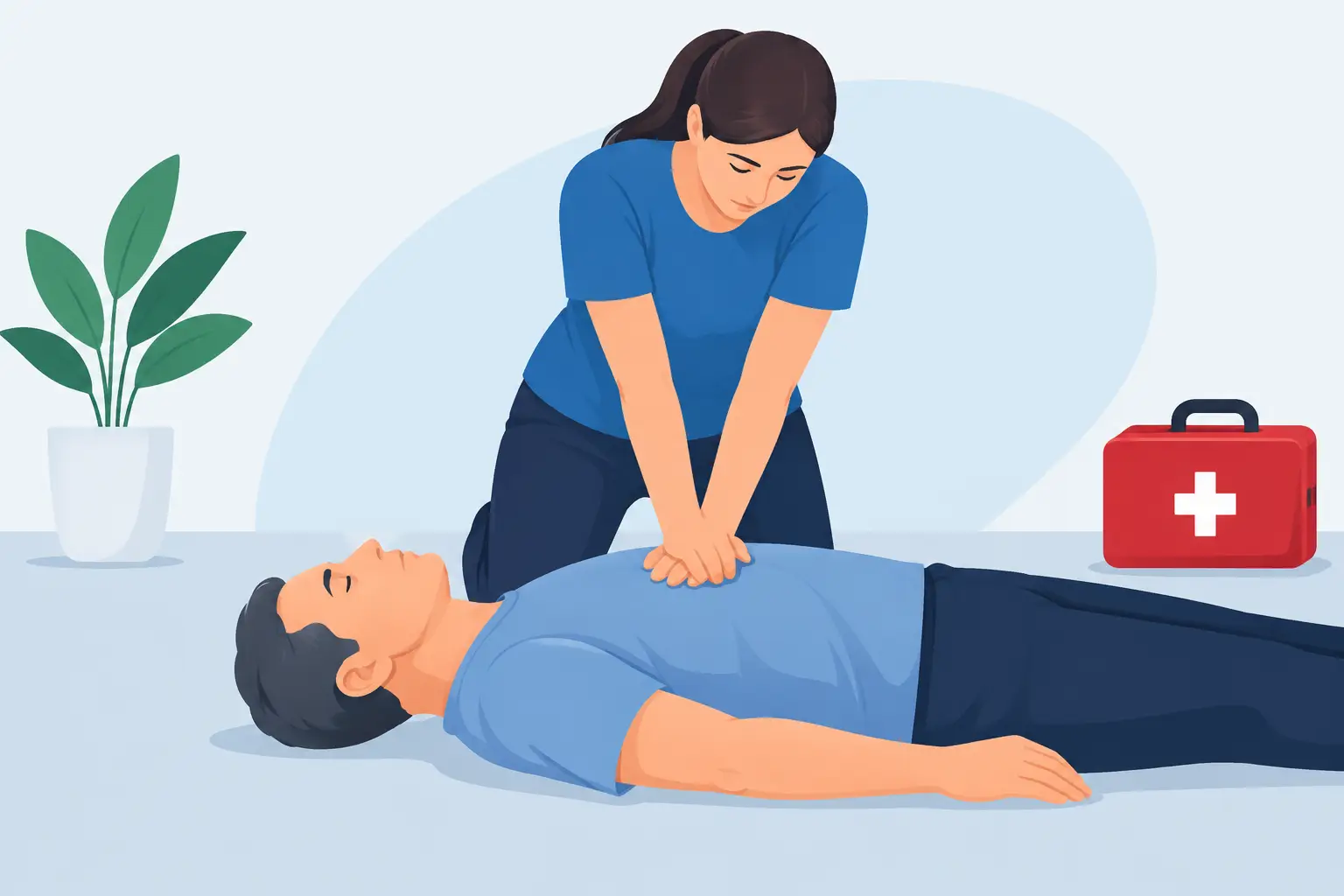
A person who suddenly collapses, is unresponsive, and is not breathing normally needs immediate action. Knowing how to perform adult CPR gives you a clear sequence to follow while emergency responders are on the way: call 911, start high-quality chest compressions, use an AED as soon as one is available, and continue until help takes over.
CPR is not a substitute for emergency medical care. It is a temporary, life-sustaining response that can keep blood moving to the brain and heart during cardiac arrest. The first few minutes matter, so avoid waiting for certainty or searching for the perfect response.
When to Start Adult CPR
Start CPR when an adult is unresponsive and is not breathing normally. This includes a person who is not breathing at all or is only making occasional gasping, snorting, or irregular breaths. These gasps, sometimes called agonal breaths, are not normal breathing.
First, check that the area is safe for you and the person. Look for traffic, electrical hazards, fire, violence, unstable structures, or other immediate dangers. If it is safe to approach, tap the person firmly on the shoulders and ask loudly, “Are you okay?”
If there is no response, call 911 immediately. If other people are present, direct one specific person to call 911 and another to get an AED. Give clear instructions, such as “You in the blue jacket, call 911,” rather than asking generally for help. If you are alone and have a phone, call 911 on speaker so you can begin CPR without ending the call. The dispatcher can provide instructions until responders arrive.
Check breathing for no more than 10 seconds. Do not spend time checking for a pulse unless you are trained and expected to do so as part of your role. For most bystanders, unresponsiveness and abnormal breathing are enough to begin CPR.
How to Perform Adult CPR With Compressions
Place the person flat on their back on a firm surface. Kneel beside their chest. Put the heel of one hand in the center of the chest, on the lower half of the breastbone. Place your other hand on top and interlock your fingers or keep them lifted so they do not press on the ribs.
Keep your arms straight and position your shoulders directly above your hands. Push hard and fast, allowing the chest to return fully to its normal position after each compression. For an adult, compress the chest at least 2 inches but no more than 2.4 inches deep. Aim for a rate of 100 to 120 compressions per minute.
Good CPR is physically demanding. The quality of each compression matters more than speed alone. Pressing too slowly, too shallowly, or leaning on the chest between compressions reduces blood flow. Keep interruptions as short as possible. If another trained rescuer is available, switch compressors about every two minutes or sooner if fatigue affects compression depth or rhythm.
Continue with cycles of 30 chest compressions. If you are not trained to provide rescue breaths, are not willing to provide them, or do not have a barrier device, provide hands-only CPR. Keep giving uninterrupted chest compressions until an AED is ready, the person shows clear signs of life, a qualified responder takes over, or the scene becomes unsafe.
Hands-only CPR is a practical response for many adult sudden collapses, especially when a bystander witnesses the event. It is not necessarily the best approach for every emergency. Rescue breaths are particularly valuable when lack of oxygen is the likely cause, such as drowning, overdose, choking after the obstruction is removed, or a breathing-related collapse. Formal first aid training helps rescuers recognize these situations and respond appropriately.
Add Rescue Breaths if You Are Trained
If you are trained in CPR and prepared to give breaths, complete 30 compressions, then open the airway. Place one hand on the forehead and two fingers under the chin. Gently tilt the head back and lift the chin.
Pinch the person’s nose closed, make a complete seal over their mouth with yours or with a barrier device, and give one breath lasting about one second. Watch for the chest to rise. Give a second breath, then return immediately to 30 chest compressions.
Do not force air into the lungs or spend too long trying to make a breath work. If the chest does not rise, reposition the head and chin, check quickly for an obvious object in the mouth, and try again. Never perform a blind finger sweep. An object that cannot be seen may be pushed farther into the airway.
The standard ratio for one adult rescuer is 30 compressions to 2 breaths. Maintain that pattern while minimizing pauses. The person may vomit during CPR. If this occurs, quickly roll them onto their side as a unit, clear the mouth only of material you can see, return them to their back, and resume CPR without unnecessary delay.
Use an AED as Soon as It Arrives
An automated external defibrillator, or AED, is designed to guide a lay rescuer through the process. It can analyze the heart rhythm and, when appropriate, advise a shock. Early defibrillation combined with CPR can substantially improve the chance of survival in certain cardiac arrests.
Turn the AED on as soon as it is available and follow its voice prompts. Expose the person’s chest and dry it if it is wet. Attach the pads exactly as shown on the pad diagrams. One pad is commonly placed on the upper right chest, below the collarbone, and the other on the lower left side of the chest below the armpit.
Make sure no one is touching the person while the AED analyzes. Say clearly, “Stand clear,” and visually confirm that everyone is clear. If the AED advises a shock, ensure no one is in contact with the person, deliver the shock as directed, and immediately restart CPR. Do not pause to look for movement or a pulse unless the AED or dispatcher instructs you to do so.
If the AED says no shock is advised, begin CPR again right away. A no-shock instruction does not mean the emergency is over. The person still needs continuous care until they begin breathing normally or professional responders take over.
What to Do if the Person Starts Breathing
If the person starts breathing normally, stop chest compressions but remain with them. If they are still unresponsive, place them on their side in the recovery position when there is no concern for a serious injury that requires them to remain still. Keep monitoring their breathing and be ready to restart CPR if normal breathing stops.
If the person becomes responsive, keep them calm, warm, and in a comfortable position unless moving them would create a risk. Do not give food, drink, or medication unless directed by emergency personnel. Even when someone seems to recover, they need medical evaluation after a suspected cardiac event.
Common CPR Errors That Cost Time
The most common error is delaying CPR because a rescuer is unsure. If the person is unresponsive and not breathing normally, call 911 and start compressions. Doing something promptly is generally better than waiting while the condition worsens.
Other preventable problems include compressing too softly, pausing too often, failing to allow full chest recoil, and waiting to use an AED. Keep your hands centered on the chest, maintain a consistent compression rhythm, and let the AED guide you. Remove medication patches from the pad area and dry a wet chest before placing AED pads. If the person has a visible implanted device, such as a pacemaker, place the pad at least an inch away from the device rather than directly over it.
CPR skills are perishable. Reading the steps is useful, but hands-on practice is what builds the ability to find the correct hand position, achieve proper depth, manage fatigue, and use an AED without hesitation. For employees, supervisors, security personnel, and other workplace responders, recognized training also supports a more organized emergency response.
Canada First Aid provides practical, blended first aid and CPR instruction for learners who need recognized training and direct in-person skills practice. A current course gives you more than a certificate: it gives you the muscle memory to act when someone’s next breath depends on it.