Best CPR Course Features for Recognized Training
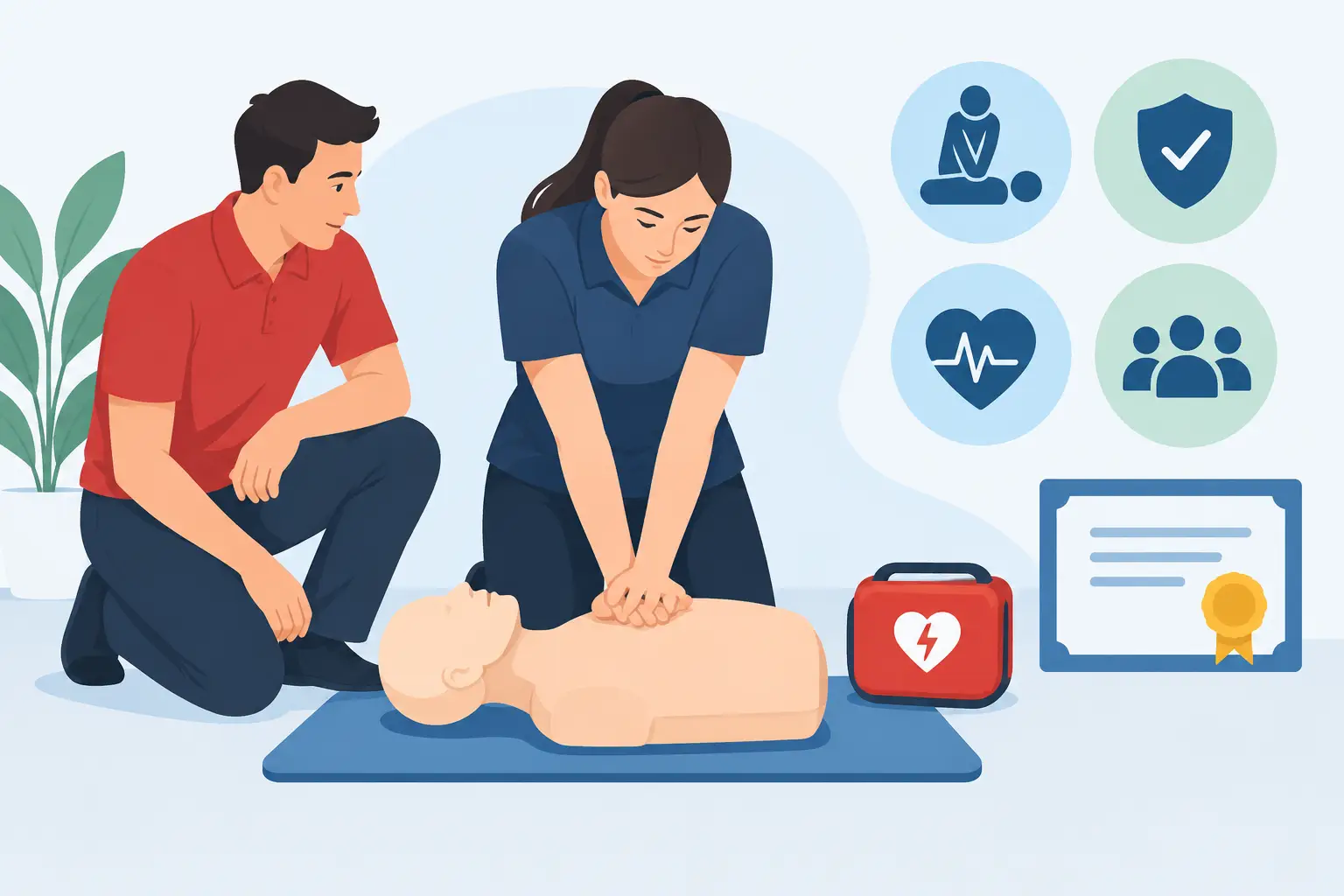
A CPR certificate only helps if an employer, workplace, or regulator accepts it and if you can use the skills under pressure. The best CPR course features are not flashy extras. They are the practical elements that confirm the training is recognized, hands-on, current, and suitable for the reason you need certification.
For Ontario workers, job seekers, supervisors, and employers, the right choice usually comes down to course level, recognition status, time commitment, and whether the class gives learners meaningful practice with CPR and an automated external defibrillator (AED). A low price or short schedule can be useful, but neither should replace legitimate instruction and clear certification outcomes.
Best CPR Course Features to Check Before Registering
Start by identifying the credential you actually need. A CPR-only class may suit personal preparedness or a role with limited requirements. Many workplaces, however, require first aid training that includes CPR and AED certification. Security personnel, supervisors, child care workers, fitness staff, and employees assigned to workplace emergency response may need a specific level of training rather than a general CPR card.
Read the job posting, employer policy, or workplace safety requirement before registering. If the requirement says First Aid Level C with AED, a basic CPR course is not an equivalent substitute. Paying for the wrong level can mean taking another course later, losing both time and money.
Recognized certification and clear provider standards
The first question is whether the certificate will be accepted for its intended purpose. A quality provider states the certification type, issuing standard, course duration, and renewal requirements clearly. It should not leave learners guessing whether the program meets workplace expectations.
For Ontario workplace needs, look for training that is recognized for provincial compliance purposes where applicable. Employers should also confirm that the course aligns with their internal policy, insurance requirements, and the duties assigned to trained staff. Recognition is especially relevant when certification is needed for employment, contract work, or a regulated environment.
Be cautious of vague terms such as “official,” “approved,” or “internationally accepted” when they are not supported by specific course information. A legitimate provider can explain exactly what learners receive upon successful completion and what the certificate covers.
Hands-on CPR and AED practice
Watching demonstrations is not enough. CPR is a physical skill that requires correct body position, compression depth and rate, rescue breathing technique when included, and the ability to work with an AED without unnecessary delay.
A strong course includes supervised practice using adult manikins and training AEDs. Learners should have time to repeat the sequence: assess the scene, check responsiveness and breathing, call for help, begin compressions, apply AED pads, and follow device prompts. This repetition helps replace hesitation with a clear response pattern.
The same principle applies to choking response and, when included in the course level, infant or child CPR. Course content should match the certification level, but practical assessment should remain central. If a course promises certification with little or no skills practice, it may not prepare a learner for either a workplace assessment or an actual emergency.
Qualified instructors who can correct performance
Instructor quality affects what learners retain. An effective instructor does more than read slides or play videos. They demonstrate skills accurately, watch participants practice, correct errors, and explain why a step matters.
This matters because small mistakes can affect CPR quality. Locked elbows, proper hand placement, full chest recoil, and minimizing interruptions are easier to understand when an instructor observes and coaches the learner directly. Participants should be able to ask practical questions, including how to respond when they are alone, when bystanders are present, or when an AED is already available.
Class size can influence this experience. A larger group is not automatically poor training, but it should still allow every participant adequate access to equipment and instructor feedback. If hands-on practice is rushed, the course may meet a schedule but fall short on confidence.
Blended Learning Can Improve Scheduling Without Removing Practice
For many working adults, scheduling is the main obstacle to maintaining certification. A blended format can be a practical option when it divides the course into online theory and in-person skills instruction. Learners can complete reading, videos, and knowledge components on their own schedule, then attend a focused classroom session for practical training and evaluation.
The trade-off is that online coursework requires self-discipline. It should not be treated as a shortcut or skipped until the last minute. Complete the assigned modules before the in-person session so the classroom time can focus on scenarios, questions, and physical skills.
A well-structured blended course also states the expected time commitment upfront. For example, a program that combines eight hours of online learning with eight hours of in-person instruction gives learners a realistic view of the total training requirement. This is more useful than advertising only the classroom portion.
Canada First Aid offers a blended Intermediate First Aid Level C with AED option designed for learners who need recognized training while managing work and personal schedules. The format supports efficient completion, but the in-person component remains essential because emergency response skills must be practiced and assessed.
Course Content Should Match Real Workplace Emergencies
The best training is not limited to a memorized CPR sequence. It also teaches learners to make safe decisions before treatment begins. Scene assessment, use of personal protective equipment, emergency activation, communication with dispatchers, and handover to emergency responders are all part of competent first aid response.
For employees and designated workplace responders, broader first aid content can be more valuable than CPR alone. Depending on the course level, this may include bleeding control, shock, seizure response, diabetic emergencies, allergic reactions, burns, fractures, and medical emergencies. The purpose is not to turn participants into health care professionals. It is to help them recognize urgent conditions, provide appropriate immediate care, and avoid actions that could make the situation worse.
Scenario-based practice is particularly useful. A scenario can require a learner to manage an unresponsive coworker, assign someone to call 911, locate an AED, control bystanders, and continue care until help arrives. That is closer to a real workplace event than practicing one skill in isolation.
Transparent Logistics Prevent Registration Problems
A course description should make the operational details easy to verify before payment. Check the total cost, whether taxes or materials are included, the training location, start and end times, attendance requirements, and certificate delivery process. If you need certification by a deadline, confirm when you will receive proof of successful completion.
Also review transfer, cancellation, and late-arrival policies. In-person skill sessions often have strict attendance rules because missed instruction or assessments cannot always be recreated quickly. Knowing the policy in advance prevents avoidable issues, especially for workers coordinating shifts or employers registering multiple staff members.
For group bookings, employers should ask about class capacity, onsite versus public training options, and documentation for employee records. The cheapest provider is not always the most efficient if schedules, certificates, or course records are difficult to manage afterward.
Full Courses and Recertification Are Not Interchangeable
Recertification is often shorter than a full course, but it is only appropriate for learners who meet the provider’s eligibility requirements. A valid, qualifying prior certificate may be required, and there may be limits on how long a credential has been expired. Do not assume that any past CPR card qualifies you for a refresher.
A full course is generally the better choice for first-time learners, people whose certification has lapsed beyond the allowed period, or anyone moving into a role with a higher training requirement. It provides more time to build foundational knowledge and practice skills from the beginning.
Before choosing a class, match the certificate to the requirement, verify the provider’s recognition, and make sure the schedule leaves enough time for both online work and in-person practice. That preparation makes registration straightforward and leaves you with training you can use when it matters.