CPR Training That Meets Workplace Requirements
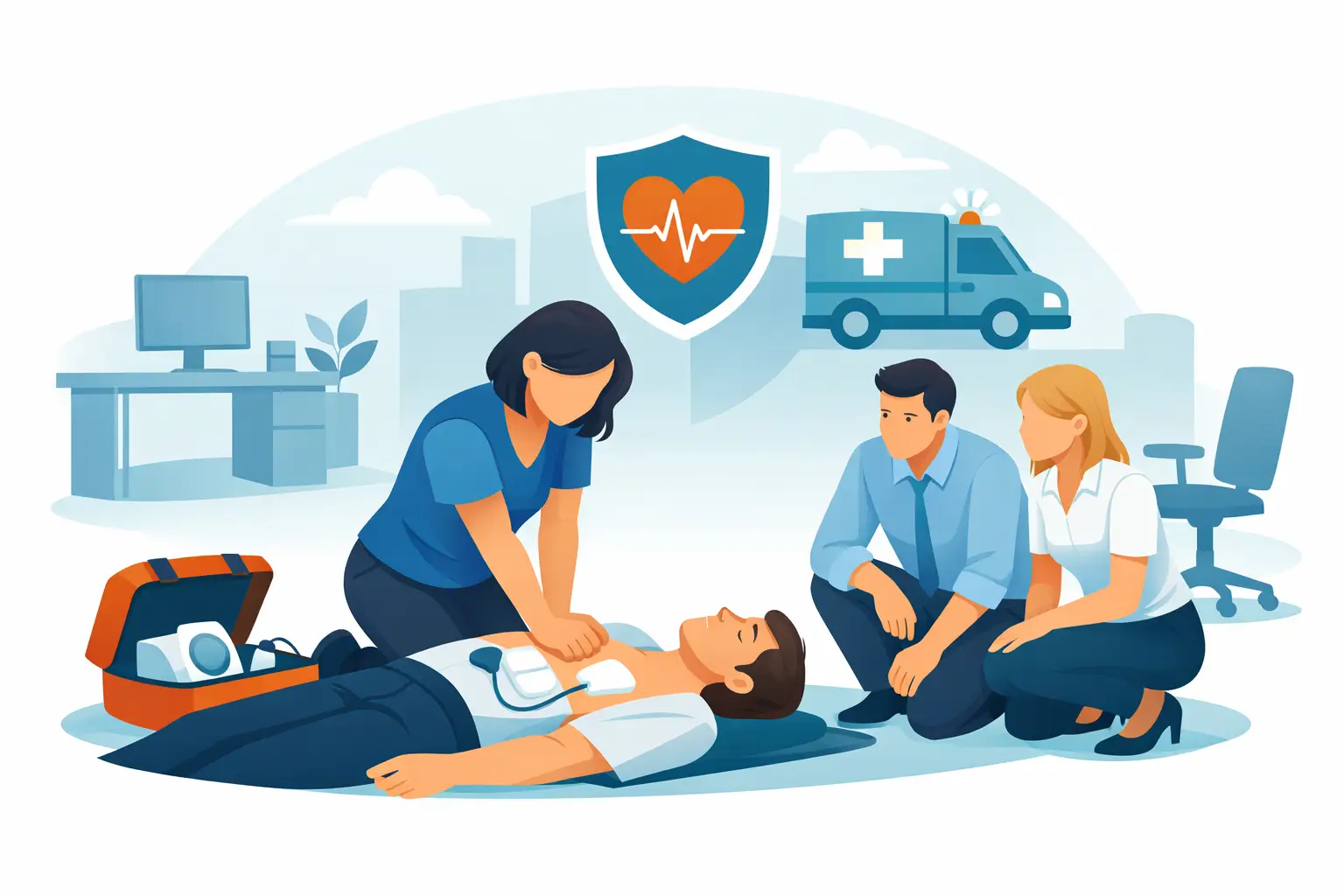
A job posting may simply say “CPR required,” while an employer may ask for a specific first aid level, AED instruction, or proof that the training is recognized for workplace purposes. CPR training is most useful when it gives you both practical emergency response skills and a credential that matches the requirement you need to meet.
For employees, job seekers, supervisors, security personnel, and employers, the right course is not just about receiving a certificate. It is about being prepared to recognize an emergency, act quickly, and follow a clear response process until professional help arrives. Course selection should start with the required certification level, then consider delivery format, hands-on instruction, and recognition status.
Choosing CPR Training for Workplace Requirements
The first question is simple: what does your employer, job posting, licensing body, or workplace safety plan require? Some positions only require basic CPR, while others require first aid certification combined with CPR Level C and AED training. If the requirement is unclear, ask for the exact course name before registering.
In Ontario workplaces, employers may need training that supports their first aid obligations and internal emergency procedures. A course recognized for workplace purposes provides more than a general introduction to CPR. It documents that the participant completed training to an established standard and successfully demonstrated the required skills.
Intermediate First Aid Level C with AED certification is often a practical choice for people who need a comprehensive workplace credential. It combines first aid assessment and treatment skills with CPR techniques for adults, children, and infants, along with automated external defibrillator use. This broader course can be appropriate when a basic CPR-only class does not meet the employer's requirement.
CPR Is Not One Single Credential
The term “CPR certification” can describe different training levels. That is why comparing course names matters. A short course may focus primarily on resuscitation skills, while a workplace first aid course includes additional subjects such as scene safety, emergency assessment, bleeding control, shock, medical emergencies, and injury response.
CPR Level C generally prepares participants to respond to cardiac arrest involving adults, children, and infants. AED training teaches participants how to use an automated external defibrillator safely as part of the response. An AED gives voice prompts and analyzes the heart rhythm, but learners still need the confidence to start CPR, apply pads correctly, and continue care until emergency services take over.
For a workplace role, choosing the lowest possible course level can create problems if your employer later asks for a more complete certificate. Confirming the requirement in advance prevents unnecessary repeat training.
What Effective CPR Training Should Cover
Strong instruction combines knowledge with repeated practical application. Reading about CPR is useful, but a participant must also be able to perform the steps under realistic conditions. During an emergency, people do not have time to search through course notes or reconsider the sequence of actions.
A complete course should teach participants how to assess scene safety, check responsiveness, contact emergency services, begin CPR, use an AED, and provide ongoing care until help arrives. It should also explain when to stop, when to switch with another responder, and how to communicate clearly with bystanders and dispatchers.
For Level C training, participants should practice skills for different age groups. The response process changes depending on whether the patient is an adult, child, or infant, particularly when applying AED pads and providing rescue breaths. Practical instruction gives learners the opportunity to correct hand placement, compression depth, pace, and body positioning with guidance from an instructor.
First aid content is equally valuable in many workplace settings. Cardiac arrest is not the only urgent event a worker may face. A trained responder may need to manage severe bleeding, recognize signs of shock, assist someone having a medical emergency, or provide care for an injury while waiting for paramedics.
Why Hands-On Assessment Matters
Online learning can efficiently cover course theory, terminology, and response principles. It is especially useful for working adults who need flexibility before attending a scheduled class. However, online coursework alone cannot confirm that a person can perform compressions correctly, apply an AED, or respond safely in a practical scenario.
Hands-on instruction creates the necessary bridge between understanding a procedure and being able to carry it out. Participants work with training manikins, practice AED operation, and receive corrections from a qualified instructor. This is where technique becomes more reliable.
Practical assessment also protects the value of the credential. Employers need confidence that a certificate represents completed training, not simply an online module. For participants, this structure reduces uncertainty. They leave knowing what the physical steps feel like and how to respond when the situation is stressful.
How Blended CPR Training Works
A blended format is designed for people who need recognized training without committing to multiple full days in a classroom. The online portion covers course material in advance, while the in-person session focuses on skill practice, scenarios, and evaluation.
Canada First Aid offers Intermediate First Aid Level C with AED certification through an 8-hour online component and an 8-hour in-person session. This format allows participants to complete theoretical learning on their own schedule before attending practical training. It also keeps classroom time focused on the skills that require instructor observation and direct feedback.
Blended learning is not automatically the right fit for every person. Participants must be comfortable completing the online material independently and should allow enough time to finish it before the practical session. Someone who prefers to learn all material in a classroom may benefit from a fully instructor-led option, if available. For many employed adults, though, the split format makes certification easier to schedule around work and family responsibilities.
What to Confirm Before You Register
Before selecting a course date, review the course details instead of relying only on a title. A few minutes of confirmation can prevent an unsuitable booking or a certification gap.
- Confirm the exact certification level required by your employer, client, or job posting.
- Verify whether AED instruction and CPR Level C are included in the course.
- Check that the training is recognized for the workplace or regulatory purpose you need to meet.
- Review the online and in-person attendance requirements, location, and course schedule.
- Ask what identification, proof of completion, or prior certification is needed for registration or recertification.
Employers arranging training for a team should also consider operational needs. A course must fit shift schedules, provide a clear record of attendance, and give workers enough time to complete pre-course learning. It is often more efficient to standardize the same recognized course level across roles that share emergency response responsibilities.
Using Your Certification at Work
After successful completion, keep your certification record accessible. You may need to provide it to an employer, recruiter, site supervisor, or licensing organization. Save a digital copy when available and make note of the issue date, since certificates have validity periods set by the training standard and provider.
Do not wait until a certificate is close to expiring before checking your renewal options. Recertification eligibility can depend on the current credential, its status, and the course standard. Planning ahead gives you more date options and helps prevent a lapse that could affect work eligibility.
Certification should also be supported by workplace readiness. Know where first aid kits and AEDs are located, understand your workplace emergency contact process, and report equipment concerns promptly. A trained responder is more effective when the workplace has clear procedures and maintained emergency supplies.
Training That Supports Real Response
The value of CPR training is measured long before a certificate is requested. It appears when a worker recognizes that someone is unresponsive, calls for help without delay, starts care correctly, and uses available equipment with purpose. Those actions can make a critical difference while waiting for emergency services.
Choose training that meets the stated requirement, includes hands-on practice, and gives you a credential you can present with confidence. The right course should leave you prepared not only to satisfy a workplace standard, but also to act when someone needs help immediately.