How to Prepare for First Aid Class Properly
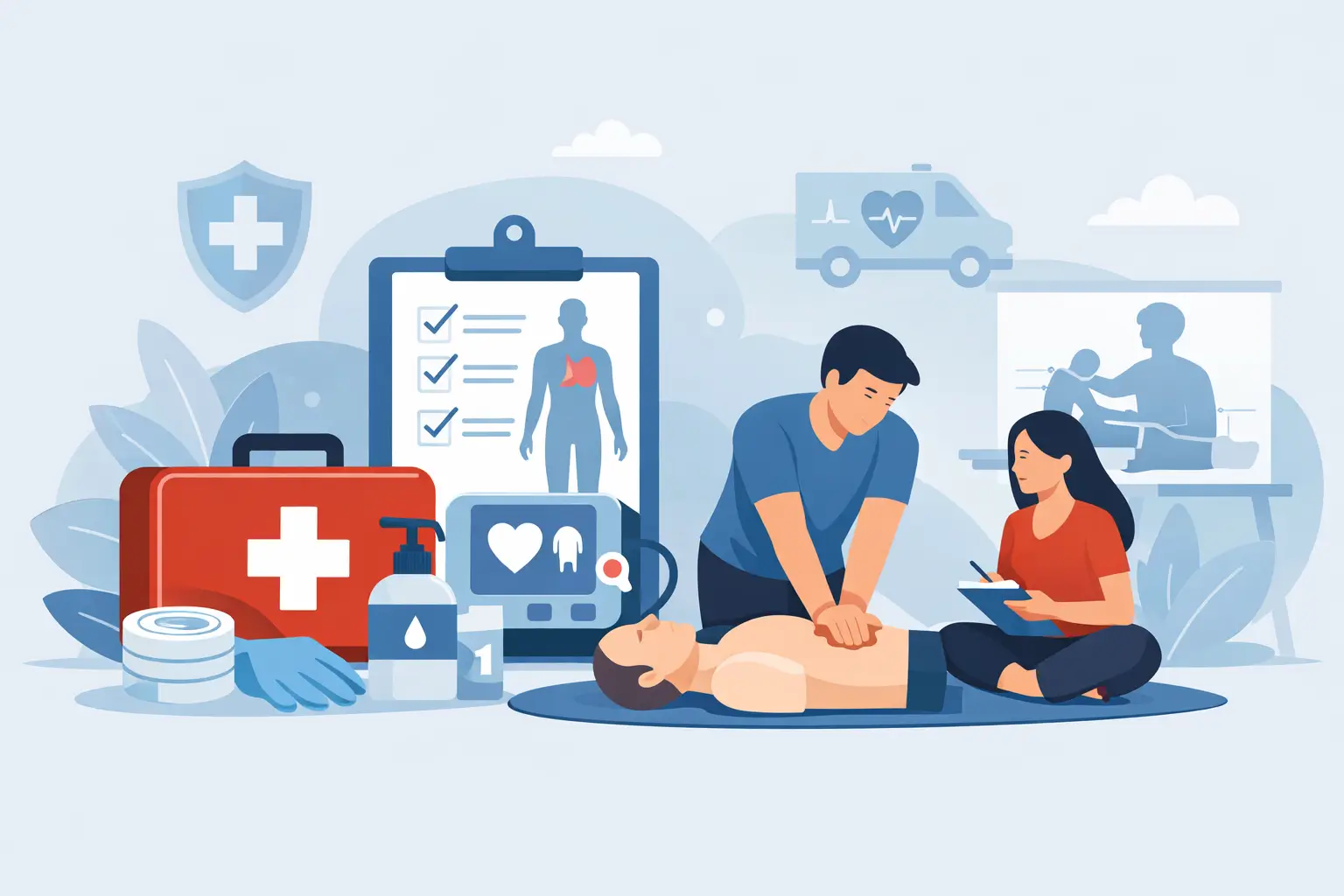
A first aid class is not just a box to check for an employer. You may be expected to recognize a medical emergency, act within your training, and use equipment correctly while others are relying on you. Knowing how to prepare for first aid class helps you arrive ready to learn, complete the required components efficiently, and retain skills that matter after certification.
For workplace learners, security professionals, supervisors, and job seekers, preparation also prevents avoidable delays. Review the course details, protect enough time for the full training schedule, and treat the practical session as a skills assessment rather than a lecture you can passively attend.
Confirm What Your Course Requires
Start with the course name, certification level, delivery format, and completion requirements. First aid programs are not all identical. Some are basic awareness courses, while others include CPR, AED training, choking response, wound care, medical emergencies, and more extensive scenario practice.
If your employer requires a specific credential, confirm the exact level before registering. A certificate that sounds similar may not meet a workplace policy, contract requirement, or provincial standard. In Ontario, employers and workers should verify whether a WSIB-recognized course is required for their role or workplace first aid plan.
Also check whether the course includes online learning before the in-person session. Blended programs require learners to finish digital coursework within the assigned time frame. Canada First Aid's Intermediate First Aid Level C with AED certification, for example, combines 8 hours of online coursework with 8 hours of in-person instruction. The online portion is not optional preparation. It is a required part of the training path.
Read your registration confirmation carefully. It should tell you the training date, start and end times, location, identification requirements, online access instructions, and any completion deadline. If something is unclear, resolve it before class day instead of assuming the instructor can change the schedule.
Complete Online Work Before the Deadline
The most practical answer to how to prepare for first aid class in a blended format is simple: complete the online module early. Do not leave several hours of coursework until the night before your practical session.
Online first aid learning introduces the knowledge behind emergency response. Depending on the program, this can include scene safety, consent, infection prevention, emergency medical services activation, CPR sequences, AED use, bleeding control, burns, fractures, and sudden medical conditions. The in-person class builds on that material. If you skip through the online portion or rush it, hands-on practice will feel harder and you may lose time reviewing concepts other participants already understand.
Set aside uninterrupted time for the module. Use a reliable device, stable internet connection, and a quiet place where you can focus. Keep your course login information available, and save proof of completion if the training provider instructs you to do so.
Pay attention to any knowledge checks instead of treating them as obstacles. Questions that feel difficult are useful signals. Review those topics before the practical session, especially the sequence for checking a scene, obtaining consent when possible, calling emergency services, and delivering care within your level of training.
Review the Core Response Priorities
You do not need to memorize a medical textbook before class. You should, however, arrive familiar with the order of priorities used in first aid. This allows you to focus more fully on physical technique when you are with the instructor.
A safe responder does not rush directly to the patient. The first consideration is whether the scene is safe for you, the person needing help, and bystanders. Hazards may include traffic, violence, electricity, fire, chemicals, unstable surfaces, or bodily fluids. If the area is unsafe, your role may be to call for help, keep others away, and wait for trained responders rather than placing yourself in danger.
Next, think about how help is activated. In a real emergency, early communication matters. Know when to call 911, when to ask a bystander to call, and what information dispatchers may need. In a workplace setting, you may also need to follow site procedures, report to a supervisor, or send someone to meet emergency services.
It is also useful to understand the broad distinction between life-threatening problems and less urgent injuries. Unresponsiveness, absent or abnormal breathing, severe bleeding, signs of stroke, chest discomfort, seizure activity, and serious allergic reactions require immediate action and escalation. Your class will teach the specific assessment and treatment steps. Preparation means recognizing that calm, organized action is the objective.
Wear Clothing That Works for Skills Practice
First aid training is physical. You may spend time kneeling beside a manikin, performing chest compressions, placing AED pads on a training manikin, practicing recovery positions, applying bandages, or working through emergency scenarios with a partner.
Wear comfortable clothing that allows you to kneel, bend, reach, and move your arms freely. Closed-toe shoes are usually the sensible choice for a training environment. Avoid clothing that makes floor work difficult or distracting. If you have a knee, back, wrist, or mobility concern, attend anyway if you are able, but tell the instructor before hands-on activities begin. They can explain safe positioning, reasonable modifications, and what competency requirements still apply.
Bring items only when requested in your course instructions. A government-issued photo ID may be needed to verify attendance. You may also want water, a small snack, glasses if you use them for reading, and a notebook for personal reminders. Do not assume you need to buy first aid supplies in advance. Training providers normally supply the equipment needed for class practice.
Arrive Ready to Participate
Plan to arrive early enough to sign in, locate the room, use the restroom, and settle in without interrupting the session. Late arrival can create a real problem in certification training because missed content and missed skills practice may need to be made up before a certificate can be issued.
During class, participate actively. Ask direct questions when a step is unclear. Practice the technique until you understand where your hands go, how hard to compress, how to position a person safely, or how to operate the training AED. Watching an instructor perform a skill is not the same as being able to do it under pressure.
Expect correction. Instructors may adjust your hand placement, pacing, body position, or communication. That is not a sign that you are failing. It is the purpose of hands-on instruction. Good first aid training identifies errors in a controlled setting so you are less likely to make them during an emergency.
Prepare for Assessment Without Overthinking It
Most recognized first aid courses include some form of knowledge evaluation and practical skills assessment. The details depend on the certifying standard and course level, but learners are generally expected to demonstrate that they can follow the correct sequence, use equipment safely, and communicate appropriately.
The best preparation is not trying to memorize every possible scenario. Focus on the structure behind the response: assess hazards, check the person, call for help, provide care within your training, and monitor until help takes over. When you understand the order, scenario questions become easier to manage.
If you are anxious about CPR or AED practice, say so early. Many first-time learners worry about performing compressions in front of others or making a mistake during a scenario. Training manikins and guided practice exist for exactly that reason. The goal is competent performance, not perfection on the first attempt.
Know What Happens After Class
Before you leave, confirm how and when your certificate will be issued, how long it remains valid, and whether your employer needs a copy. Save the certificate in a place you can access later, such as a secure personal records folder. If you are taking the course for employment, provide documentation according to your employer's process rather than assuming the provider will notify them.
Certification is a starting point, not a reason to stop paying attention. Review key steps periodically, know where first aid kits and AEDs are located at your workplace, and report missing or expired supplies when you see them. The preparation that matters most is the kind that stays with you after the classroom session ends.
Arrive rested, complete the required online work, wear practical clothing, and be willing to practice until the skills feel familiar. That approach gives you more than a certificate: it gives you a clearer chance of responding effectively when a real emergency happens.