Workplace CPR Compliance Guide for Ontario
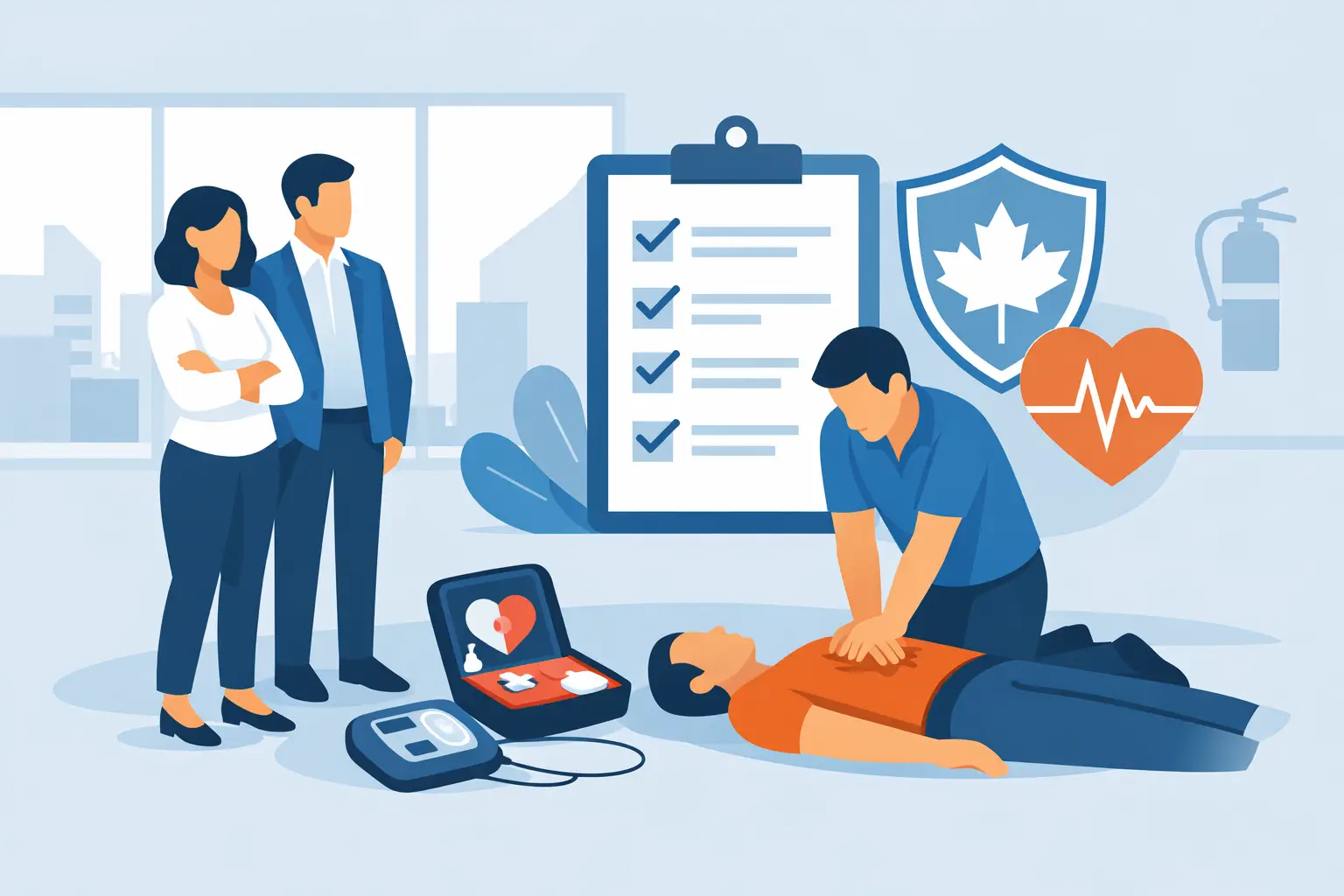
A cardiac emergency does not wait for a health and safety meeting, a scheduled shift change, or the one trained employee to return from lunch. This workplace CPR compliance guide Ontario employers can use focuses on the practical question behind compliance: when an emergency occurs, does your workplace have qualified people, appropriate equipment, and a documented first aid program ready to respond?
CPR training is a major part of workplace readiness, but a CPR card by itself does not automatically make an employer compliant. Ontario first aid obligations involve trained coverage, approved training, first aid supplies, communication procedures, and records. The correct setup depends on your workforce size, work conditions, and the risks identified in your workplace assessment.
Workplace CPR Compliance Guide for Ontario Employers
Ontario workplaces covered by the provincial first aid requirements must provide first aid training and supplies that meet the applicable rules. The current framework places emphasis on an employer's first aid needs assessment and on training through a WSIB-approved provider.
For many employers, the practical starting point is to identify how many workers are regularly present and what level of first aid training is required. Smaller workplaces may require Emergency First Aid coverage, while larger workplaces generally require Standard First Aid-trained personnel. Standard First Aid commonly includes CPR Level C and AED training, which prepares participants to respond to adults, children, and infants and to use an automated external defibrillator.
The required number of first aiders increases with workforce size. Coverage must also work in real operating conditions. A single qualified employee on the payroll is not enough if that person works only days while your workplace runs evenings, weekends, or multiple locations. Review every shift, work area, and work arrangement where employees may need immediate help.
CPR Level C is often requested by employers because it is broadly recognized and suitable for workplaces with a general public, mixed-age visitors, security duties, or higher employee interaction. Whether it is the right minimum credential for your site still depends on the training level identified by the first aid requirements and your documented assessment.
Start with a first aid needs assessment
A first aid needs assessment is where compliance becomes specific to your operation. It should account for the number of workers, worksite layout, known hazards, travel time to emergency services, shift patterns, and whether employees work alone or at remote locations.
A low-risk office with a small daytime team does not have the same needs as a warehouse, construction site, security operation, or facility with public access. The assessment may show that additional trained workers are needed beyond the minimum ratio because employees are spread across floors, work in isolated areas, or cannot reliably reach a designated first aider quickly.
Document the assessment and keep it available. Treat it as an operating document, not a form completed once and forgotten. If you add a night shift, open another site, change the nature of the work, or increase staffing, review the assessment again.
Match Training Coverage to Your Actual Shifts
The most common compliance failure is not a lack of certificates. It is a lack of available certificate holders when an incident happens. Build coverage around attendance, not assumptions.
Start by identifying the trained person or people assigned to each shift. Then account for breaks, vacation, sick days, training days, job reassignment, and turnover. If one employee is the only trained first aider for an entire operation, coverage can disappear without warning. Cross-training additional staff gives supervisors a workable backup plan and reduces pressure on a single employee.
For multi-site employers, each workplace needs its own review. A trained worker at a head office cannot provide practical first aid coverage for staff at a separate warehouse or client location. The same applies to mobile staff. If workers travel, work alone, or perform duties away from a fixed site, the employer should consider the response time and communication tools available to them.
Keep a current internal roster that shows each trained worker, certificate type, certificate expiration date, usual shift, and backup coverage. This record is useful during an inspection, but its larger value is operational. Supervisors can immediately see where coverage is thin before it becomes an emergency.
Choose a WSIB-recognized course that fits the requirement
Training should be selected after the assessment, not before it. A course must be delivered through a provider approved to provide the required workplace first aid training. Employers should confirm the credential level, CPR component, AED instruction, practical skills requirements, and certificate validity before enrolling staff.
For workplaces that need Standard First Aid-level coverage with comprehensive CPR skills, Intermediate First Aid Level C with AED certification can be an appropriate path when it meets the training requirement identified for the workplace. The course should include hands-on practice and assessment, not only online content. CPR, AED use, choking response, and emergency scene management are physical skills that require practical evaluation.
Blended learning can reduce time away from work while maintaining the in-person component needed for skill practice. Canada First Aid offers WSIB-recognized Intermediate First Aid Level C with AED training through eight hours of online coursework and eight hours of in-person instruction. This format can help Toronto and Peel employers schedule staff efficiently without treating certification as a paperwork exercise.
Before registration, confirm that employees can complete both portions within the required timeframe and that the in-person session is accessible to the people assigned to provide coverage. A convenient course is useful only if your staff can attend and finish it on time.
Maintain the Supplies, Records, and Response Process
Training is one part of the program. Employers must also provide the required first aid box or kit, make it readily accessible, and maintain its contents. The appropriate kit and supplies depend on the workplace category, worker count, and first aid requirements that apply to the site.
Assign a specific person to inspect supplies on a schedule. Check expiry dates, replace used items promptly, and make sure the kit has not been moved or blocked. If you have an AED, include its readiness checks in the same process. Confirm that pads and batteries are within date, the device status indicator is normal, and staff know where it is located.
Employees should know how to get help quickly. Post or communicate the location of first aid supplies, the names or roles of trained first aiders, emergency contact procedures, and the process for reporting an incident. In a large facility, vague instructions such as "find a supervisor" can waste critical time. Use clear internal directions that work for new employees, temporary workers, and visitors.
First aid treatment records also require attention. Maintain records in a secure manner and protect personal medical information. The record should support your workplace reporting process without becoming an informal public log of an employee's health details. Supervisors should know when a workplace injury requires further reporting or follow-up under company policy and applicable requirements.
Avoid the gaps that create compliance problems
Several issues appear repeatedly in workplace first aid programs: expired certificates, incomplete shift coverage, kits that are not inspected, staff who do not know who the first aider is, and training purchased from a provider without confirming approval status.
Another avoidable mistake is confusing a course completion document with an active workplace certificate. Check expiration dates and schedule recertification early. Waiting until the certificate expires can leave a shift uncovered, particularly when a course is full or an employee cannot attend the planned session.
Employers should also avoid assuming that the same plan will work after a staffing or operational change. A growing business may cross a worker-count threshold, add a new hazard, or create a second work area that needs its own coverage. Compliance is not static because workplaces are not static.
Review Your CPR Plan Before You Need It
Review your workplace first aid and CPR arrangements at least whenever staffing, work conditions, or site layout changes. Ask a simple operational question: if a worker collapsed right now, who would respond, where is the AED or first aid kit, who calls 911, and who covers the rest of the operation?
If the answer is unclear, the issue is not just administrative. It is a correctable safety gap. Clear coverage, recognized training, current supplies, and a practiced response process give your employees something more useful than a certificate on file: a real chance of effective help when minutes matter.