Ontario CPR Certification Guide for Work
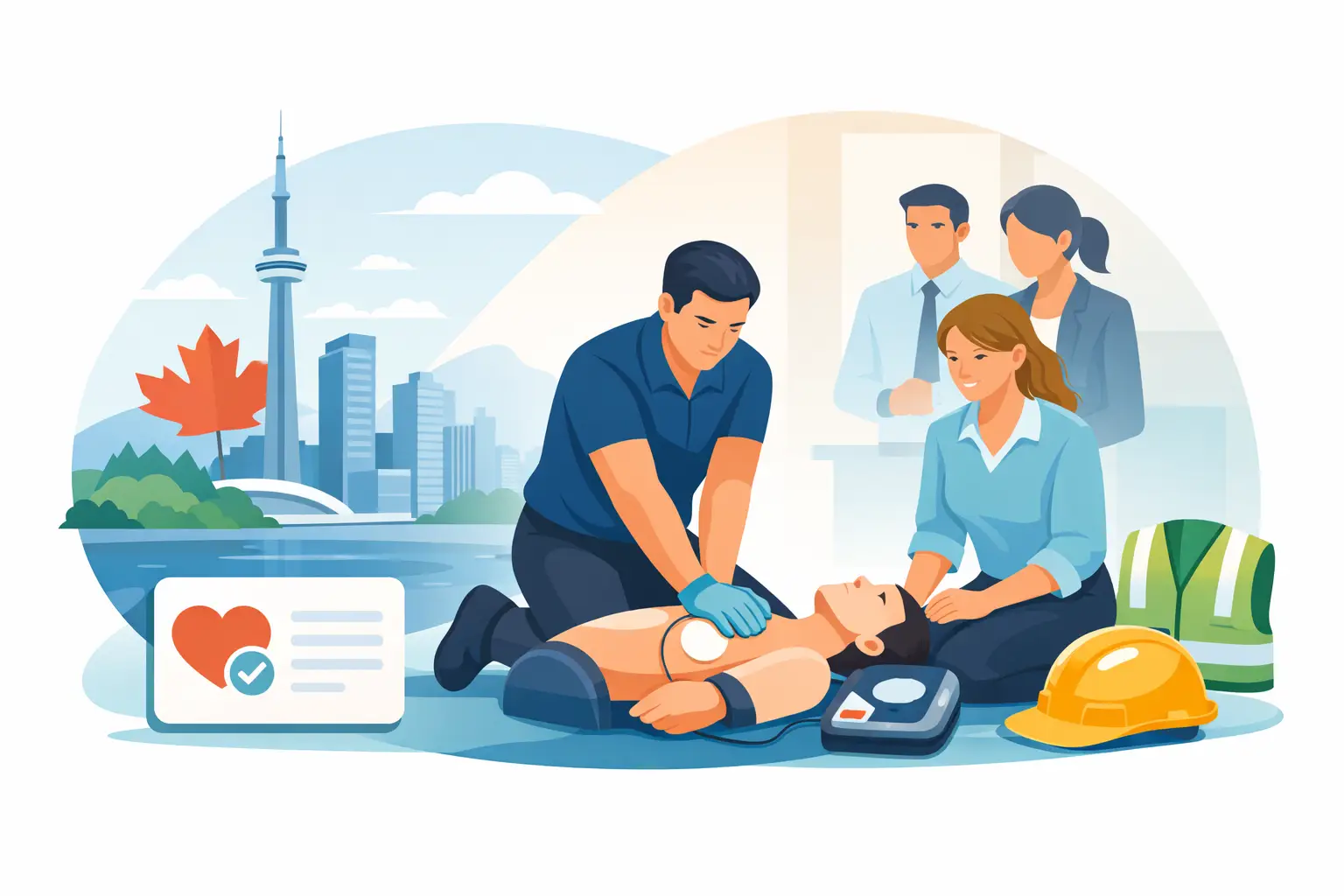
A job posting that asks for “CPR certification” can mean very different things depending on the role. A security position, childcare setting, warehouse, office, or supervisory role may require a particular first aid level, CPR level, AED training, or a certificate recognized for Ontario workplace requirements. This Ontario CPR certification guide explains how to identify the right course before you register.
Start With the Requirement, Not the Course Name
The fastest way to choose the right certification is to read the employer’s requirement exactly as written. Do not assume that a basic CPR class meets a request for first aid and CPR, or that an online completion record will satisfy a role requiring hands-on skills training.
Look for specific wording such as “CPR Level C,” “Standard First Aid,” “Intermediate First Aid,” “AED,” or “WSIB-recognized.” If the requirement is unclear, ask the employer or supervisor which certificate they accept and whether a particular training provider is required. This is especially useful for job seekers, where replacing an incorrect certificate can delay an application or start date.
For Ontario workplaces, the required level depends on the work environment, workforce size, and employer obligations. An employer may also set a higher standard than the legal minimum based on the risks of the job. Security staff, supervisors, team leads, and employees working with the public are often asked to hold comprehensive first aid and CPR credentials.
Ontario CPR Certification Guide: Know the Main Course Levels
Course names can vary by provider, but the level of training is what matters. The following distinctions help you compare options.
CPR-only training
A CPR-only course focuses on recognizing cardiac arrest, providing CPR, using an automated external defibrillator (AED), and responding to choking. Depending on the level, it may cover adult, child, and infant casualties. CPR Level C is commonly requested because it includes skills for all age groups and is relevant to many public-facing and workplace roles.
CPR-only training can be appropriate when an employer specifically requests CPR Level C or when you need a refresher for a role that does not require first aid certification. It is not a substitute for a full first aid course when the requirement includes injury assessment, bleeding control, medical emergencies, or workplace first aid duties.
Emergency First Aid with CPR and AED
Emergency First Aid is a shorter first aid course designed for lower-risk settings or roles with limited first aid responsibilities. It generally covers the initial assessment of an emergency, CPR and AED use, choking, severe bleeding, and basic response procedures.
This option can meet some workplace requirements, but it is not automatically interchangeable with Intermediate First Aid. If an employer asks for a more comprehensive credential, a short emergency course may not be enough.
Intermediate First Aid Level C with AED
Intermediate First Aid Level C with AED is a more complete workplace-focused certification. It combines CPR Level C and AED skills with broader first aid training for medical emergencies, injuries, environmental emergencies, and scene management.
This level is a practical choice for employees and job seekers who need a recognized, versatile credential rather than a limited CPR-only certificate. It is also relevant for workplaces where designated first aid attendants may need to manage an incident until emergency services arrive.
Canada First Aid offers Intermediate First Aid Level C with AED through a blended format that combines eight hours of online coursework with eight hours of in-person instruction. The online portion lets learners complete foundational material before class, while the in-person session is where participants practice and demonstrate the physical skills that cannot be confirmed through a screen.
Why Recognition Status Matters
A certificate is only useful if the organization requesting it accepts it. For workplace purposes, employers should verify that their training meets applicable Ontario requirements and that the provider’s credentials are recognized for the intended use.
WSIB-recognized first aid training is a key consideration for many Ontario employers. Recognition signals that the program follows the standards expected for workplace first aid training. It also gives employers a clearer basis for documenting compliance and ensuring designated workers have appropriate instruction.
Recognition is not the only factor. You should also confirm the certificate title, CPR level, AED component, issue date, expiration date, and whether the course includes the hands-on attendance required by the employer. A legitimate credential should clearly show what training was completed.
Choose a Format That Still Gives You Practical Skills
Convenience matters, especially for people balancing shift work, job searches, or family responsibilities. However, first aid and CPR are physical skills. Compression depth, hand placement, AED operation, recovery position, choking response, and bandaging techniques need hands-on instruction and assessment.
Blended learning is often a strong fit for adult learners because it separates theory from practical evaluation. You complete self-paced online learning first, then attend an instructor-led session to review scenarios, ask questions, and demonstrate required skills.
A fully online course may be useful for general awareness, but it may not satisfy an employer seeking formal workplace first aid certification. Before enrolling, check whether the course has a required in-person component and whether the final certificate is accepted for your role.
What to Confirm Before You Register
Registration should be simple, but the details should be clear. Before paying for a course, confirm these four points:
- The exact certificate name and whether it includes CPR Level C and AED training.
- The provider’s recognition status for Ontario workplace needs.
- The total course time, including online modules and in-person attendance.
- The certificate validity period and any requirements for renewal or recertification.
Also check the training location, session dates, attendance policy, and what happens if you do not complete the online portion before the practical class. For workers in Toronto and Peel, a local in-person location can reduce travel time and make scheduling easier, particularly when certification is needed before a job start date.
Price is another practical consideration, but it should not be the only one. A lower-cost class is not a better option if it does not include the level your employer needs, lacks an AED component, or produces a certificate that must be replaced. Compare the full credential, format, and recognition status rather than the advertised price alone.
How Long Does Ontario CPR Certification Last?
Most workplace first aid and CPR certificates are valid for a limited period, commonly three years. The exact validity depends on the issuing organization and course type, so always review the certificate and provider documentation.
Do not wait until the last week before expiration to plan your renewal. Employers may require continuous certification, and popular course dates can fill up. If your job depends on active credentials, set a reminder several months ahead and confirm whether you qualify for a recertification course or need the full course again.
A certificate can also need replacement before it expires if your employer changes its policy, your role changes, or a licensing body requests a different level. For example, moving from an office role to a security or supervisory role may create a need for broader first aid training.
Prepare for the In-Person Session
The practical session is not a passive lecture. Come prepared to participate in CPR practice, AED scenarios, and first aid exercises. Wear comfortable clothing that allows you to kneel and move safely, arrive on time, and bring any required proof that the online module was completed.
Training can be physically demanding for some participants because CPR practice involves repeated compressions on a manikin. Tell the instructor about a limitation before the session begins. The instructor can explain the assessment requirements and available options, but course completion still depends on demonstrating the required skills.
The goal is not just to receive a card or digital certificate. It is to leave with a clear response sequence: assess the scene, call for help, start care within your training, use available equipment such as an AED, and communicate effectively with emergency responders.
When you choose a recognized course that matches the actual requirement, certification becomes straightforward: complete the training, keep your record current, and be ready to act when someone needs help.