First Aid and CPR Training Certificate Guide
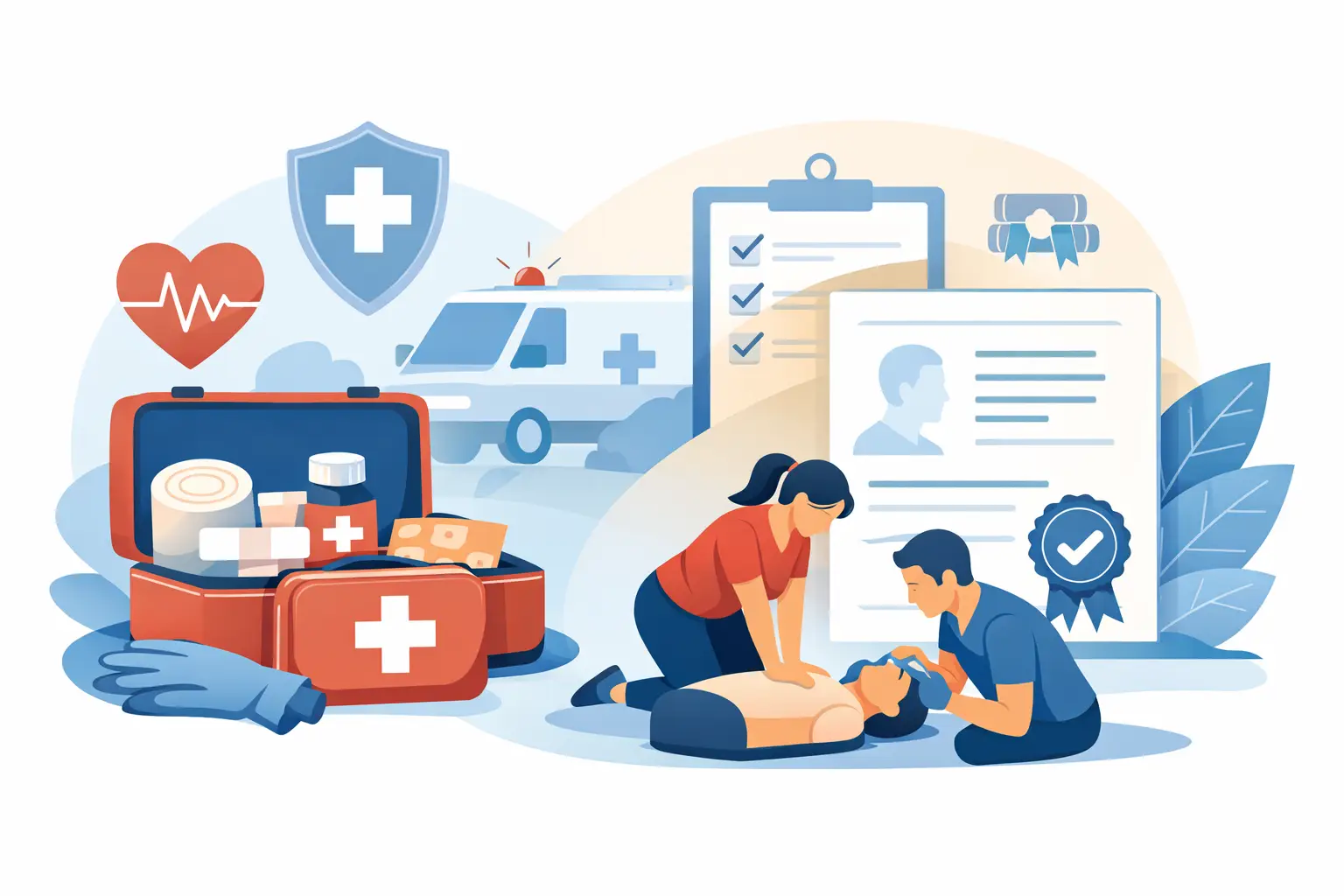
If an employer asks for a first aid and CPR training certificate, they are not asking for a vague safety course. They usually need proof that you completed recognized training, learned the required skills, and can present valid certification for hiring, site access, or workplace compliance. That distinction matters because not all courses are accepted in the same way.
For job seekers, supervisors, security staff, and employers, the practical question is simple: what certificate do you actually need, and how do you get it without wasting time on the wrong course? The answer depends on your role, your workplace requirements, and whether the training is recognized for occupational use.
What a first aid and CPR training certificate means
A first aid and CPR training certificate is documentation showing that you completed formal instruction in emergency response. Depending on the course level, that can include scene assessment, emergency medical services activation, choking response, CPR, AED use, bleeding control, shock management, and care for medical or injury-related emergencies.
The certificate itself is more than a record of attendance. For most employers, it needs to come from a recognized training provider and reflect a course level that matches the role. A general interest class may be useful for personal knowledge, but if you need certification for work, the course must meet the standard your employer or industry expects.
That is where people often make the wrong choice. They register for the cheapest class, the shortest class, or an online-only option, then find out the credential is not accepted. If you need certification for employment or compliance, the course structure and recognition status are just as important as the price.
Who typically needs a first aid and CPR training certificate
This requirement shows up across many workplaces, not just high-risk settings. Security guards, warehouse staff, teachers, child care workers, fitness employees, construction personnel, office supervisors, and customer-facing staff may all need current certification. Some employers require it before the start date. Others allow a short window after hiring, but they still expect a valid credential.
In Ontario workplaces, employers also look at recognized training in relation to safety obligations and internal policy. A supervisor may need proof of training for compliance records. A job seeker may need it to stay competitive in hiring. An employer may need multiple staff members certified to maintain coverage across shifts and locations.
For individuals, there is also a practical benefit beyond compliance. A recognized certificate confirms that the holder has trained in current response steps, including CPR and AED use, rather than relying on outdated information or informal instruction.
Not all first aid and CPR certificates are the same
The biggest mistake people make is assuming every certificate carries the same value. It does not. Course levels vary, and so do employer expectations.
Some roles only require basic CPR with AED. Others require a broader first aid course combined with CPR Level C and AED. In many workplace settings, Intermediate First Aid with CPR Level C and AED is the more relevant option because it covers adult, child, and infant CPR along with a wider emergency response scope.
You also need to look at whether the provider offers recognized certification. If the training is intended for workplace use, recognition matters. A course can be well presented and still fail to meet an employer's documentation requirements if it is not issued through an accepted framework.
This is why the course description matters. Before registering, confirm the exact certificate name, the CPR level included, whether AED training is part of the program, how the course is delivered, and whether the credential is recognized for workplace or employment use.
How blended first aid and CPR training certificate courses work
For adults balancing work schedules, blended learning is often the most efficient route. Instead of sitting through all course content in a classroom, students complete part of the program online and the practical portion in person.
A typical blended model separates theory from skill demonstration. The online section covers core principles, legal considerations, emergency awareness, and response steps. The in-person section focuses on hands-on skills such as chest compressions, rescue breathing, AED use, bandaging, and scenario-based response.
This format works well when it is organized properly. It gives learners flexibility without removing the practical requirement that employers and safety standards expect. CPR and first aid skills cannot be fully assessed through a screen alone. Hands-on instruction is still necessary if the goal is a credible, usable certificate.
Canada First Aid uses this practical structure for Intermediate First Aid Level C with AED certification, combining 8 hours of online coursework with 8 hours of in-person instruction. For many workers in Toronto and Peel, that format makes it easier to complete recognized training without stepping away from work for multiple full classroom days.
What employers usually look for
When employers ask for a first aid and CPR training certificate, they usually want four things. They want the right course level, valid dates, recognized training, and clear documentation.
The right course level means the certificate matches the job requirement. If the role calls for CPR Level C with AED and a broader first aid credential, a lower-level course may not be enough.
Valid dates matter because certification expires. Even experienced workers need recertification when their credential lapses. Employers rarely treat expired certification as acceptable, especially in regulated or safety-sensitive roles.
Recognized training matters because it supports internal safety records and external compliance expectations. If a provider advertises a certificate but cannot clearly explain its recognition status, that is a problem.
Clear documentation matters because hiring managers and site supervisors need to verify credentials quickly. The certificate should identify the course completed and show that the training was formally issued.
How to choose the right course without losing time
Start with the job posting, employer handbook, or site requirement. If the exact course name is listed, follow it. If it is not, ask whether they need CPR only, first aid with CPR, or a specific level such as CPR Level C with AED. That five-minute check can prevent a full day of wasted training.
Next, review the training format. If you need speed and flexibility, blended learning is often the best option. If you learn better in a fully in-person setting, that may still be worth the extra scheduling commitment. The right answer depends on your timeline, your learning style, and whether practical sessions are available near you.
Then look at logistics. Location, course dates, total training hours, and registration simplicity all matter. A recognized course is only useful if you can complete it on time and receive the documentation when you need it.
Price matters too, but it should be evaluated in context. The cheapest course is not the best deal if it leads to a rejected certificate or forces you to retrain. A slightly higher fee for accepted, properly structured certification is usually the better decision.
Common questions about a first aid and CPR training certificate
One common question is whether online-only certification is enough. For workplace use, that depends on the employer and the training standard, but many roles require a hands-on component. If practical skill assessment matters, online-only training may not meet the requirement.
Another question is how long certification remains valid. That depends on the issuing standard and course type, but expiry is a normal part of first aid and CPR credentials. If your certificate is close to expiring, recertify before applying for jobs or before your employer's audit cycle.
People also ask whether CPR and first aid should be taken together. In many employment settings, yes. Combined training is often the more practical choice because employers do not always treat CPR-only certification as a substitute for a broader first aid credential.
Why the right certificate is worth getting right the first time
A first aid and CPR training certificate is a working credential. It can affect hiring, scheduling, site access, and compliance records. That makes course selection a practical decision, not just a training decision.
If you are registering as an individual, choose a course that matches the role you want or already have. If you are arranging training for staff, choose a provider that offers recognized certification, clear scheduling, and a format your team can realistically complete.
The best course is not the one with the loudest marketing. It is the one that gives you the correct certificate, from a credible provider, in a format that fits your schedule and stands up when an employer asks to see it. Get that part right, and the training does what it is supposed to do - prepare you to respond when it counts and keep your paperwork in order when it does not.