How Long Is First Aid and CPR Training?
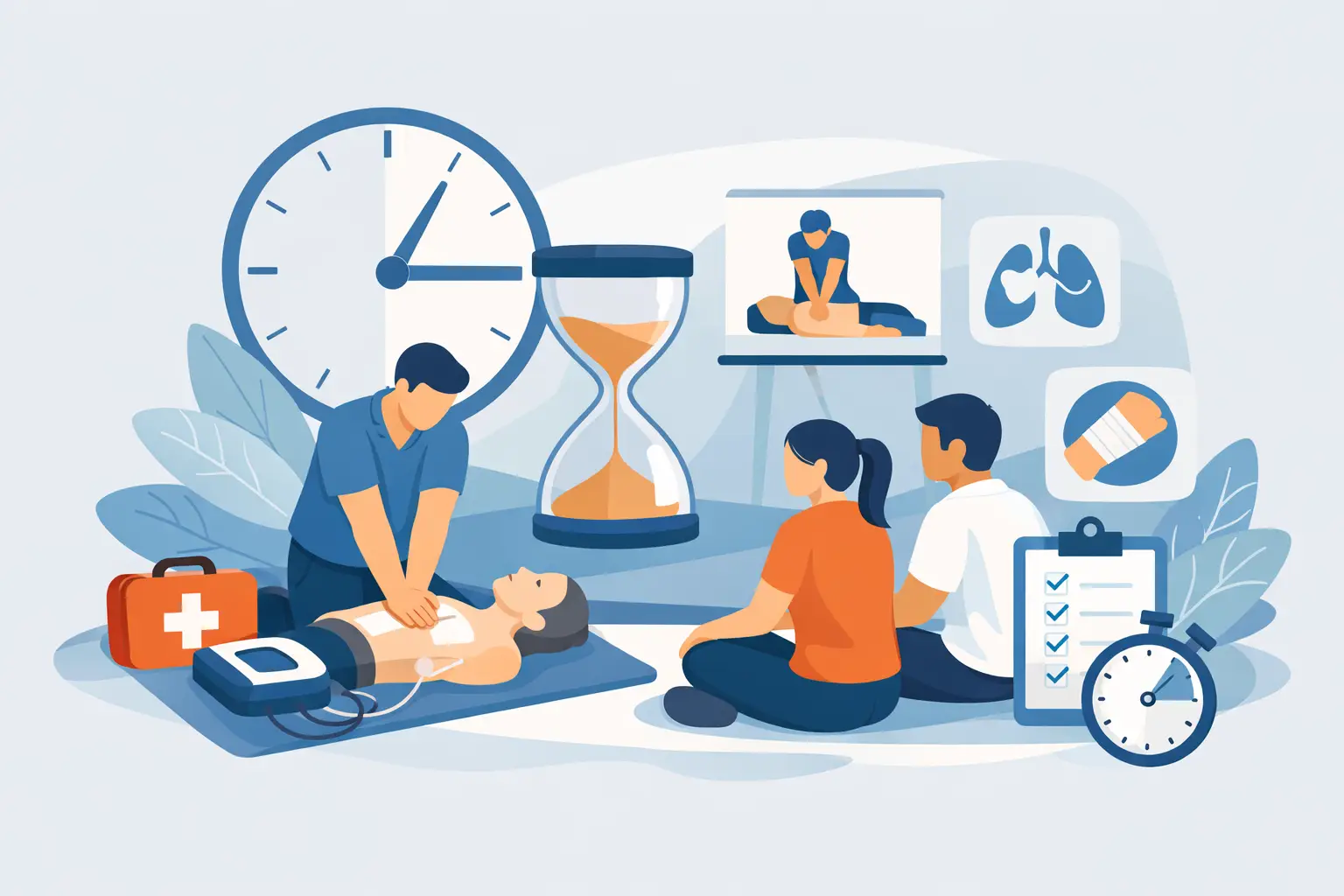
If you need certification for a job, a workplace requirement, or a hiring deadline, one of the first questions is simple: how long is first aid and CPR training? The short answer is that it depends on the course level, the delivery format, and whether CPR, AED, or workplace-recognized first aid is included. Some courses can be completed in a few hours. Others take a full day or are split between online study and in-person skills training.
For most adults comparing options, the real issue is not just total hours. It is how quickly you can finish a recognized course, meet an employer requirement, and receive valid certification without wasting time on the wrong format.
How long is first aid and CPR training in most cases?
Basic CPR-only training is usually the shortest option. A standalone CPR course may take around 4 to 6 hours depending on whether it includes AED instruction, infant and child content, and the certification level required by the employer or regulator.
First aid with CPR takes longer because the scope is broader. Once a course includes injury management, medical emergencies, legal responsibilities, and hands-on response skills, the training time increases. A standard or intermediate first aid course with CPR and AED often runs about 16 hours in total. That can be delivered over two full days, or through a blended format that divides the time between online theory and in-person practical instruction.
That difference matters. If you only need CPR for a specific role, the shorter course may be enough. If your workplace requires a broader first aid credential, a CPR-only class will not meet the same standard.
What affects the total training time?
Course duration is not fixed across every provider because training standards allow for different delivery models. The main variables are course level, certification requirements, and how the material is taught.
A CPR Level C course is usually shorter than a workplace first aid course because it focuses on resuscitation skills, choking response, and AED use for adults, children, and infants. An intermediate or standard first aid course adds topics such as bleeding control, shock, burns, fractures, environmental emergencies, and scene assessment. More content means more training time.
Format also changes the schedule. In a classroom-only course, all theory and practical work happen in person. In a blended course, the theory is completed online first, and the in-person portion is reserved for hands-on skills, assessments, and instructor-led practice. The total hours may be similar, but the blended model usually makes scheduling easier for working adults.
Employer and regulatory requirements can also narrow your options. Some jobs accept blended certification. Others may require a specific provider standard, a recognized credential, or a certain level of CPR included with first aid. If you register for the wrong course, the problem is not just inconvenience. You may have to retrain.
Typical course lengths by training type
If you are trying to estimate your schedule, it helps to look at the common course categories rather than searching for one universal answer.
A basic emergency first aid course with CPR is often completed in about 8 hours. This is commonly chosen for lower-risk workplaces or general preparedness, but it may not satisfy every occupational requirement.
A more comprehensive intermediate or standard first aid course with CPR Level C and AED is often about 16 hours total. This is a common requirement for many Ontario workplaces because it provides broader emergency response training and a recognized certification path.
Standalone CPR and AED training is commonly completed in 4 to 6 hours. That makes it useful for learners who do not need the full first aid component but still need a valid CPR credential for employment.
Recertification can be shorter than an initial course, but only if the certifying standard allows it and the previous certification is still eligible for renewal. If a certification has expired or the learner does not meet the recertification rules, the full course may be required again.
Why blended training is often the most efficient option
For adults balancing work, commuting, and family obligations, the fastest option is not always the shortest classroom session. It is the format that reduces downtime while still producing a recognized certificate.
Blended learning does that well. Instead of spending two full days in a classroom, learners complete the theory online on their own schedule and then attend a practical in-person session for skill evaluation. A common structure is 8 hours online and 8 hours in person for a total of 16 hours.
This format works especially well for workplace certification because the online portion can be completed in stages rather than in one block. It also keeps the in-person session focused on practical skills such as CPR, AED use, bandaging, assessments, and emergency response scenarios. For many people, that is a better use of time than sitting through all the theory in class.
Canada First Aid uses this blended structure for Intermediate First Aid Level C with AED certification, which is useful for learners who need a WSIB-recognized course and a practical schedule.
The difference between course hours and calendar time
One common misunderstanding is assuming that a 16-hour course always takes two consecutive days. That is not necessarily true.
A 16-hour program might be completed over a weekend, over multiple evenings, or through a mix of self-paced online learning and one classroom day. The number of training hours stays similar, but the calendar time can feel much shorter or much easier to manage depending on the format.
That is worth checking before you register. If you need certification by a specific date, ask not only how many hours the course requires, but also when the in-person session is available, how long the online portion takes to complete, and when proof of certification is issued.
How to choose the right course length for your needs
The best course is not the longest or the cheapest. It is the one that matches your requirement without adding unnecessary delay.
If your employer asked specifically for CPR, a short CPR and AED course may be enough. If the requirement says first aid and CPR Level C, you need the broader course. If you work in security, supervision, construction, childcare, or another role with safety responsibilities, a more comprehensive credential is often the better fit.
It is also worth thinking about recognition. A short course is not useful if the certificate is not accepted by your employer, site, or regulator. For workplace use, recognized training standards matter as much as convenience.
Before booking, confirm five points: the exact course name, whether CPR Level C is included, whether AED training is part of the certification, whether the credential is recognized for your workplace, and the total time required for both online and in-person components. That removes most registration mistakes.
How long does certification last after training?
While this is separate from course duration, it is part of the same planning decision. Most first aid and CPR certifications are valid for a fixed period, often three years, though exact terms depend on the certifying body and course type.
That means the time investment should be viewed over the life of the credential. A 16-hour course that satisfies a workplace requirement for several years is often more practical than taking a shorter course now and discovering later that it does not meet the standard you need.
This is another reason to avoid choosing based on speed alone. Shorter training can be appropriate, but only if it aligns with the actual certification requirement.
A practical answer for most job-related training
So, how long is first aid and CPR training for the average working adult? In most job-related cases, expect anywhere from 4 to 16 hours depending on whether you need CPR only, emergency first aid, or a fuller intermediate first aid course with CPR Level C and AED.
If you need a workplace-ready certification, 16 hours is a common benchmark, especially in a blended format with 8 hours online and 8 hours in person. That structure gives you a recognized credential without requiring all instruction to happen in the classroom.
The right next step is to match the course length to the actual requirement, not to guess based on the shortest option available. A few extra hours of training is usually far less costly than arriving at work with the wrong certificate. If you choose based on recognition, format, and schedule together, the time commitment becomes much easier to manage.