How to Get First Aid and CPR Certification
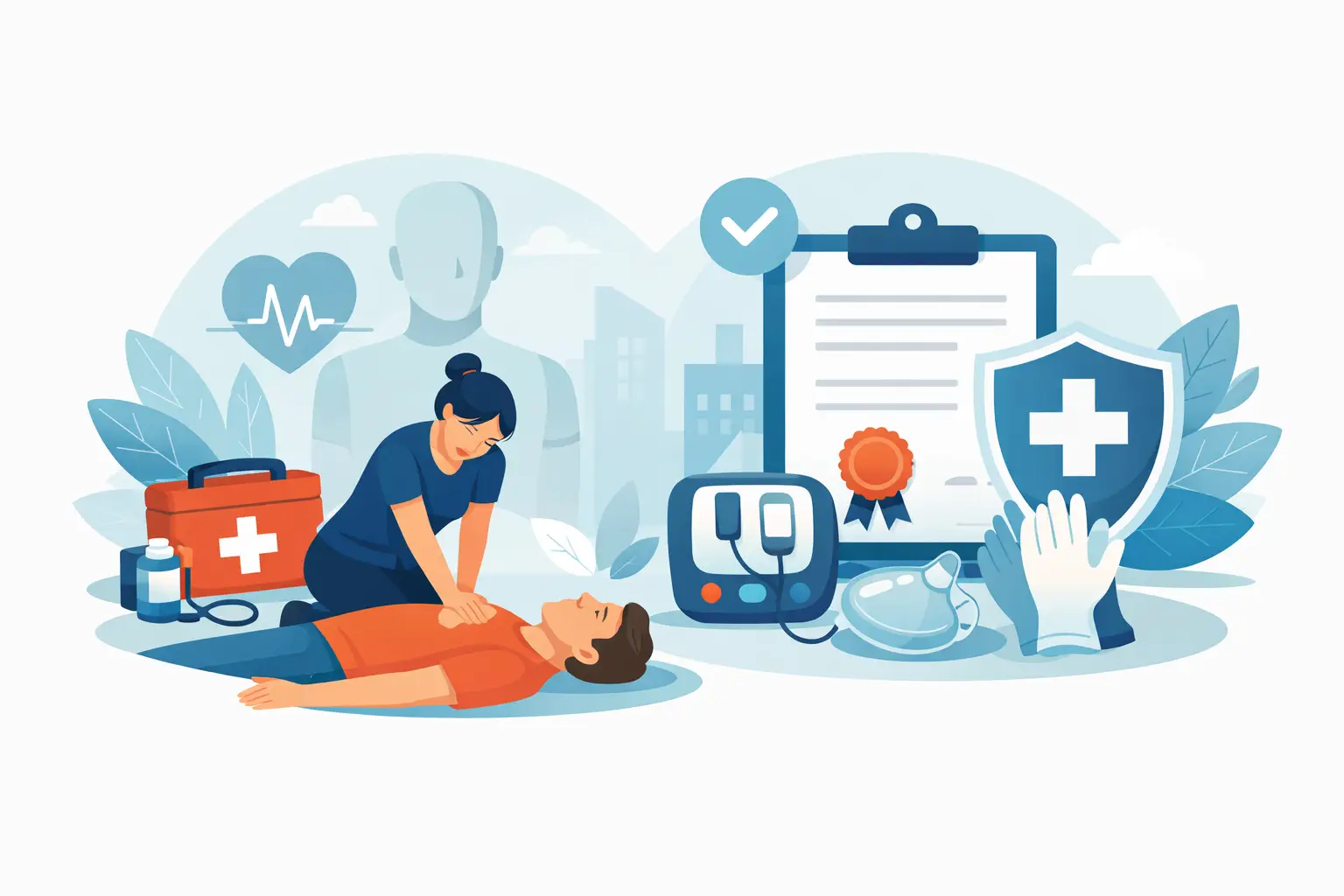
If an employer asks for proof by next week, or a job posting lists CPR as a condition of hire, the question becomes practical very quickly: how to get first aid and CPR certification without wasting time on the wrong course. The process is usually straightforward, but the right choice depends on why you need certification, whether your workplace requires a recognized standard, and how quickly you need your card.
How to get first aid and CPR certification the right way
Start by confirming what type of certification you actually need. Many people assume any CPR course will do, but employers often ask for a specific level. Some workplaces require basic CPR only. Others require first aid plus CPR Level C with AED, especially in security, childcare, construction, healthcare support, education, and general workplace safety roles.
If your certification is for work, your first check should be whether the training provider offers recognized credentials that meet local workplace expectations. That matters more than extras, branding, or low advertised prices. A course is only useful if your employer, supervisor, or hiring manager accepts it.
The next step is choosing the delivery format. In-person training is still common, but blended learning has become one of the most efficient options. Instead of spending two full days in a classroom, you complete part of the course online and then attend an in-person session for hands-on skills and assessment. For adults balancing shifts, commuting, or hiring deadlines, this format is usually the most practical.
Choose the certification level before you register
The biggest mistake learners make is registering first and checking requirements later. That can lead to taking a course that is too basic or not accepted for the role.
A standard first aid and CPR certification course usually includes emergency scene management, choking response, wound care, breathing emergencies, and CPR skills. If AED is included, you will also learn how to use an automated external defibrillator during a cardiac emergency. CPR Level C is commonly requested because it covers adult, child, and infant resuscitation.
For many Ontario workplaces, Intermediate First Aid Level C with AED is a strong fit because it aligns with common safety requirements while providing broad emergency response training. If you are applying for jobs in security, supervision, public-facing operations, or environments with formal safety expectations, this level often makes more sense than a minimal CPR-only course.
That said, it depends on your purpose. If you only want personal preparedness, a shorter course may be enough. If you need workplace compliance, always match the training level to the employer requirement.
Questions to ask before booking
Before paying for a class, ask a few direct questions. Is the course recognized for workplace use? Does it include CPR Level C and AED? Is the certification valid for the jobs or industries you are targeting? How long is it valid, and what does renewal involve?
Those answers tell you more than a generic course description.
Pick a recognized provider, not just a convenient one
Convenience matters, but recognition matters more. A provider should be clear about the standard being taught, the credential issued, and whether the training is accepted for workplace or employment purposes.
This is especially important if you are trying to meet a hiring condition, return-to-work requirement, or internal safety policy. A cheap course with unclear recognition can cost more in the long run if you need to retake training somewhere else.
Look for providers that clearly state the course structure, training hours, certification level, and whether the program is recognized for workplace compliance. A provider should also make scheduling, registration, and contact information easy to access. If basic details are hard to find, that is usually a warning sign.
For learners in Ontario who need a practical route to recognized certification, blended training can be a strong option. Canada First Aid offers WSIB-recognized training that combines 8 hours of online coursework with 8 hours of in-person instruction, which is often a better fit for working adults than a full classroom schedule.
Understand the course format before you commit
Knowing what the course actually involves helps you avoid surprises. Most recognized first aid and CPR certification courses are not passively watched and completed. You will usually need to participate, demonstrate skills, and meet assessment standards.
In a blended format, the online portion covers theory. That often includes legal considerations, emergency response priorities, injury management, and the principles behind CPR and first aid care. The in-person portion is where you practice compressions, rescue skills, AED use, and scenario response under instructor supervision.
This split has a clear advantage. You can complete the knowledge-based material on your own schedule, then use classroom time for the parts that require physical practice and evaluation. For most adult learners, that is a more efficient use of time.
There is a trade-off, though. Blended learning works best if you are willing to complete the online portion properly. If you leave it to the last minute or rush through it, the in-person session becomes harder. The format is flexible, but it still requires discipline.
How long it takes to get certified
The timeline depends on the course level and format. Some CPR-only programs can be completed quickly, while more complete first aid and CPR certifications usually require a longer training day or a blended schedule across online and in-person components.
If you need certification fast, check the next available in-person date before registering. People often focus on the online flexibility and forget that the final credential usually depends on completing the hands-on session too. If there is no seat available for a week or two, that affects your timeline.
A realistic approach is to choose a provider with regular local scheduling, complete the online work as soon as possible, and attend the in-person session without delay. That is usually the fastest path to getting the certification card in hand.
What to bring to the in-person session
Most providers will give instructions after registration, but expect to bring identification, wear comfortable clothing, and arrive ready to participate in physical skills practice. CPR requires kneeling, compressions, and scenario-based activity. If you have a physical limitation, ask in advance how the provider handles accommodations.
That is not something to leave unaddressed. A professional provider should explain expectations clearly before class day.
Cost, value, and what you are really paying for
Price matters, but first aid and CPR certification is not just a commodity purchase. You are paying for recognized instruction, practical assessment, certification processing, and a credential that can be used for work or compliance purposes.
The cheapest option is not always the best option if it creates problems with employer acceptance, scheduling delays, or incomplete training. On the other hand, the most expensive course is not automatically better. What matters is whether the program matches your required level, is recognized, and fits your schedule.
When comparing providers, look at the full picture: course level, recognition status, included CPR and AED training, blended or in-person format, total hours, location, and speed of certification issuance. That gives you a much clearer value comparison than price alone.
What happens after you pass
Once you complete the course requirements and demonstrate the required skills, you receive certification. Keep a digital and printed copy if possible, especially if you are applying for jobs, onboarding with a new employer, or submitting credentials to a site supervisor.
Also check the expiry period right away. First aid and CPR certifications typically need renewal after a set term. If your work depends on staying current, put the renewal date in your calendar well in advance. Letting it lapse can create avoidable employment issues.
If you are an employer, it also helps to track who on your team is certified, when each card expires, and whether renewal or recertification is needed. Waiting until a card expires often creates scheduling pressure that could have been avoided.
A simple path for anyone asking how to get first aid and CPR certification
If you want the process to go smoothly, keep it simple. Confirm the certification level required, choose a recognized provider, review the course format, register for a date that fits your timeline, complete all training components, and keep your credential current.
That is the practical answer to how to get first aid and CPR certification. The right course should do two things at once: teach you how to respond in an emergency and give you a credential that is accepted when it matters. If you choose with that standard in mind, the next step is usually easy.