Workplace First Aid Versus Personal Certification
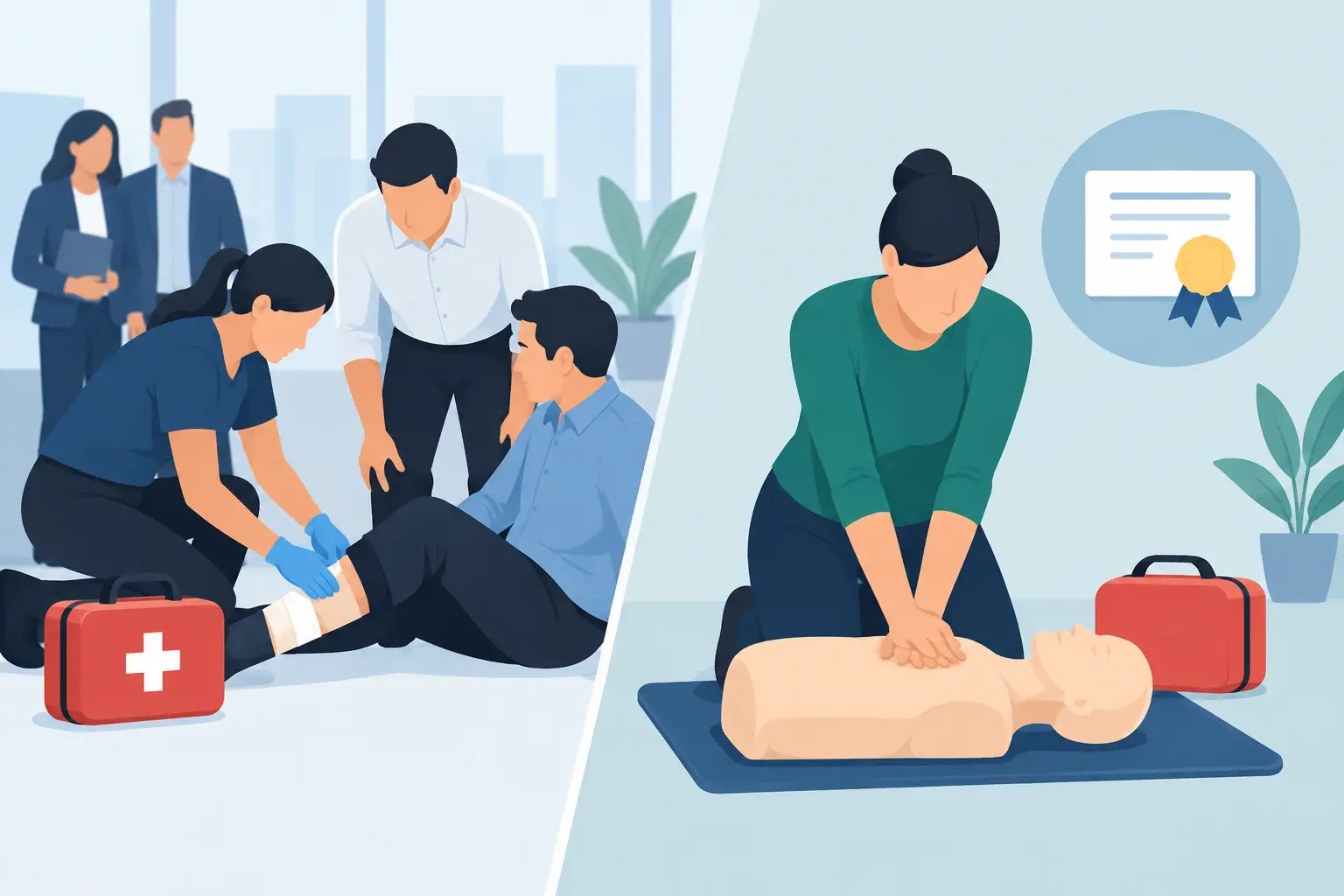
A certificate can look similar whether an employer paid for the course or you registered on your own. The real difference in workplace first aid versus personal certification is the reason for training, the employer’s compliance responsibilities, and whether the course meets a specific job or site requirement.
For employees and job seekers, the practical question is simple: will this credential be recognized where you need it? For employers, the question is broader: does the training support workplace first aid obligations and prepare designated staff to respond properly?
What Workplace First Aid Certification Means
Workplace first aid training is selected to support an employer’s health and safety program. In Ontario, employers must consider their workplace hazards, number of workers, shifts, location, and access to emergency services when assigning first aid responsibilities. A certificate is one part of that program. The employer also needs appropriate first aid supplies, reporting procedures, and workers who know how to respond while waiting for emergency services.
The course itself must be recognized for the purpose it serves. Many employers look for WSIB-recognized training because they need a credential that aligns with provincial workplace requirements. A manager cannot assume that any online completion certificate, community workshop, or informal course will satisfy a workplace requirement.
Workplace training also tends to be more operational. Learners practice how to assess an emergency, protect themselves and others, call for help, document what happened, and provide care within the limits of their training. The goal is not to turn employees into medical professionals. It is to ensure there is a calm, capable response during the first critical minutes.
The employer still has responsibilities
Sending one employee to a course does not transfer all safety responsibility to that person. Employers remain responsible for maintaining a suitable first aid program and ensuring trained workers are available when needed. This can require more than one certified person, especially where staff work across shifts, travel between locations, or work in separate areas of a large site.
A current certificate should also be matched to the role. A security professional, supervisor, childcare worker, construction employee, or front-desk worker may face very different risks. The right course level depends on the work environment and the employer’s stated requirement.
What Personal Certification Means
Personal first aid certification is training an individual obtains for personal preparedness, career development, volunteer work, or a job search. You register directly, complete the required training, and receive a credential in your own name. This gives you control over when you train and lets you arrive at a new job with current qualifications already in place.
Personal certification is especially useful when a job posting lists First Aid and CPR as a condition of employment. Security personnel, camp staff, fitness professionals, education workers, and many customer-facing employees are often expected to hold valid certification before their first shift. Completing training independently can prevent a hiring delay.
The credential can still be accepted in a workplace if it comes from a recognized provider and meets the employer’s required standard. However, personal certification does not automatically make you the designated workplace first aider. Your employer must decide how it fits into its safety plan and confirm that the certificate is current and suitable for the role.
Workplace First Aid Versus Personal Certification: The Main Difference
The training content may be identical when the same approved course is taken. The difference is usually administrative and practical, not a separate category of medical skill.
Workplace training is arranged to meet an organization’s compliance needs. The employer may schedule a group course, keep training records, assign first aid duties, and plan coverage for absences. Personal training is arranged by the learner, who needs a recognized certificate for work, applications, or personal confidence.
That distinction matters when reviewing a course description. Do not choose based on the label alone. Check the provider, certification level, CPR component, AED training, delivery format, practical evaluation, and recognition status. If an employer requires a specific level, that requirement should guide your decision.
When Intermediate First Aid Level C With AED Is Appropriate
Intermediate First Aid Level C with AED certification is commonly requested where workers may need to respond to serious injuries, breathing emergencies, cardiac arrest, or incidents involving more than one person. Level C CPR covers care for adults, children, and infants, while AED instruction prepares learners to use an automated external defibrillator as part of the response.
For many Ontario workers, this level provides a practical balance. It offers more comprehensive emergency response training than a basic CPR-only course without requiring advanced medical training. It may be appropriate for workplace first aiders, supervisors, security personnel, and job seekers whose employers require a recognized first aid and CPR credential.
Canada First Aid delivers this program through a blended format with eight hours of online coursework and eight hours of in-person instruction. The online portion lets learners complete foundational material before class. The in-person session is where practical skills, scenario work, and required assessments are completed.
Blended learning is efficient, but it is not a shortcut. The practical portion remains essential because first aid requires hands-on performance. You need to demonstrate skills such as CPR, AED use, bleeding control, recovery positioning, and emergency scene management under instructor guidance.
How to Choose the Right Course
Start with the requirement, not the course name. If you are registering for a job, ask the employer what credential it accepts. Confirm whether it requires workplace-recognized first aid, a particular CPR level, AED training, or a specific training provider. If you are an employer, review your operational risks and confirm the course meets your workplace obligations.
Next, consider scheduling. A blended course can reduce time spent in the classroom, but you must complete the online component before the in-person training date. Missing either component can delay certification. Choose a date and location that allows you to complete the full process without rushing.
Finally, verify what you will receive after successful completion. A legitimate course should clearly state the certification issued, the provider recognition status, course requirements, and any renewal expectations. Keep a copy of your certificate and provide it to an employer when requested.
Common Mistakes That Cause Problems
The most common mistake is enrolling in a course because it is cheap or fast without confirming recognition. A short online-only class may be useful for general awareness, but it may not satisfy an employer’s requirement for practical first aid and CPR certification.
Another mistake is assuming every First Aid and CPR certificate is interchangeable. They are not. Employers may require a particular course level, CPR level, or training standard. A certificate that was accepted for one role may not be sufficient for another.
Workers also need to monitor expiry dates. First aid credentials are not permanent. If your certification expires, you may lose eligibility for a position or leave an employer without required trained coverage. Plan renewal before the certificate lapses, particularly if your job depends on it.
Registering With a Clear Purpose
If you need a credential for employment, bring the job requirement with you when comparing courses. If you are an employer, identify how many trained workers you need and what level of training is appropriate before booking. Clear requirements prevent wasted time, duplicate training, and certificates that cannot be used.
The best choice is the course that is recognized, current, and matched to the real setting where you may need to act. Whether you register independently or through your employer, first aid training should leave you ready to respond when a situation cannot wait.